Day 17 - 19th March A long drive, and a border crossing into Liberia

Photo above - motorbike ride to the vine bridge. More Photos to follow below
Last hours in Cote d'Ivoire
Today we started the day with a two hour drive further west through a lush region of thick forests and remote villages. I have really enjoyed Cote d'Ivoire with it's friendly people, it's good main roads, it's light traffic, and varied scenery from sandy beaches, to lush forest, to tree lined mountains and large rivers. Cote d'Ivoire had low levels of intrepid tourists back in the 1990s, but then the civil war started in 1999 and continued through to 2010. Then before tourism could start again, there was an outbreak of Ebola in 2015, and then COVID in 2019. So it is only in the last couple of years that tourism at any level has recommenced. I have to say, I have enjoyed travelling around West Africa and never seeing other tourists!
Dusty motorbike ride to vine bridge across river
After a two hour drive, we stopped at a village to see one of the ‘living bridges’ spanning the local river, made from lianas or vines. At the top of a dusty road, we picked up a pinion ride, on a motorbike ridden by a local, to take us down to the river. These guys were late teens early twenties, but they literally cheered and jumped up and down like kids when they were asked to take some white men on the back of their bikes. The vine bridge is strung across the river, and superstition dictates that you must walk across barefoot. It felt quite stable but the walkway is only the width of your foot. It does feel remarkably strong considering it is just five vines entwined together. On the bike ride back, we saw a lot of village school kids at the side of the track, so we stopped and went with them to their classroom (an open sided wooden structure with about half the required seating). They did a little song for us, then we had to reciprocate! We left them waving and singing twinkle twinkle little star! Back at the top of the road we climbed off our bikes to find we were covered with red dust.
Last call for food
We then drove further on to the last town before the border, Danane, to get some bread etc as for the rest of the journey, right into Liberia, there is nothing. Stopped briefly to see some women sorting coffee at the road side.
When we were about an hour from the border, our guide got a call to inform us that the vehicle that was due to collect us once we cross the border has been stopped going into Liberia from Guinea. We therefore had to proceed with a view to trying to get some transport from maybe local taxis, but we have to go quite a way to where we are staying. This far west into Cote d’Ivoire it most definitely feels like it is a poorer area.
Hard road to the border
The current UK government advice is : There are occasional clashes between armed groups from both sides of the Liberia-Côte d’Ivoire border in some of the more remote border areas of Grand Gedeh and River Gee counties. Use the main roads when travelling in these areas. We are going on a quiet rural route!
The dirt road to the border was very rutted, with deep water filled holes. At one point we had to lessen the weight in the vehicle and walk a short distance for the van to get through a particularly rough spot. We arrived at the border to exit Cote d'Ivoire at 2pm. The process here was very quick. We drove across a small bridge across a river and arrived at the Liberian border control. The whole area is just a few concrete buildings and a dusty square. The only traffic across the border was pedestrians, villagers going across to sell goods or visit relatives.
About Liberia
Once across into Liberia we started the drive to Gbanga, a small town of about 35,000 in the north of the country.
Officially called the Republic of Liberia, apart from Cote d’Ivoire, the country is also bordered by Guinea to the north, Sierra Leone to the west, and once again, the Atlantic Ocean to the south. It has an area roughly half the size of the UK, but a population of only 5.5 million. The official language is English, although there are over 20 indigenous languages spoken. The country was an American colony prior to 1847 when independence was declared. Liberia began believe it or not in the early 19th century as a project of the American Colonization Society which believed that black people would face better chances for freedom and prosperity in Africa than the US. Between 1822 and 1861, more than 15,000 freed and free born African Americans relocated to Liberia. The settlers colonized the indigenous population.
The country suffered from civil war from the 1970s to 2003. They have also suffered from outbreaks of Ebola. After the ceasefire, the UN went in to help the country with food in exchange for the handover of weapons. Despite resources like rubber and some diamonds, the country is still one of the poorest in the region, and relies on external help, particularly the US, and NGOs.
First impressions of Liberia
The road on the Liberian side of the border was a surprisingly fast well tarmarced road. There was very little traffic except motorbikes, and the odd truck. The vegetation and scenery stayed essentially the same as Cote d'Ivoire, lush and green, and hilly. The small towns and villages were busy with markets, and people still waved and stared as before. The main difference is that there are quite a few buildings that look more permanent and elaborate.
After about an hour we stopped at a police checkpoint. Whilst they were checking out papers, we had a beer at the checkpoint bar, very civilised. Shortly after setting off again, we came across a serious looking accident which appeared to be a head on collision between two cars. There are actually very few cars on the road here. Mostly motorbikes, a lot of whom ride with an umbrella to protect from the sun, although they do not wear helmets here.
Arrived at the hotel in Gbanga at about 6.15, pretty hot and dusty, especially from the motorbikes earlier. Tomorrow we head south West across Liberia to the coastal capital of Monrovia.
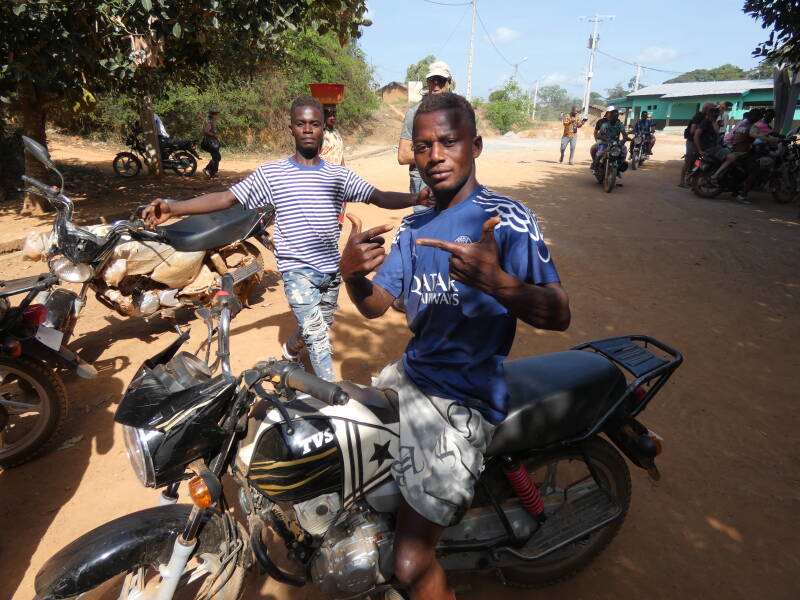
My motorbike pilot
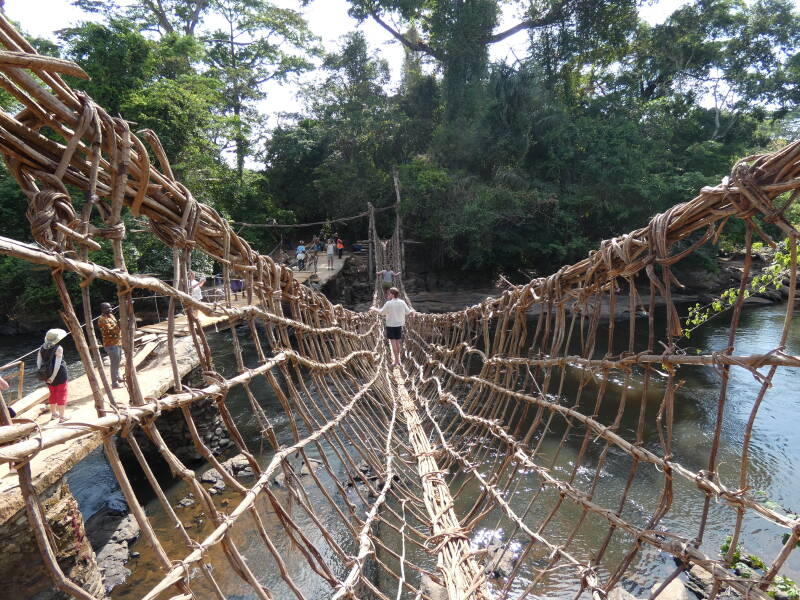
Vine bridge
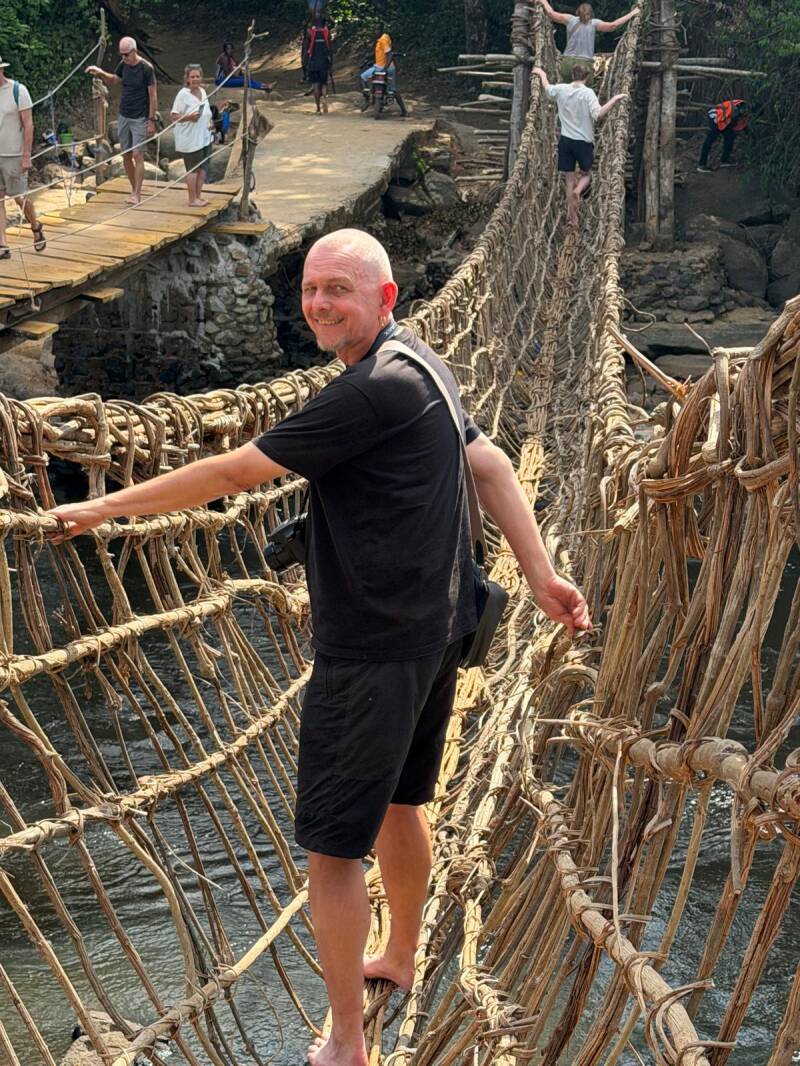
Vine bridge
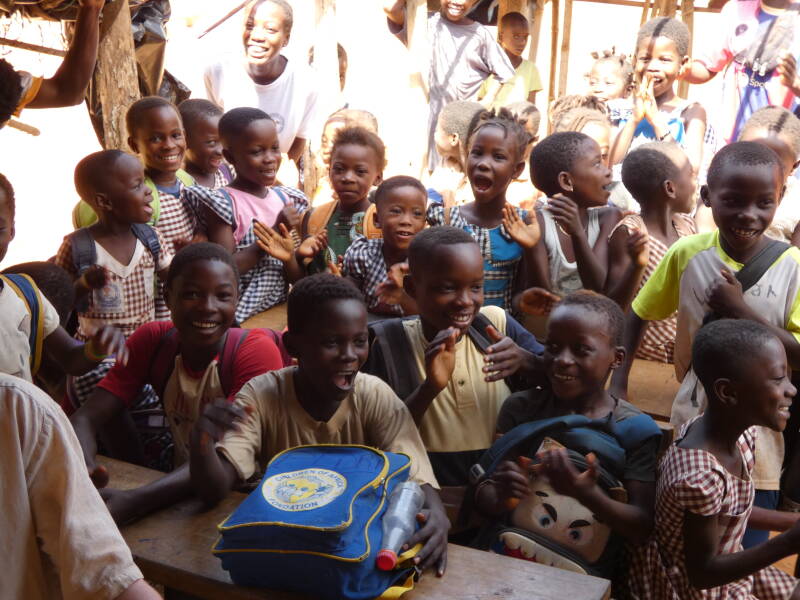
Village school
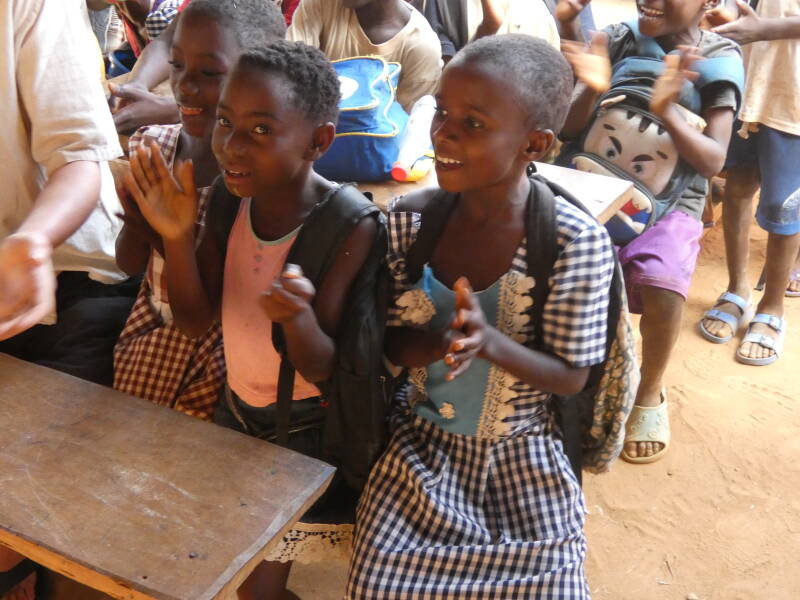
Village school
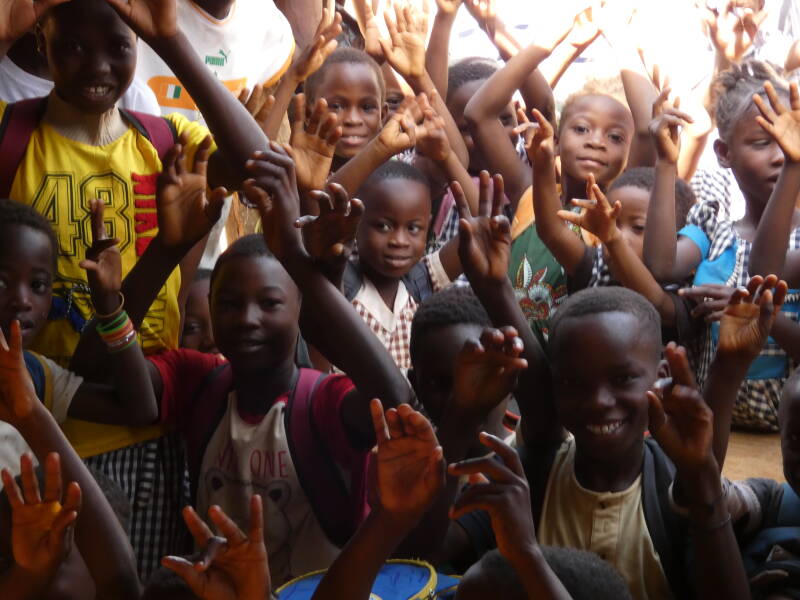
Village school
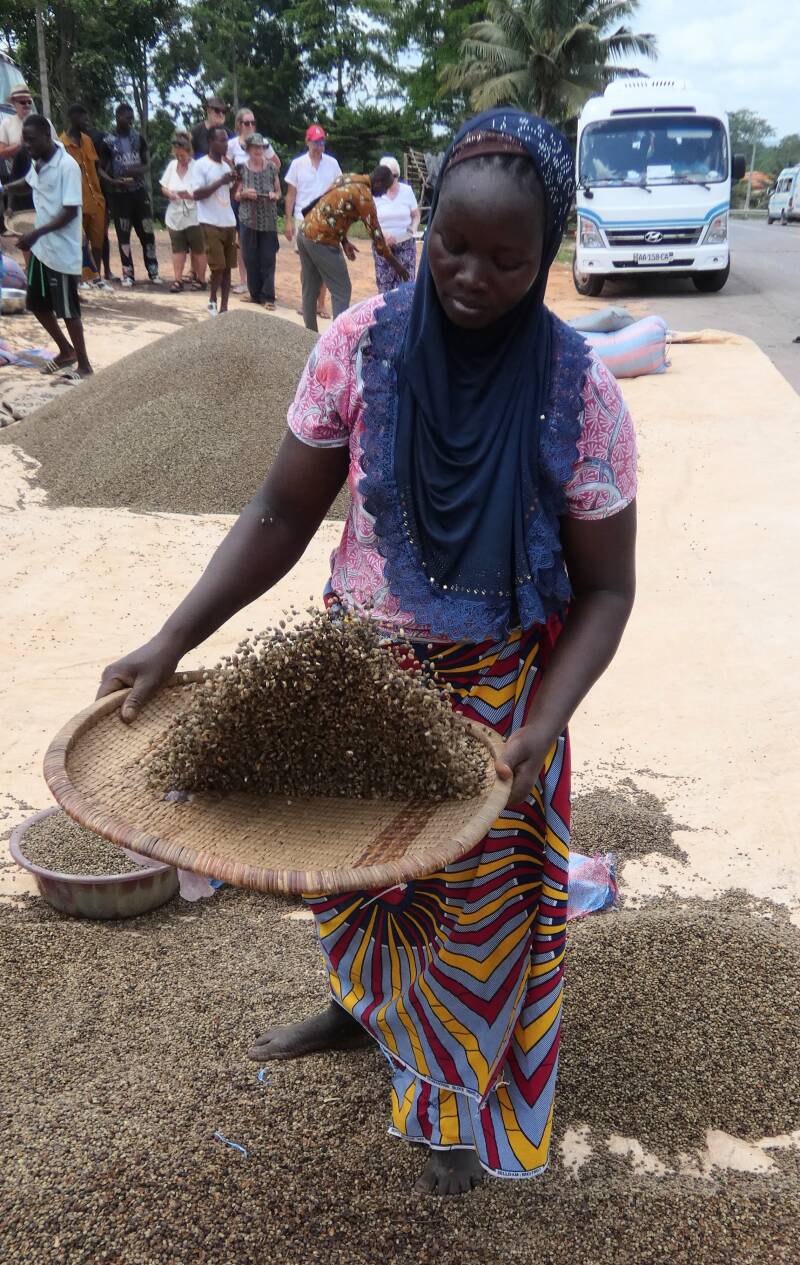
Coffee bean sorting
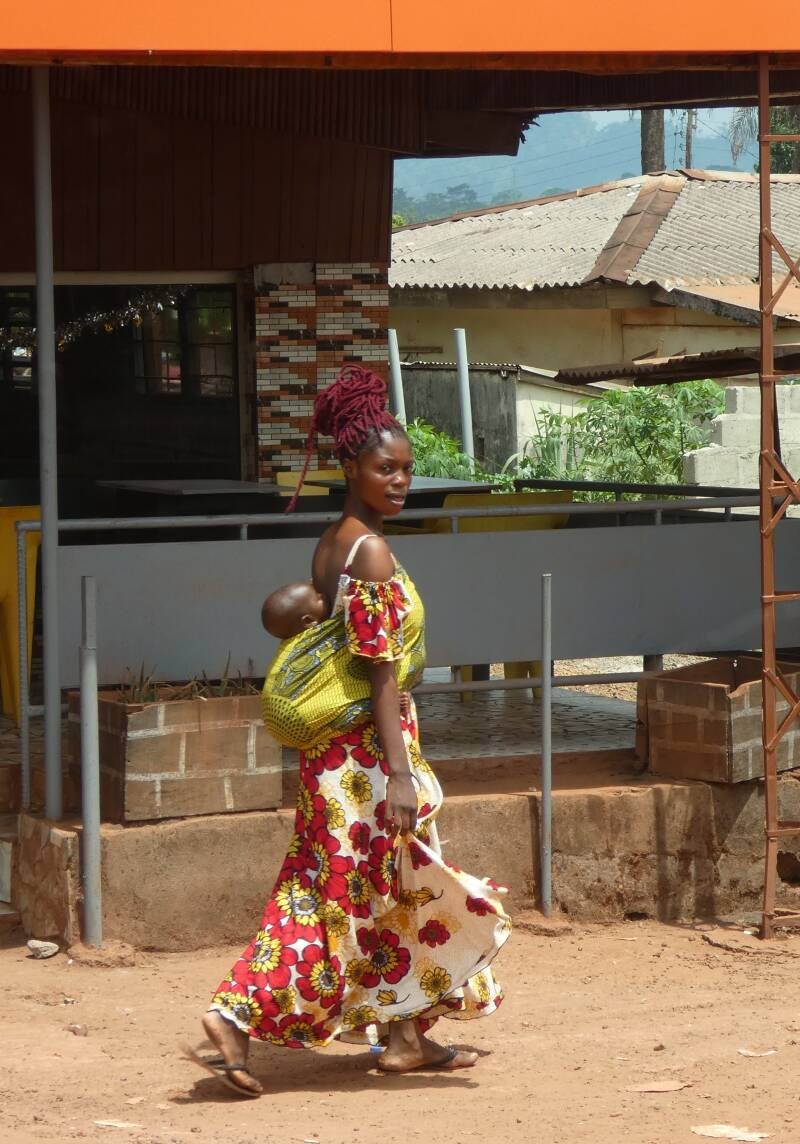
Danane lunch stop
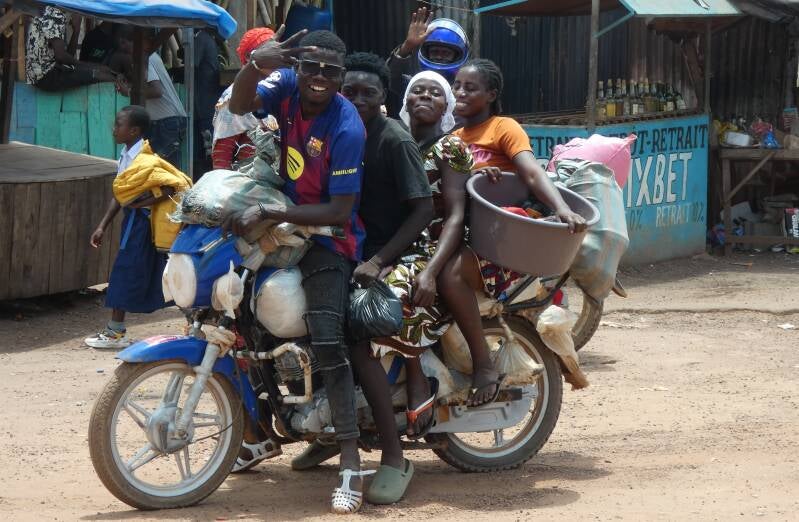
Danane lunch stop
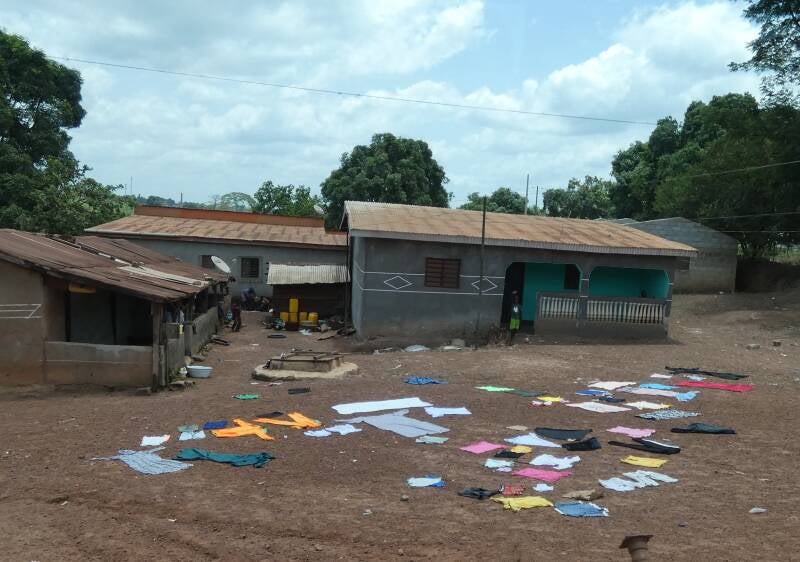
Drying the laundry in the sun
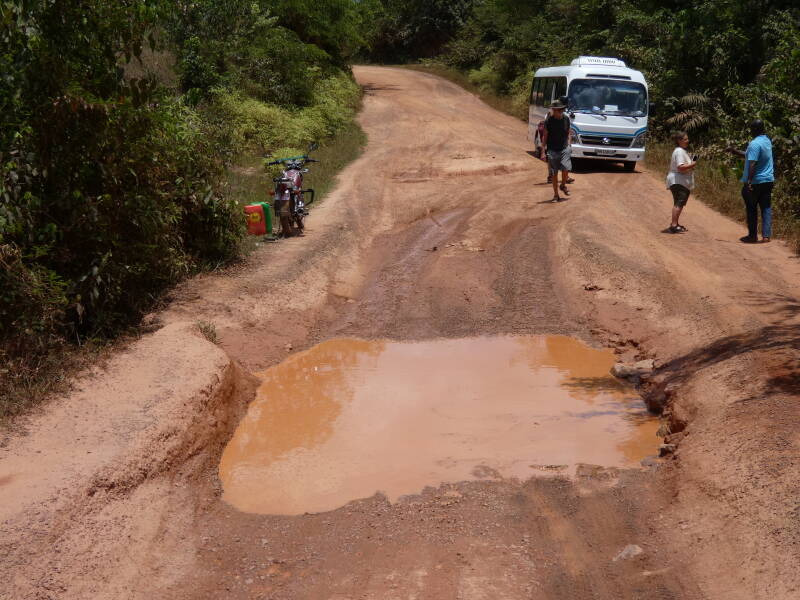
Road to the border!
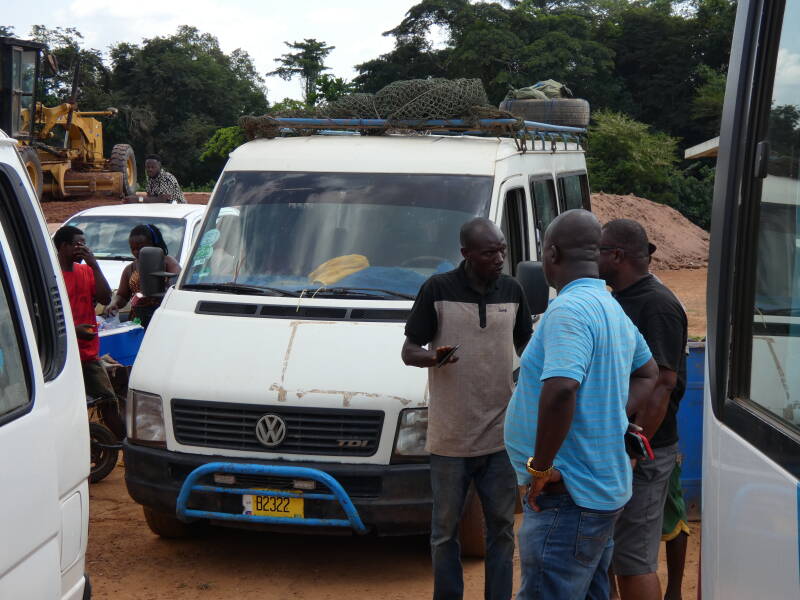
Tense discussions about onward transport
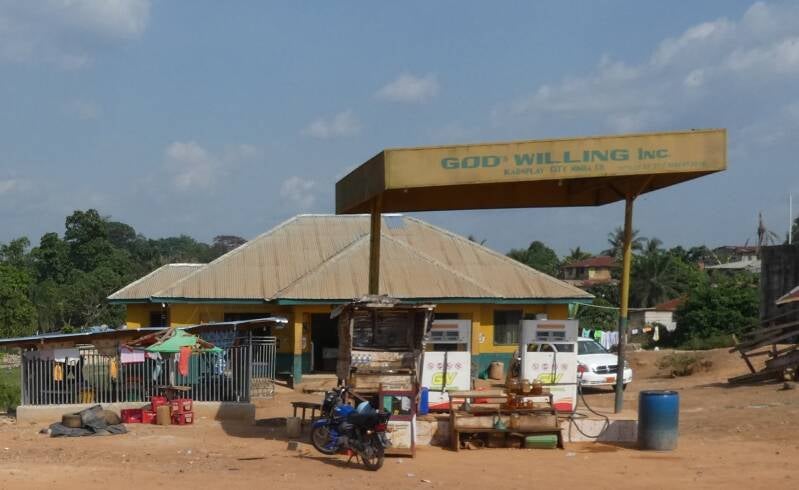
God willing Inc petrol station
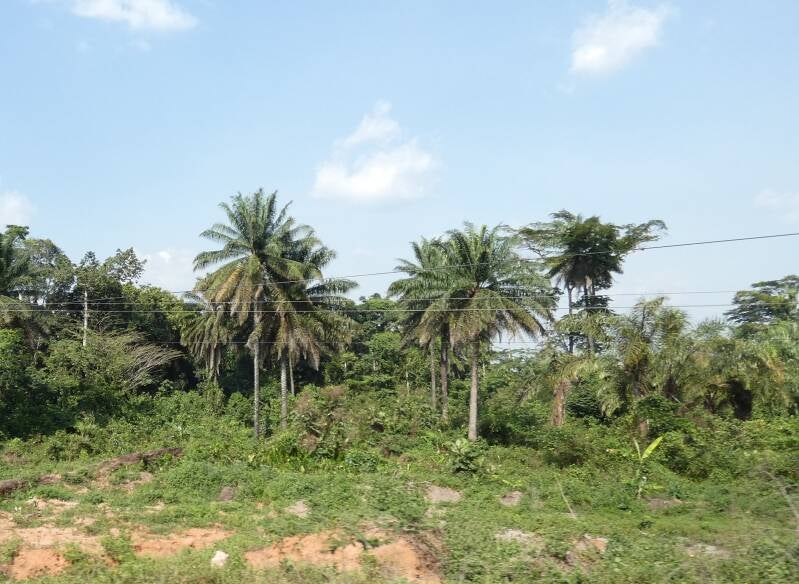
Typical roadside scenery
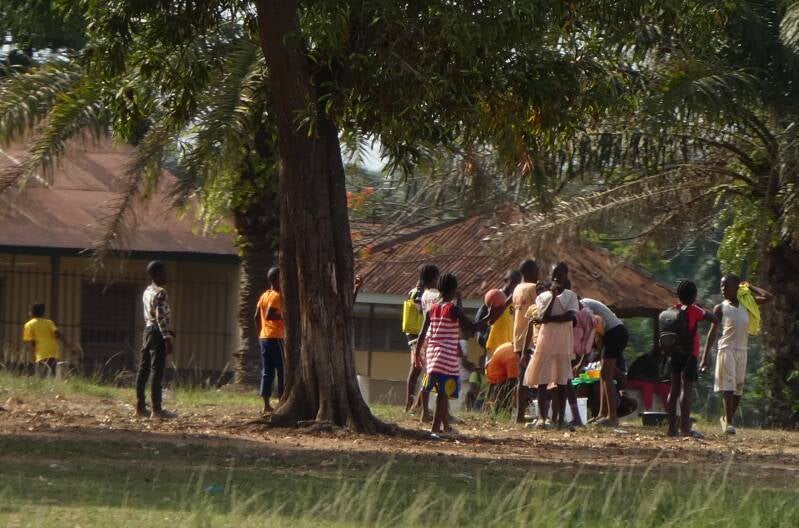
Liberia school
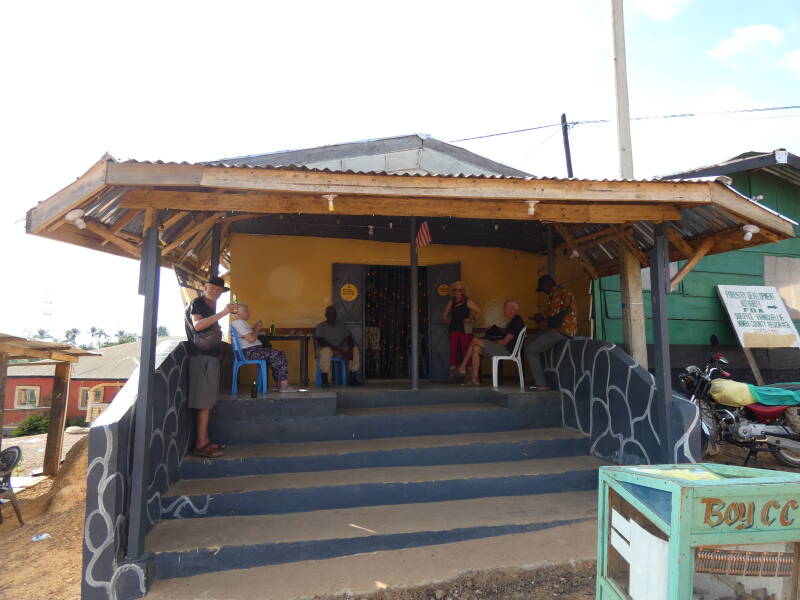
Liberia police checkpoint bar
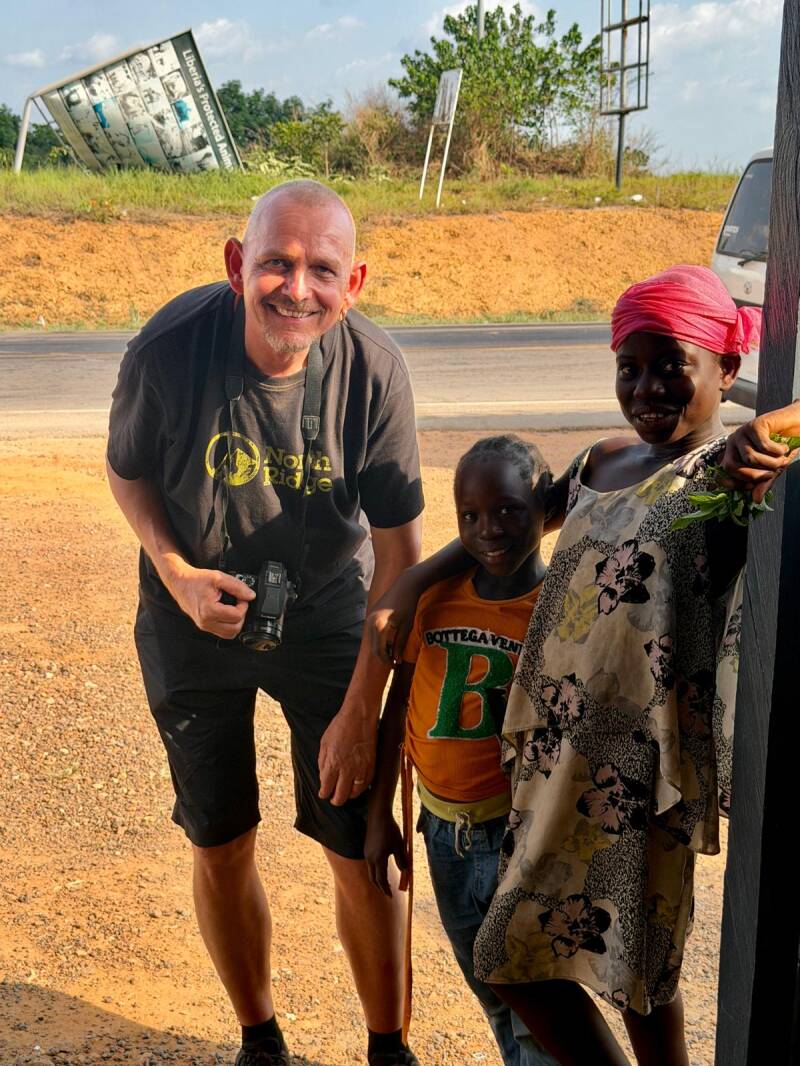
At the police checkpoint
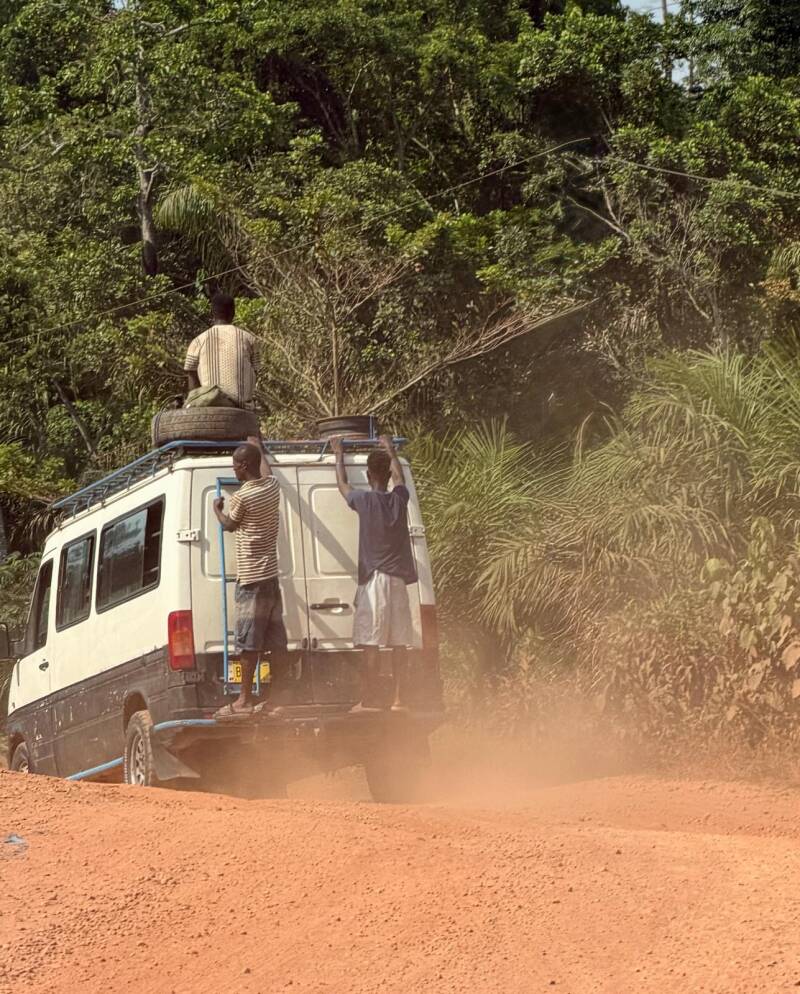
One of our two vans
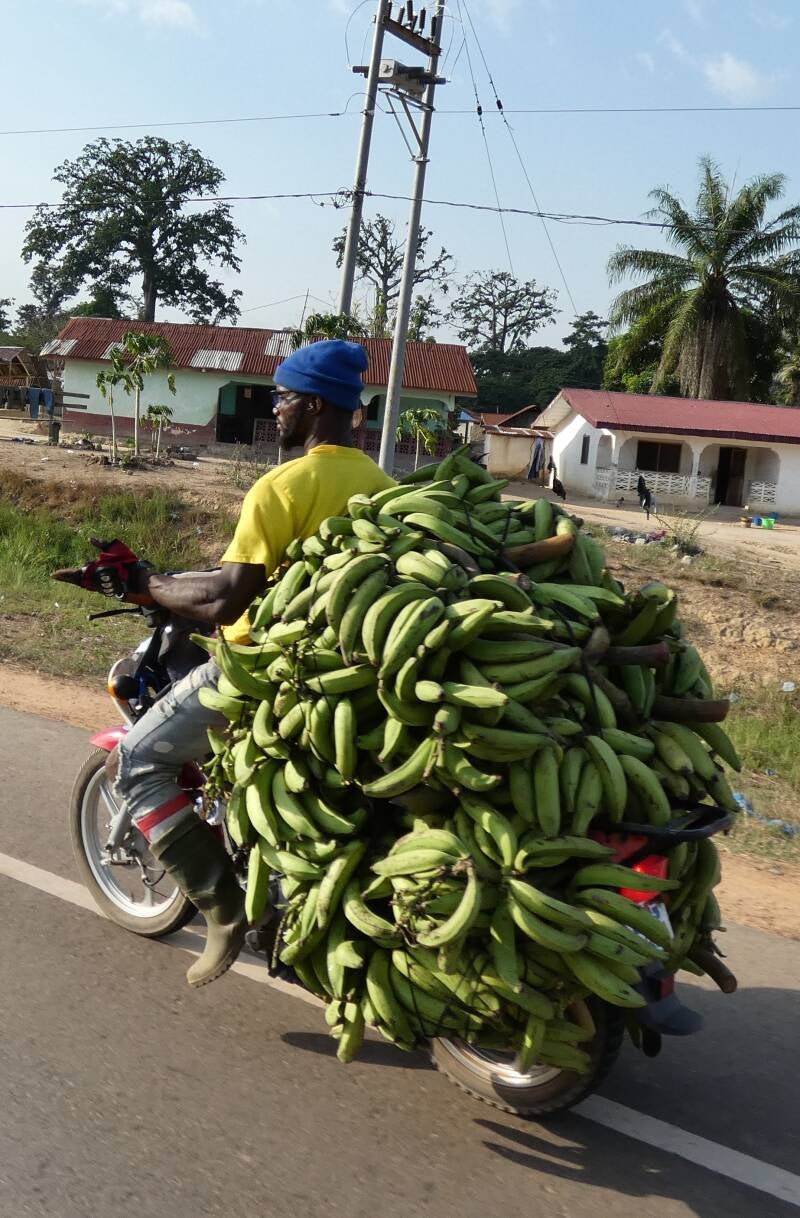
Transporting bananas the Liberian way
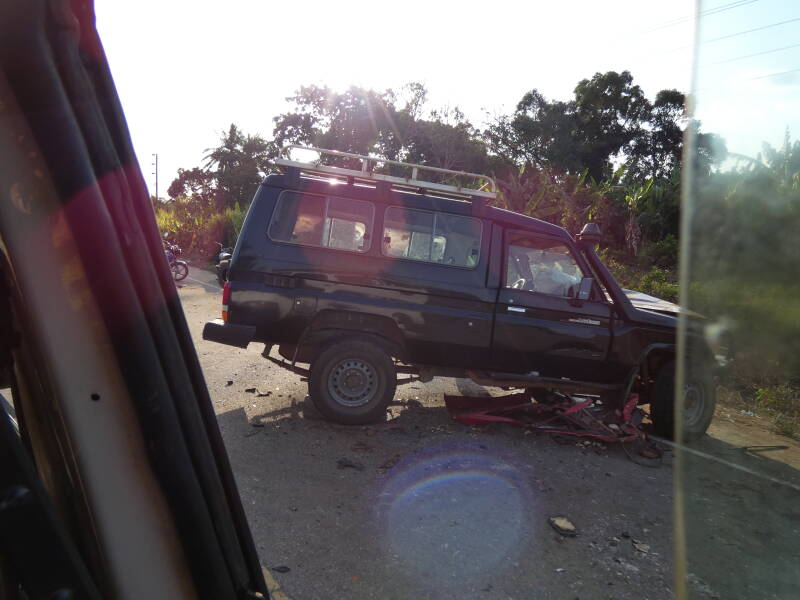
Nasty accident despite light traffic
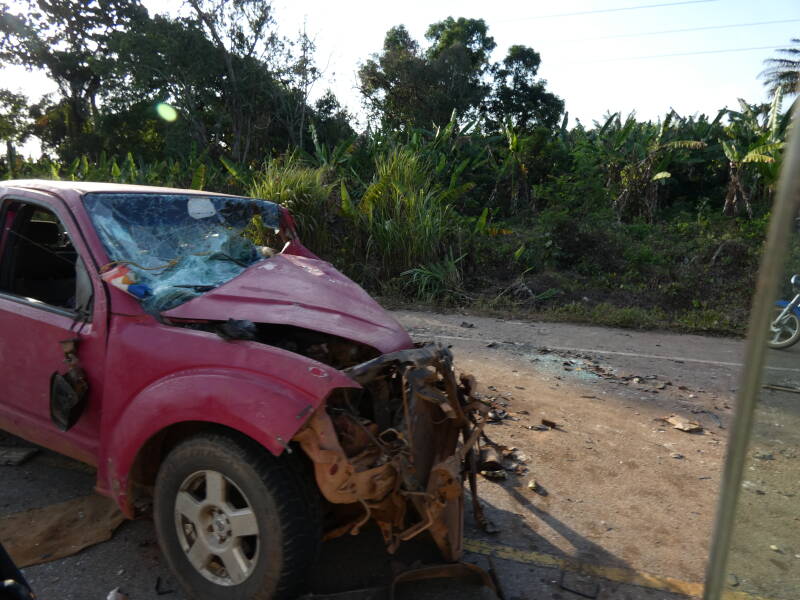
Nasty accident
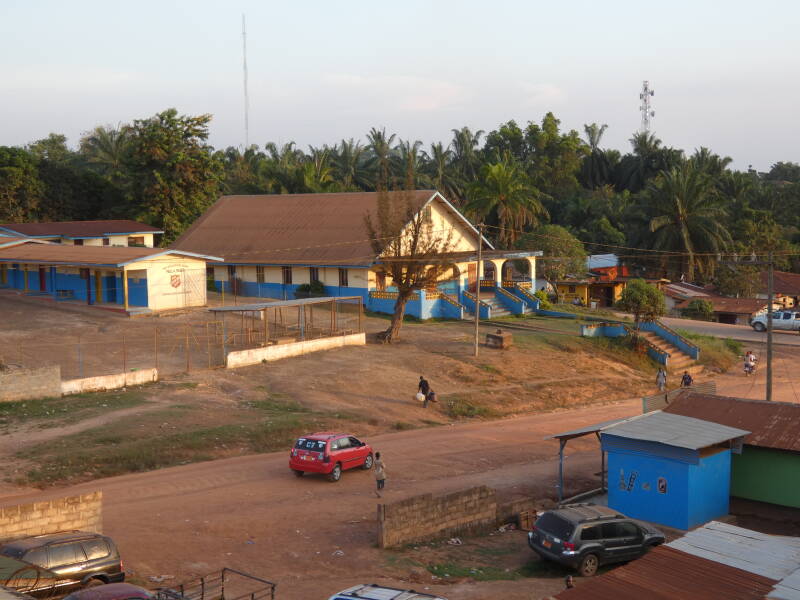
View from hotel window of local school
Create Your Own Website With Webador