Day 5 7th March - Slavery, pythons, then a voodoo ceremony

Photo above - voodoo ceremony in small rural village in Benin.
Slavery in West Africa
After breakfast, with the temperature already up to the usual 30c, we set off a couple of miles down the road to visit the so called ‘Gate of no return’. This ‘slave gate’ marks the point where local people left their motherland and were taken across the sea as slaves. The monument was built quite recently by the government to try and help educate the population about what happened here 300 years ago, as the facts were getting lost in history.
The gate lies at the end of the ‘slave road’, which the slaves were matched down having been sold to their new owners. The slavers in this area were Portuguese, Dutch, French, Danish and English, and they all had forts in the town of Ouidah, where they kept slaves until the ships came to take them. All the forts except the Portuguese one have now been destroyed.
Manual production of salt
We then left the gate and drove a short distance up the slave road and stopped at a small community area where they were extracting salt from the surrounding marshland. This involves a filtering and boiling process, all done by hand. There was also a small voodoo worshipping hut, identifiable from the white flag flying over it.
On the death of a child in voodoo
From here we walked down a track to the rivers edge where we saw villagers loaded with laundry, which they were taking by canoe over to the village on the other side. One who was a voodoo follower was carrying two wooden dolls in a pouch across her belly. You only see this in Benin and Togo. It symbolises her two children who died.
On the death of a child, the mother goes to a voodoo priest with a small wooden doll representing the child, and blesses it. This means that the doll has the child’s soul in it. The mother then treats the dolls like her own children, giving them food, bathing them etc and has to carry them with her every day, for the rest of her life.
More reminders of slavery in West Africa
A bit further along the slave road we stopped at a slavery museum, unfortunately it was closed due to renovation. There was a voodoo temple there, and a sacred tree that followers have to walk around anticlockwise.
Next we stopped at the former sight of the main slave market in the area, which is now a large open square. There is however a large multi storey house still there the belonged to the former slave master, and which is still occupied by his relations, who all have good government jobs.
The python god
In the town of Ouidah we visited the python temple, where snakes are venerated as representations of gods. Those who wished to could, after having cleansed their hands in sacred water, hold a python or two, which was an offer I could not refuse.
We then walked around Ouidah, both old and new town, observing the colonial buildings, Portuguese Fort, and a Christian Basilica.
The journey west continues
Following this, it was nice to go into a local air conditioned cafe and have some lunch. After lunch we re joined the westbound international highway that runs from Lagos in Nigeria to Abidjan in Ivory Coast. It is a nicely surfaced dual carriageway which runs east west through five countries. For the first few miles we passed through a continual run of little villages, and at each one traffic was slowed by speed bumps. Then we started to pass through grassland with small trees and some cultivated lands, so the speed bumps disappeared and the traffic thinned out, and we made good time. There were continual tempting glimpses of dirt tracks off to the side that led to numerous little local villages it would have been nice to explore.
What is voodoo
At about 3pm we reached our beach side hotel at Grand Popo, close to the border with Togo. We chilled here for an hour and a half before leaving on the bus to catch a boat up the local river to see a performance of the Zangbeto dancing masks, one of the region’s secret voodoo societies.
Voodoo is a complex and intricate way of seeing of the world, with literally hundreds of different gods responsible for various areas of daily life - some are benevolent, some less so, and in order to communicate with them and ask for favours local people will seek the assistance of followers, or adepts. There are numerous voodoo temples scattered around the coastal regions of both Benin and Togo, each headed by a priest who for a suitable donation will intercede on your behalf.
Sacrifice and blood are important within voodoo rituals, and any ceremony worth its salt is likely to involve a chicken being killed, its blood spilled onto a shrine in order to seal the pact. One can also see fetishes dotted around villages - these are inanimate objects such as rocks or trees in which a spirit is believed to reside, often covered in candle wax, feathers and blood where sacrifices have been made.
An amazing voodoo experience in a rural village
We caught a small boat just up the road from the hotel, and cruised fives minutes up the River Mono to a small village. As we got off the boat, we could hear drumming and chanting. We walked over to a dusty square in front of a concrete building that had a voodoo deity built in to the wall.
We gathered around the square, along with a lot of locals and kids to watch the ceremony unfold. There are three elements basically. The drummers keeping up a continuous rhythm, a group of singers and dancers, and then in the main square the ceremony, which consists of a guy in dreads doing a kind of whirling dervish dance, and a series of coloured straw triangles led by a spiritual leader which move around seemingly under some supernatural power. From time to time the triangles stop, and are lifted up to show that there is nothing under them that could have been propelling them. Then they are put back down and off they go again!
The village kids were really friendly, and one little girl insisted on sitting with me, and then when we went for a walk afterwards through the village, she wanted to hold my hand all the way.
We then caught the boat back and returned to our hotel. Tomorrow we cross our first border into Togo
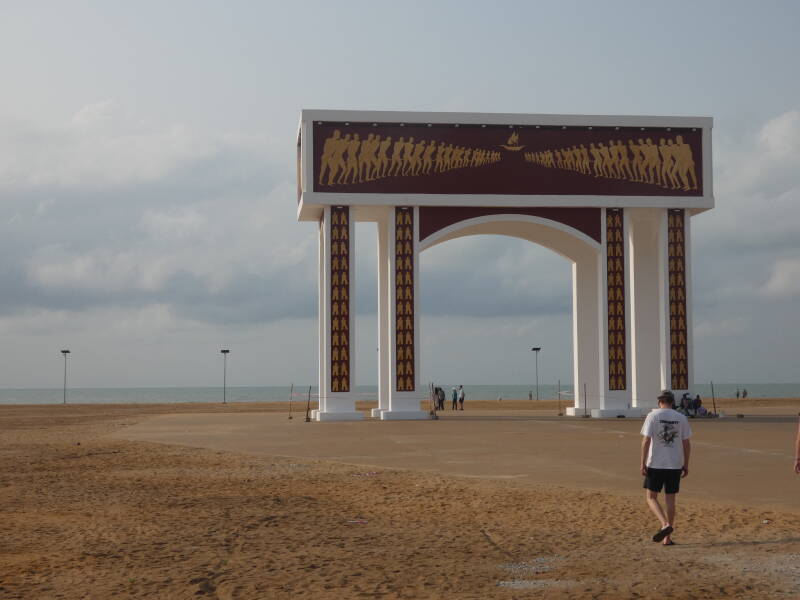
Slave gate, Ouidah
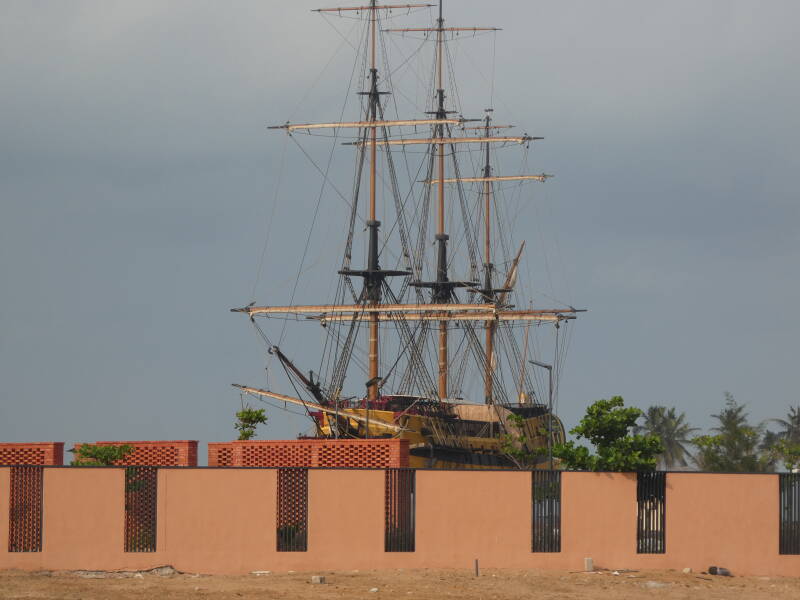
Replica of the last slave ship to leave Ouidah
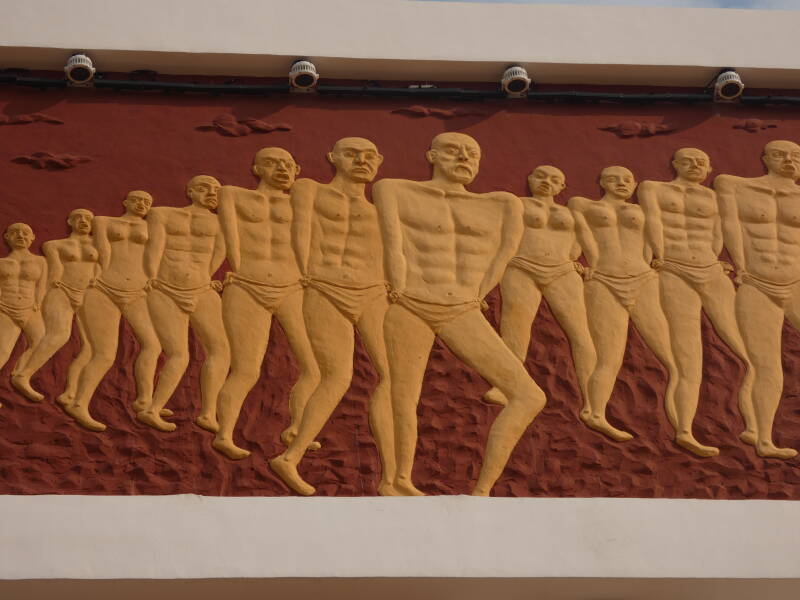
Slave gate art
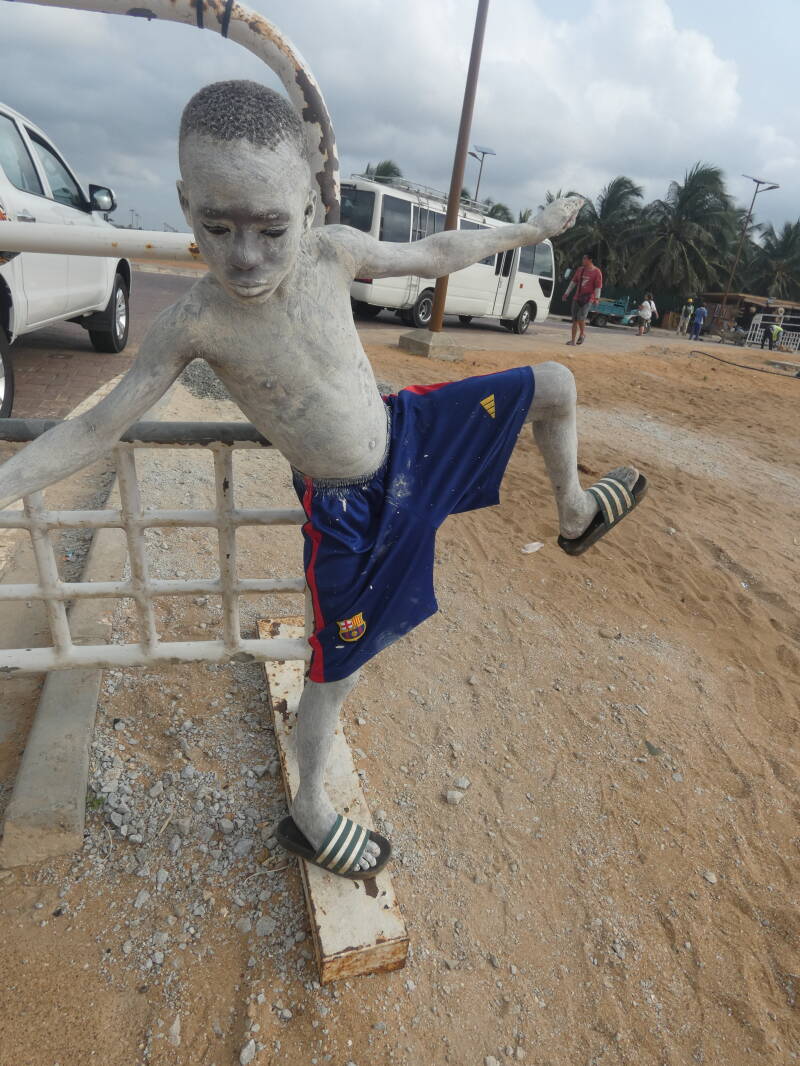
Voodoo kid playing statues
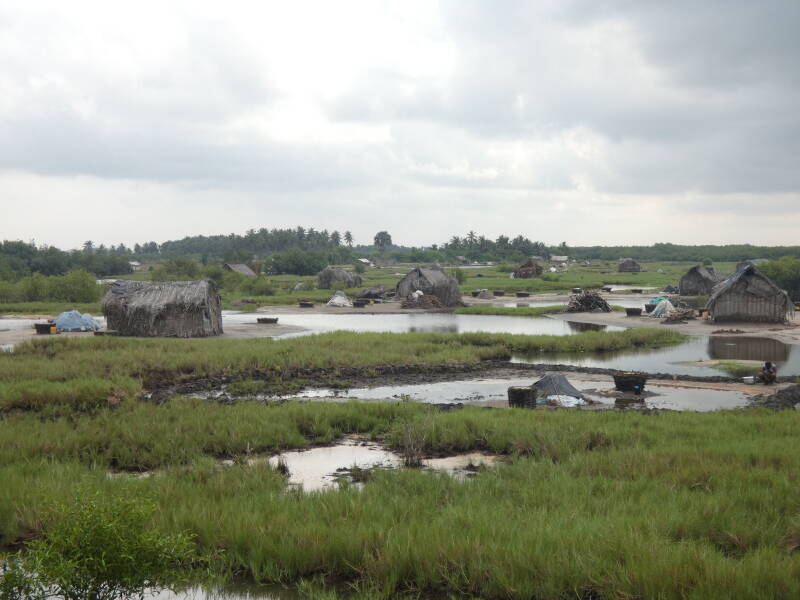
Marshy land where they extract salt
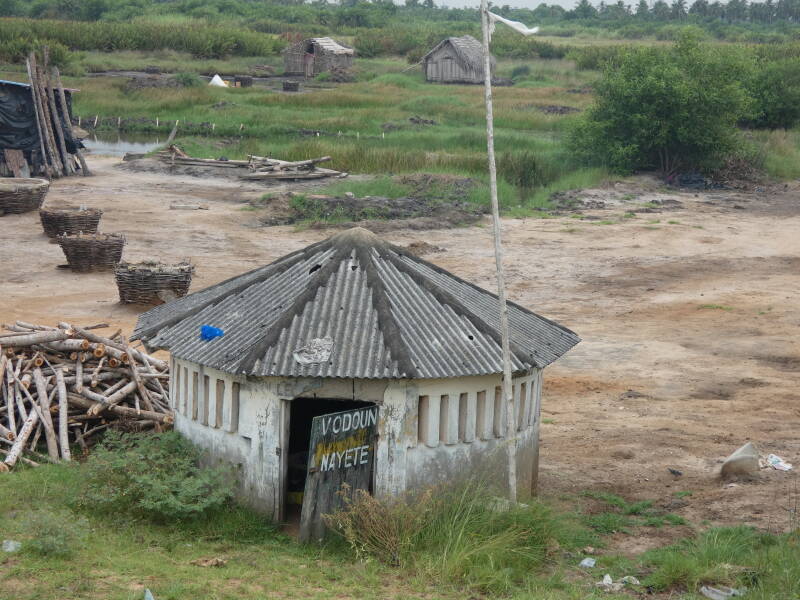
Voodoo hut indicated by white flag
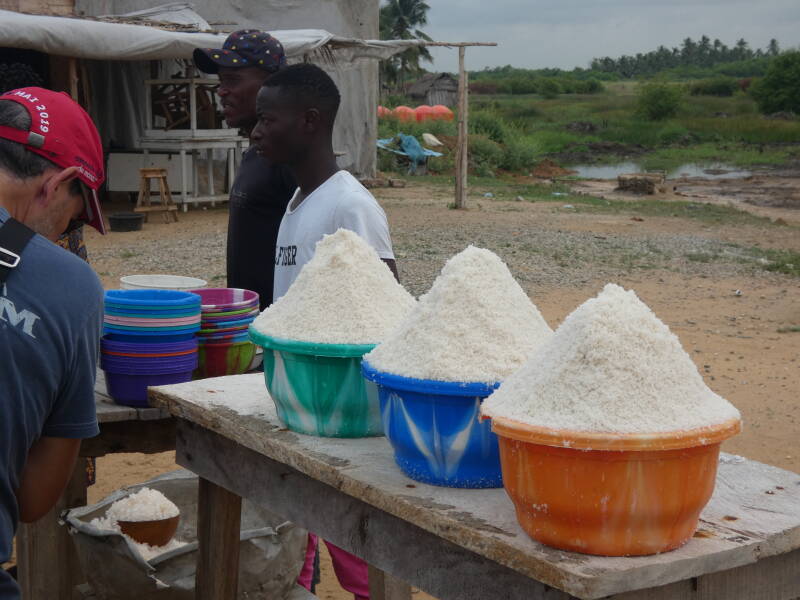
Salt extracted
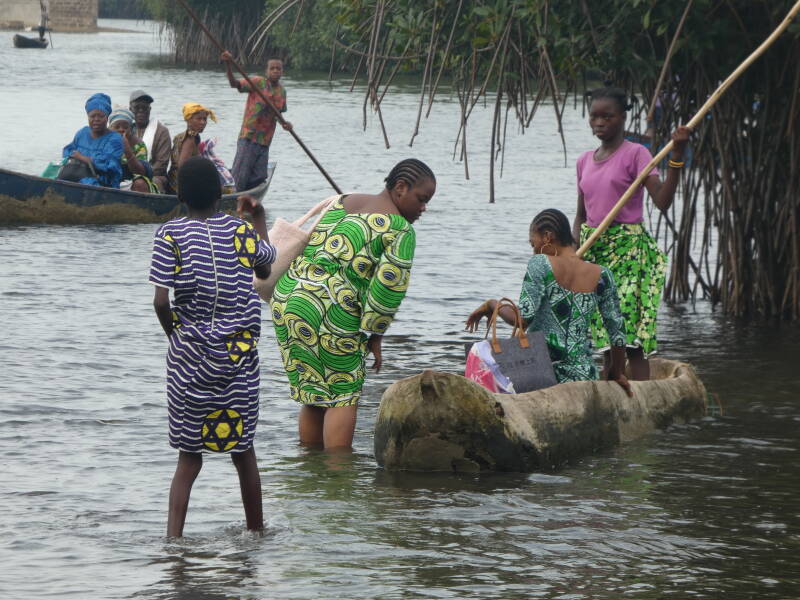
Taking laundry to village on other side of river
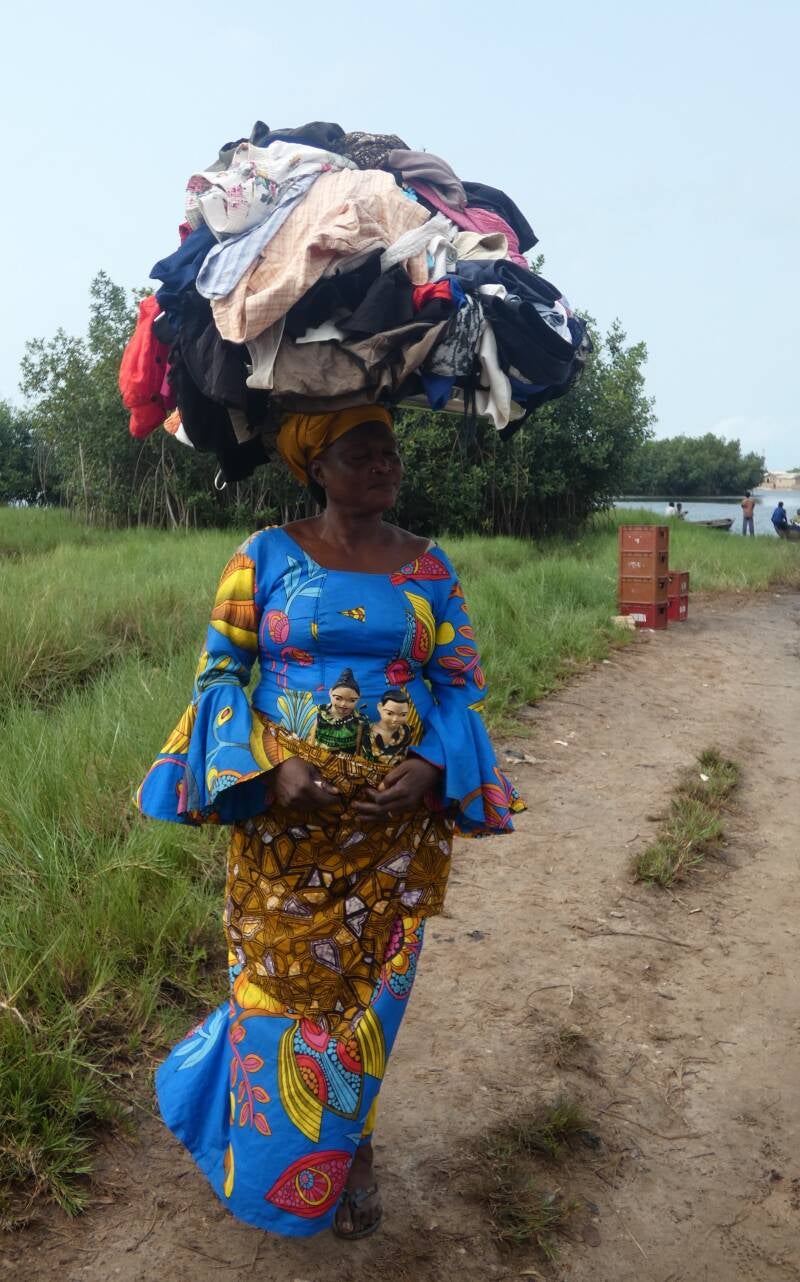
Voodoo follower with laundry and dolls representing dead children
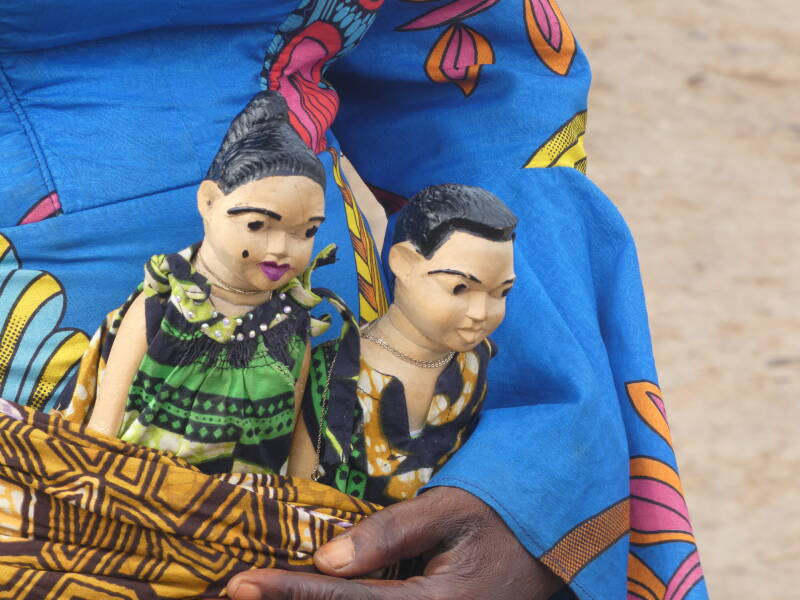
Voodoo dolls
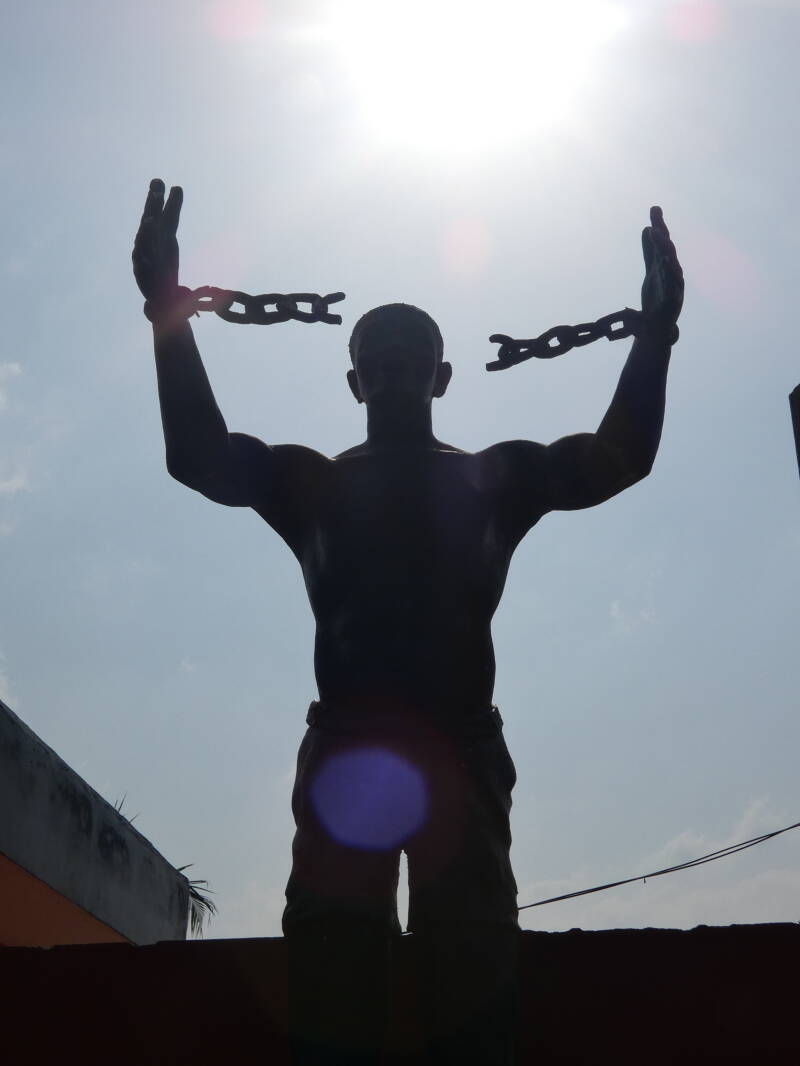
Slavery statue Ouidah
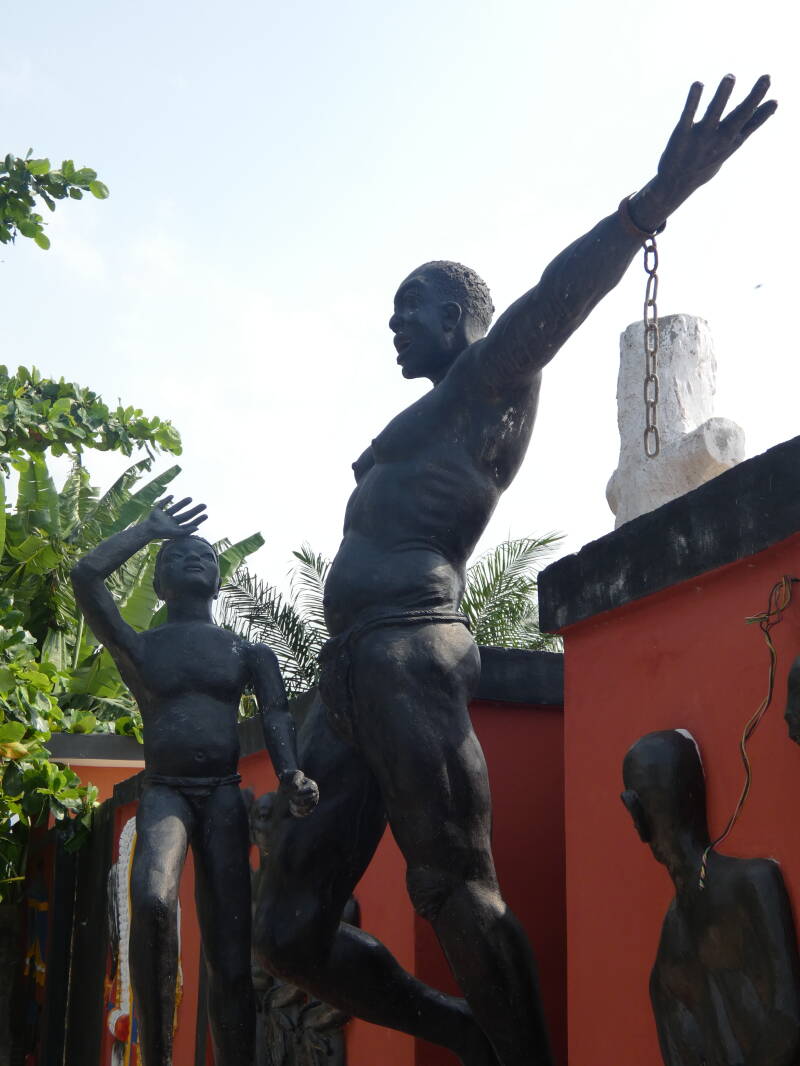
Slavery statue Ouidah
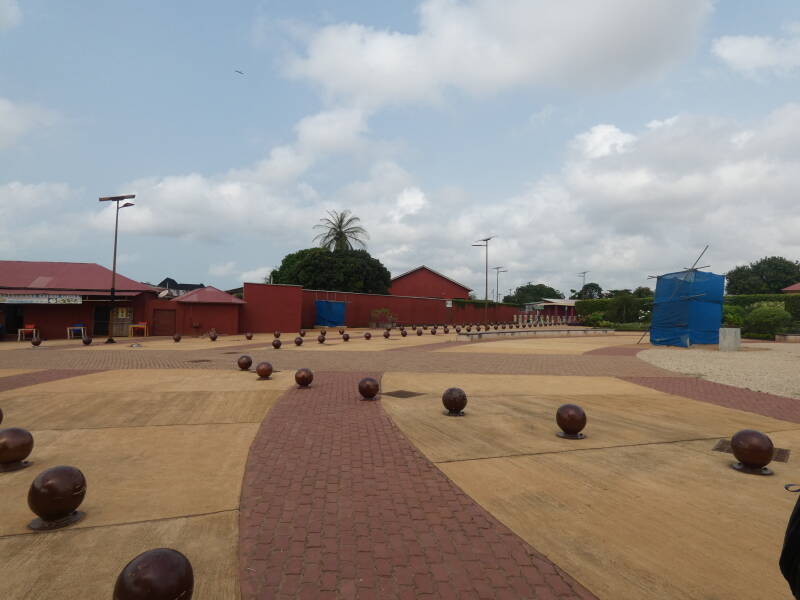
Site of old slave market, now a square
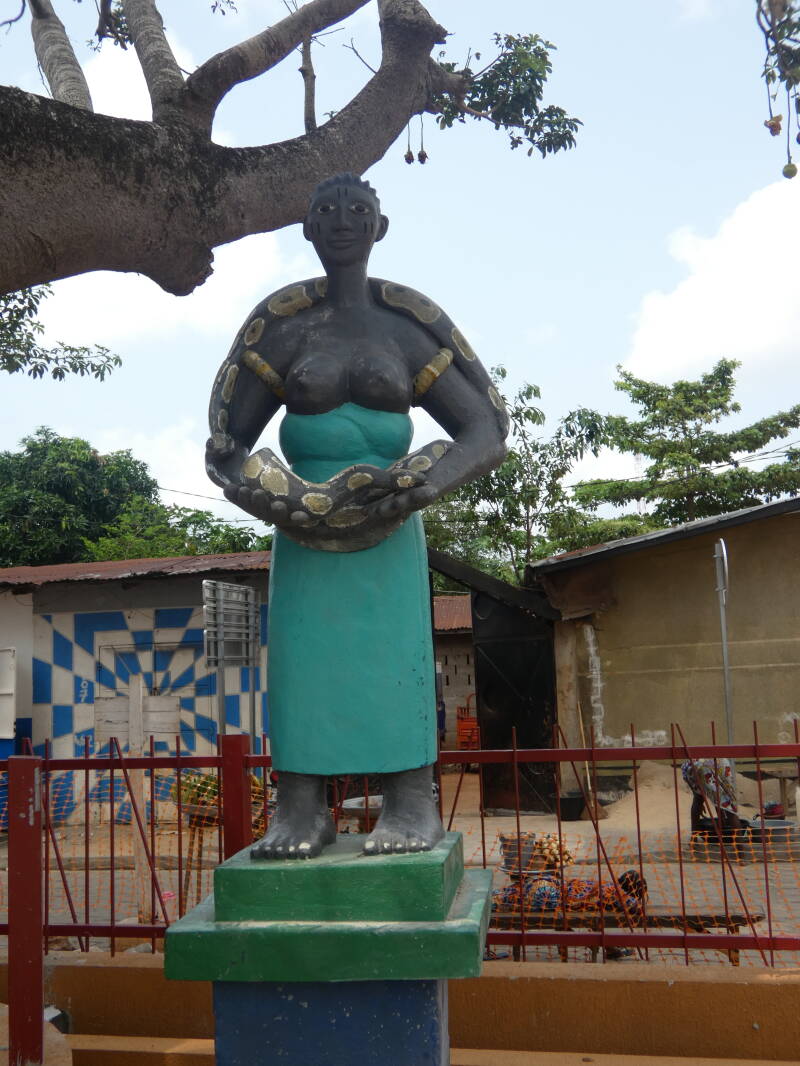
Voodoo statue
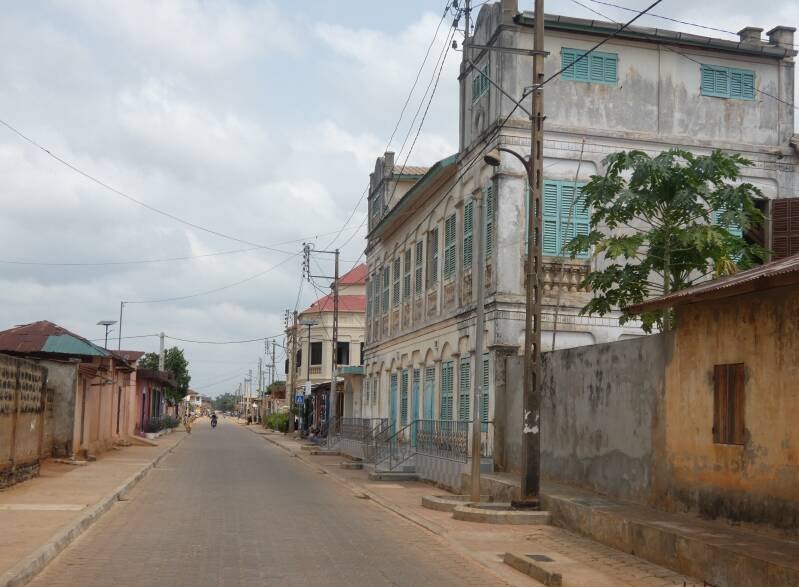
Ouidah colonial building
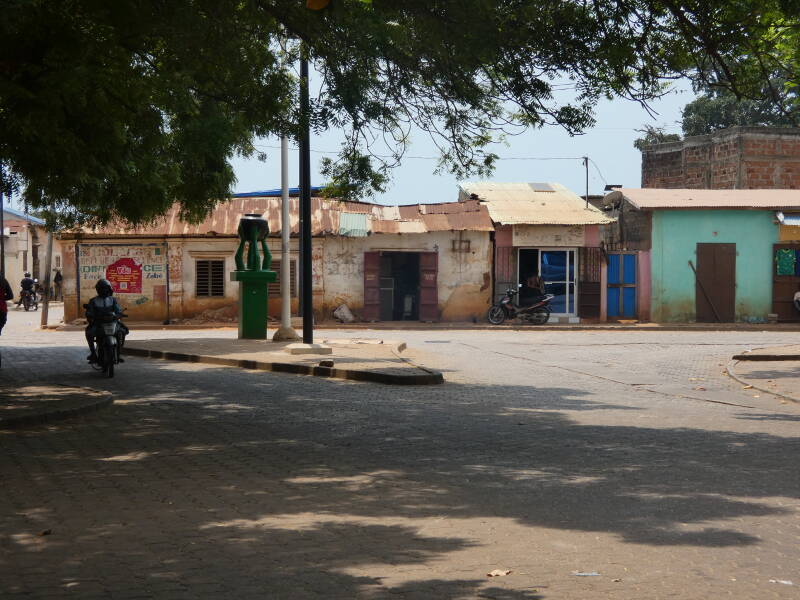
Ouidah square

The boatman's daughter on the boat with us to the voodoo ceremony
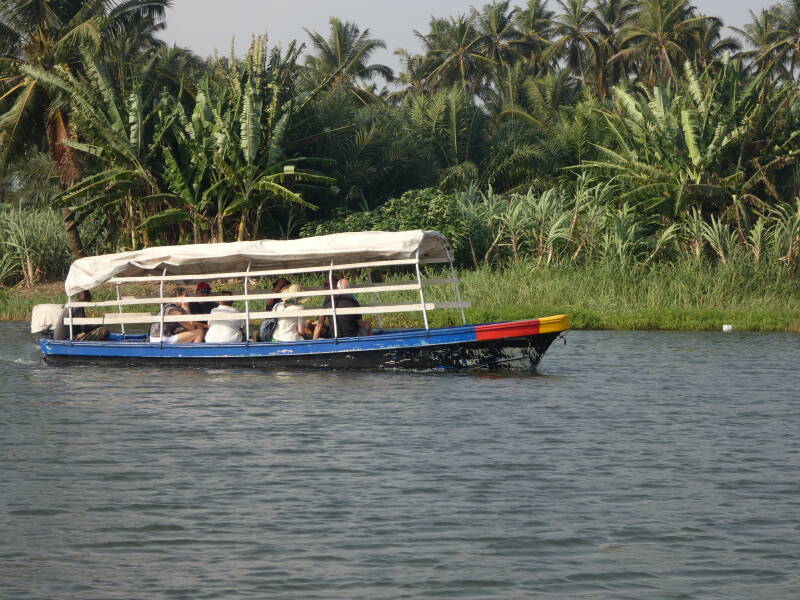
Boat to the ceremony
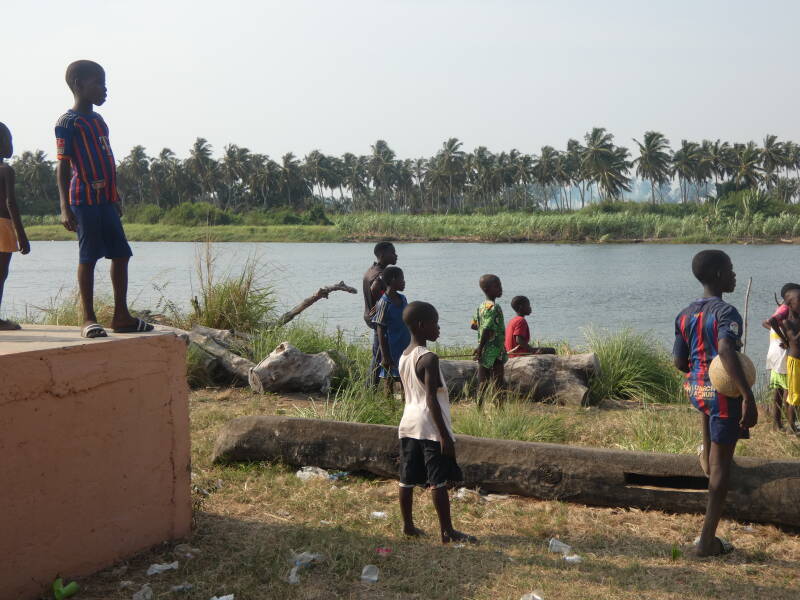
Kids at the village waiting for the boat
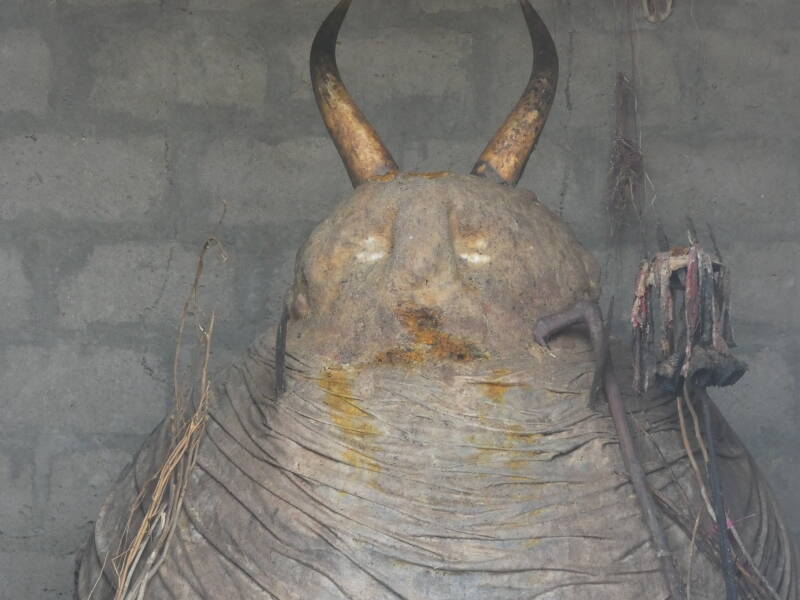
Voodoo deity
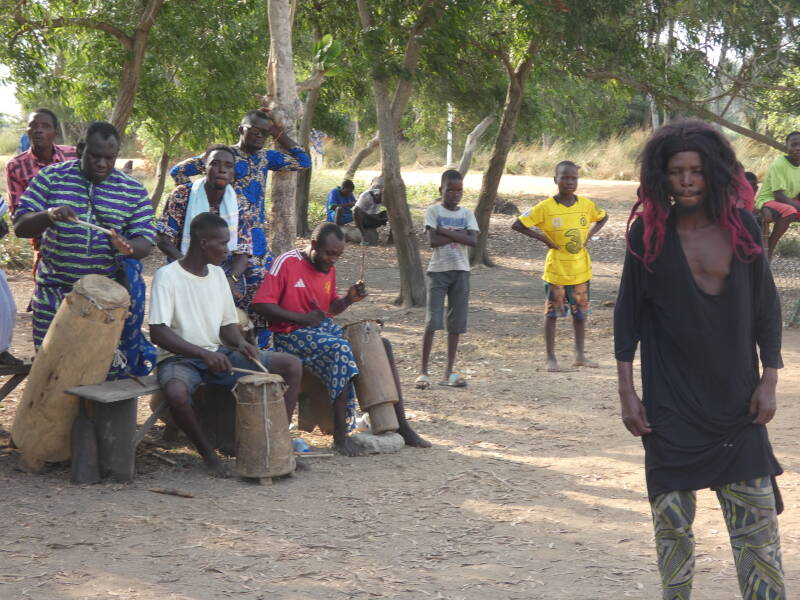
Percussionists at the ceremony
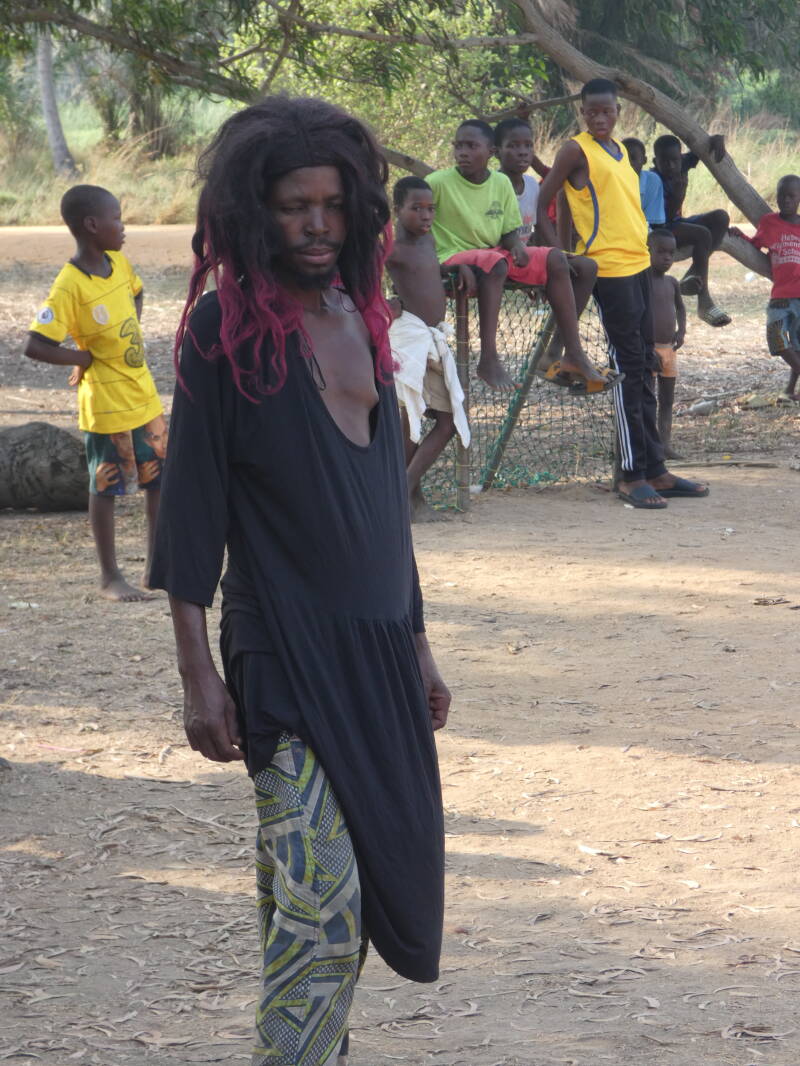
Dancer at the ceremony
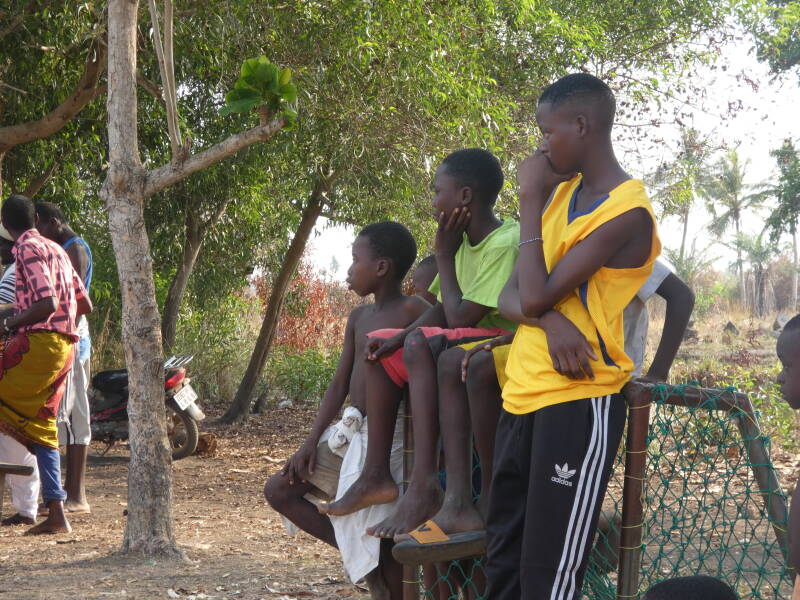
Local kids watching on
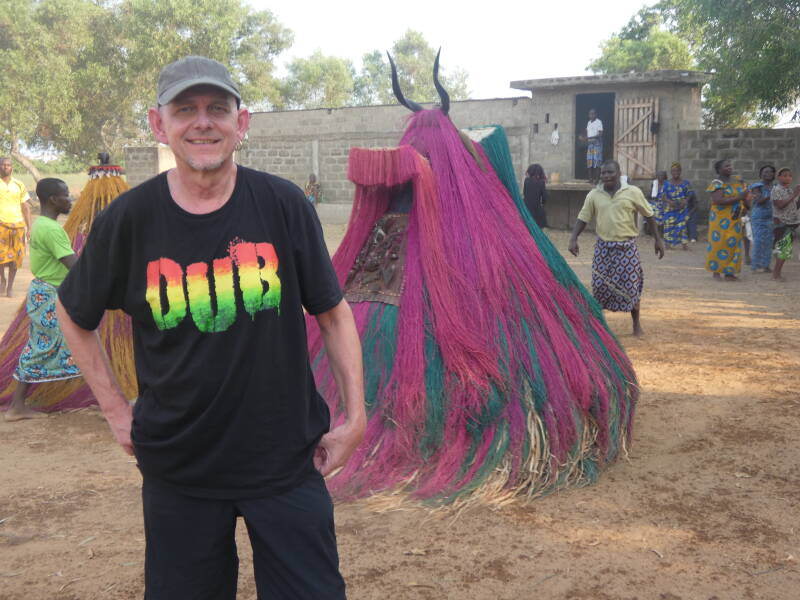
Me with the whirling straw triangles
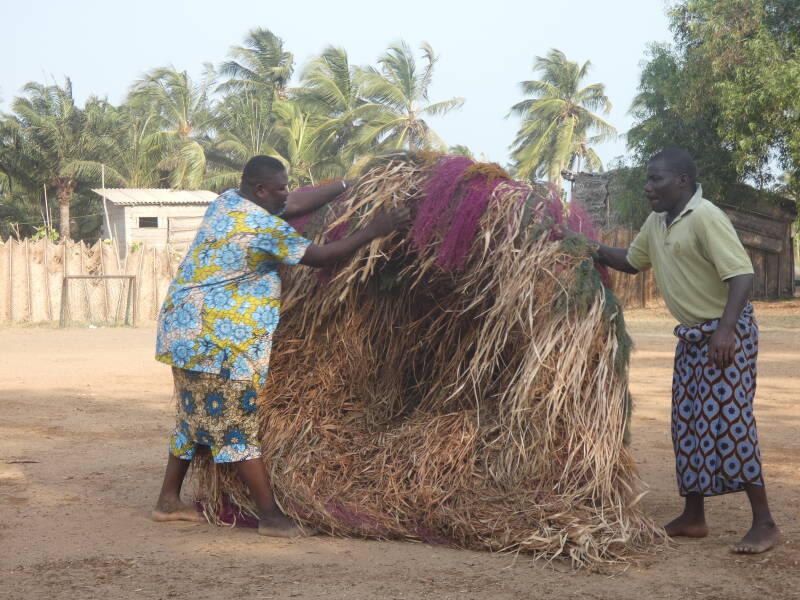
Tipping it over to show nothing under there making it move
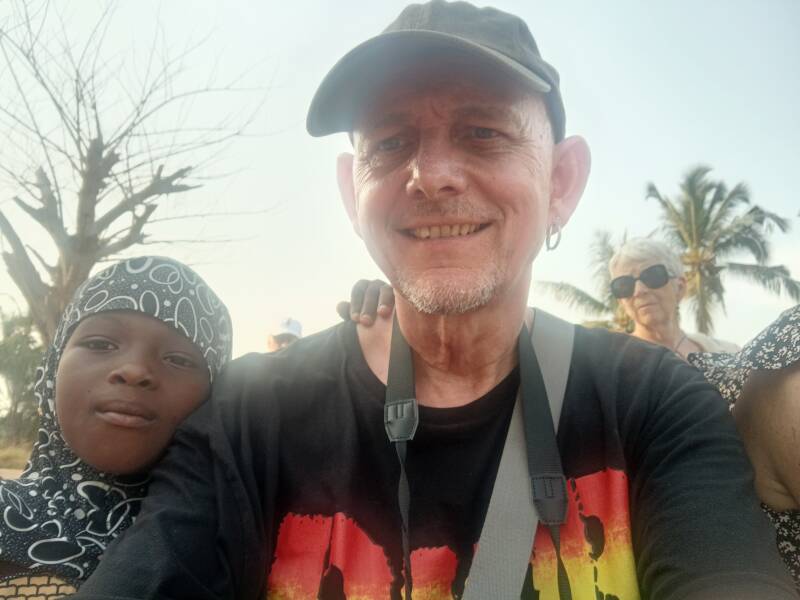
Me and boatman's daughter number two
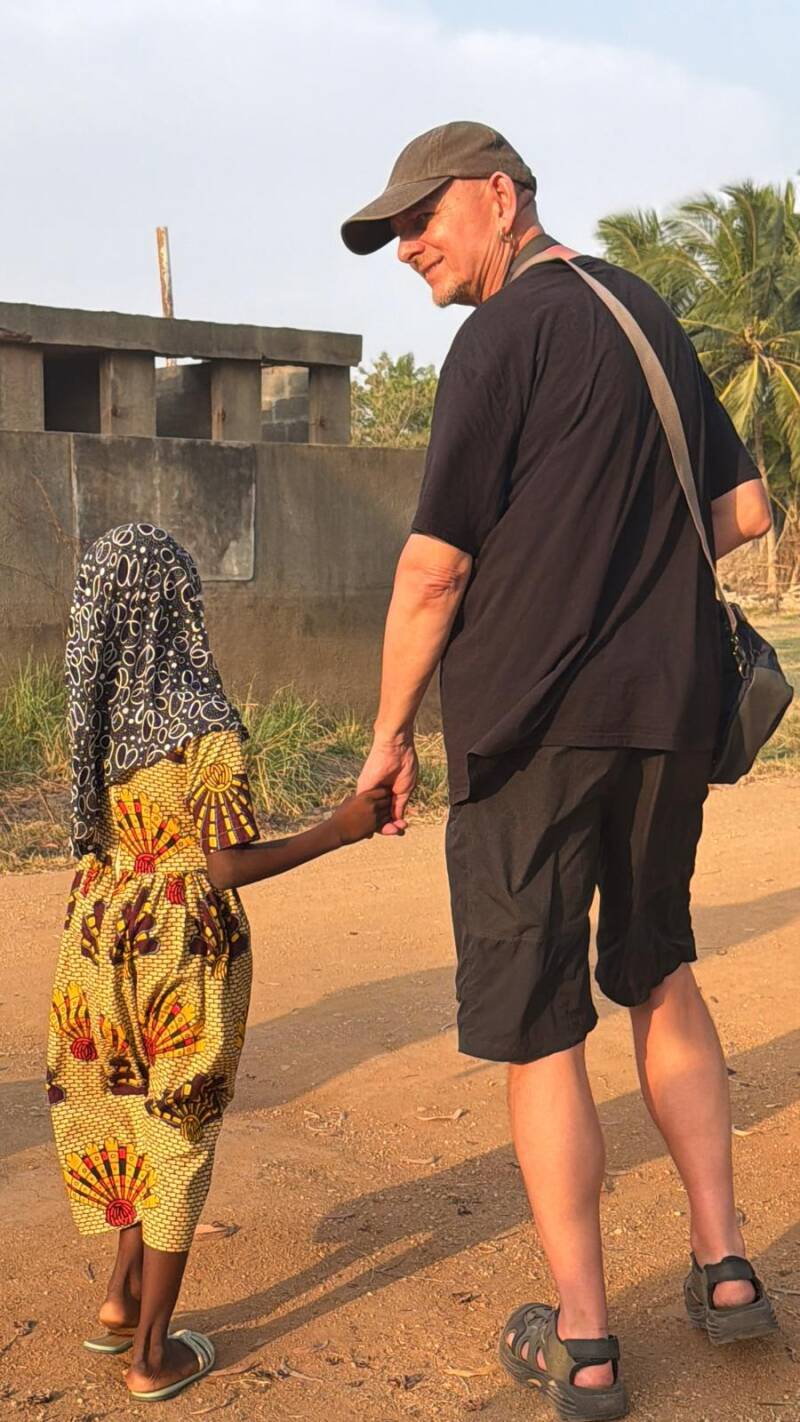
Me and boatman's daughter number two
Create Your Own Website With Webador