Day 27 - 29th March Long drive across the border into Guinea Bissau

Photo above - a truck hauls itself up the dusty mountain road, as we head down. More Photos below
The long journey begins
6.30am start !! Today is the longest driving day today, starting in the Fouta Djalon region of Guinea, finishing in the Malinke region of Guinea Bissau. It will also be the longest day in terms of time on the road because of the road conditions, and the border crossing.
We have purchased extra fuel which are carrying in jerry cans, as there are not many petrol stations on the route. We had to pull up after half an hour's as our driver had diarrhoea. He stopped at a random house and used an outdoor loo he had spotted from the road!!
The roads to start with were a nice surprise with new tarmac, only interrupted by speed bumps through the villages. Being so early, it was interesting to see life starting to wake up in the villages, with people setting up stalls, waiting at the side of the road to be picked up with all their produce. The road was slowly taking us down out of the mountains. The landscape was quite arid, but with quite a few trees, and a few spots where the land had been irrigated and cultivated.
Road 2 4WD 0
Just as we started to descend a steep hairpin stretch of road, the nice tarmac finished and the bumpy red dirt started again. After we got through this stretch the damage was fuel leaking from the bottom of one car, and a flat tyre on another. After a few discussions and looking around the vehicles we pressed on.
A few miles down the road, we came to a large village, where we changed the deflated tyre, and swapped over into another car, due to the fuel leak. This was only possible because last night we had had an unexpected visit by the guy who runs the trip company out here, who had his own personal car, and so had some space. He is travelling on to Senegal today.
Final stop in Guinea
We passed through some very untidy and poor looking villages which turned out to be temporary accommodation for people doing illegal mining near there. We also saw lots of fields full of what appeared to be rocks, but turned out to be termite mounds.
At a large town we stopped to get some lunch. It had the feel of a scruffy border town with money changers, trucks parked up etc
Dusty road to the border
After lunch we set off again, and for the next 2 hours and 42 km we travelled down an almost impossible road towards the border. It was a dirt track which was badly cut up from traffic during the last rainy season.
Half way along we stopped to have a quick look at a nice looking village with traditional round buts. Nearing the border, we came across a big Sunday market, with people from villages from miles around.
Passing through the border
At 2.30pm we arrived at the border, which consisted of two small stone buildings, a flag, lots of dust, and a piece of string across the road.
We got our visas and passport stamped out of Guinea, then drove about half a mile down a no mans land dust track, and arrived at the Guinea Bissau border control. Here the one small border building, and string across the road firms the start of a very short border town high street that runs for about 100 yards before the dirt road starts up again. Lots of stamping of passports, filling out of forms, and standing around in 38c. We had to pay about 100 dollars for the visa. Then the border control said we had to have an armed escort to the first major town 3 hours drive down a dusty bumpy road, which will cost 50 dollars.
About Guinea Bissau
Guinea-Bissau, officially the Republic of Guinea-Bissau, is a country that covers 36,125 square kilometres (13,948 sq mi) with an estimated population of 2,080,000. It borders Senegal to its north and Guinea to its southeast.
There is currently a transitional president under a military junta, following a coup just 5 months ago. It is 46% Islam, 30% traditional, and 19% Christian. The official language is Portuguese, but at least 16 other languages are spoken, primarily in this area, Creole.
First hours in Guinea Bissau
We finally left the border at 5pm, in another set of 4wd cars. You are not allowed to drive foreign cars across the border. First impressions are there are the same old dusty roads, people look poor, there is arid scenery, rough bush with only small trees. Some brick built buildings could be seen, but mainly wooden huts. Did see a couple of small bits of wetland, and a large natural pool with kids swimming in it.
Also saw more pushbikes than we have been used to seeing. Also have seen a lot of donkeys since crossing the border, some wandering on their own, others pulling carts, usually driven by small boys. The children and women in the last bit of Guinea, at the border, and passing on the road in Guinea Bissau looked very wary of us, and even a bit scared. I don't speak any Portuguese so it is tricky to say something reassuring.
There seemed to be a football match going on in every village, all played on a flat dusty piece of ground with goalposts of bamboo. Some boys, some teenagers and older, and some girls.
Arrival at our destination
We finally got to Gabu, where are staying overnight at 7.30pm. A long tiring hot dusty day. When we stop in the evening we are usually covered in red dust. The country is very poor, and we are staying in the ‘best’ hotel, owned by a minister i believe. It seemed to be run by teenagers. The keys did not have numbers on them The air conditioning was on but did not seem to work. There is no power at night in this town, despite it being the second largest city, but the hotel has a generator.
Anyway, tomorrow, we hope to see a traditional Griot performance, and then drive North west to the capital Bissau on the coast.

View across valley from dusty mountain road
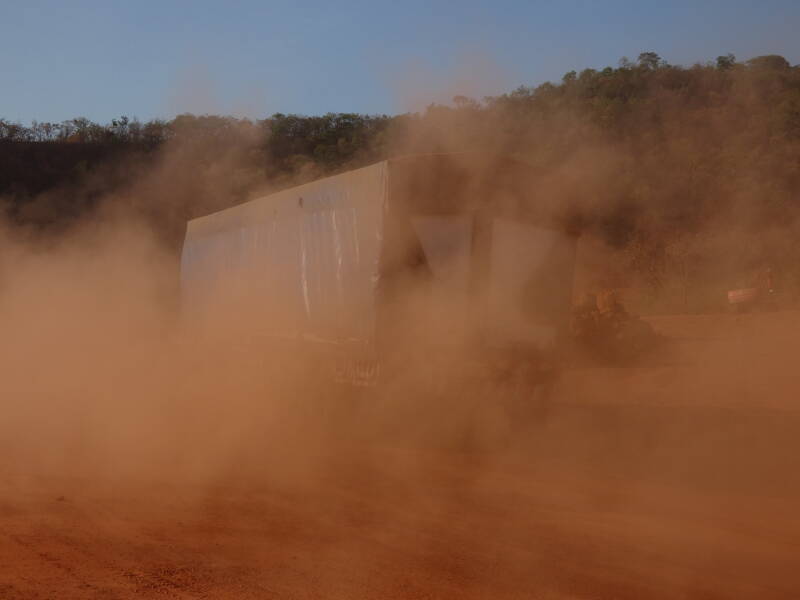
Shat it looks like when you are following a vehicle on the dusty roads
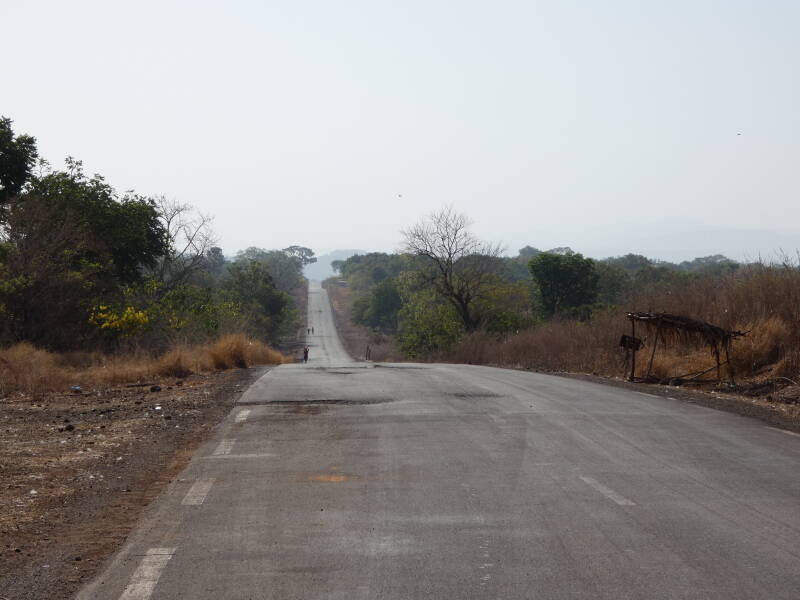
A slightly better piece of road, but if you look closely there are large holes all along it which are very deep
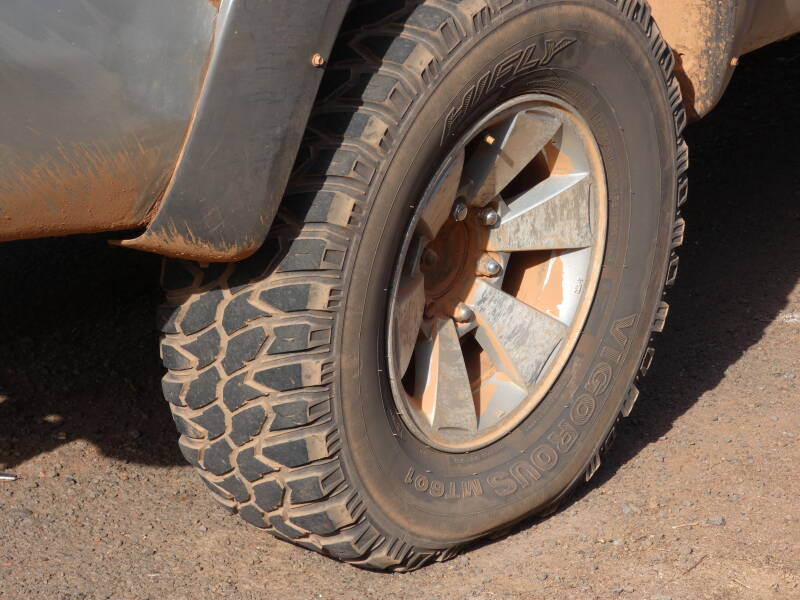
Flat tyre that had to be changed at the next village
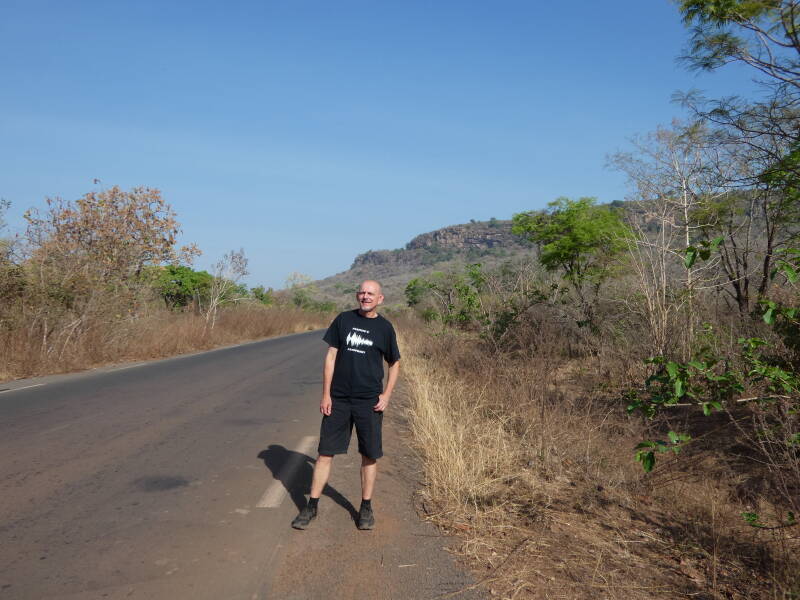
On the road in Guinea
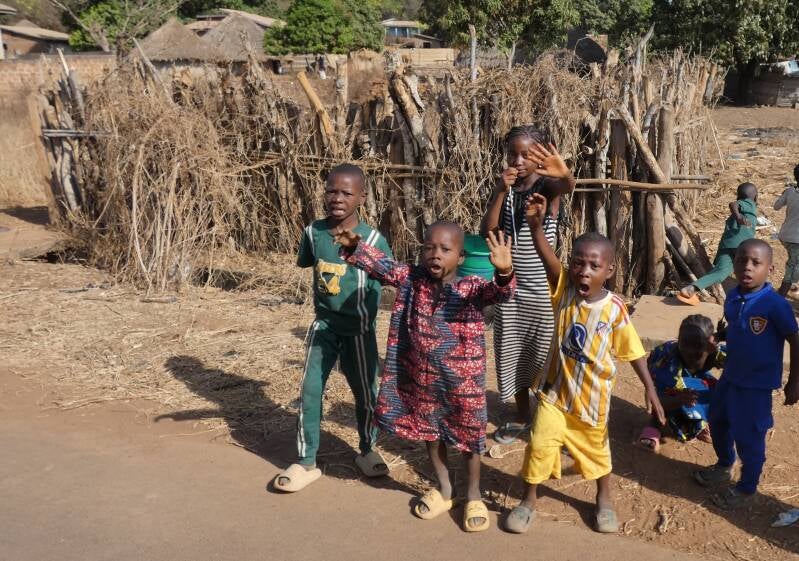
Kids scream and wave as you pass by on the road
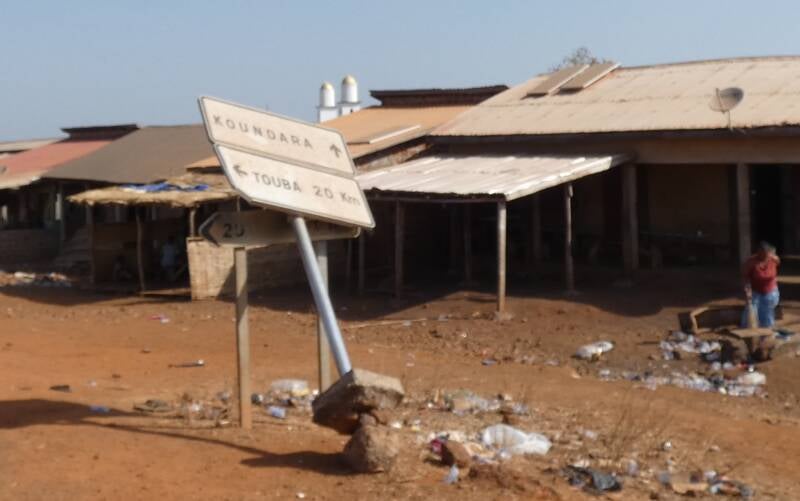
View at the side of the road showing the poverty
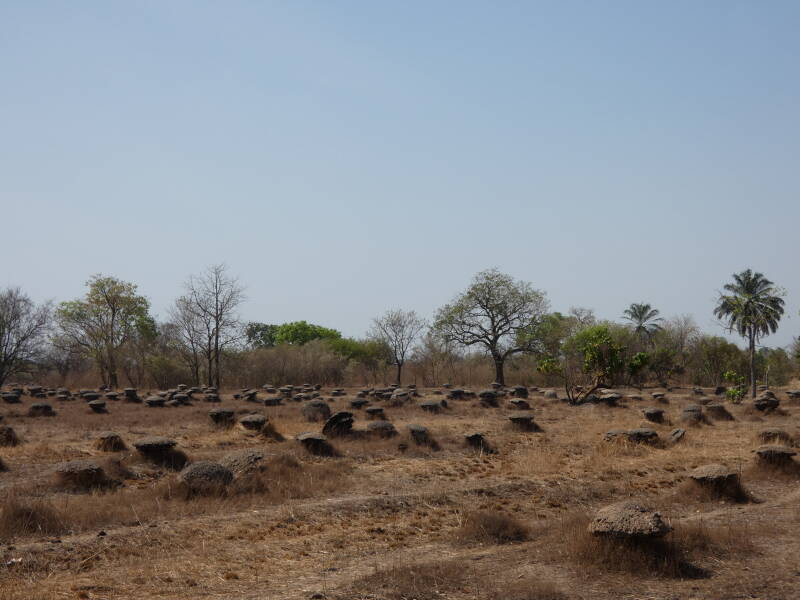
Termite mounds
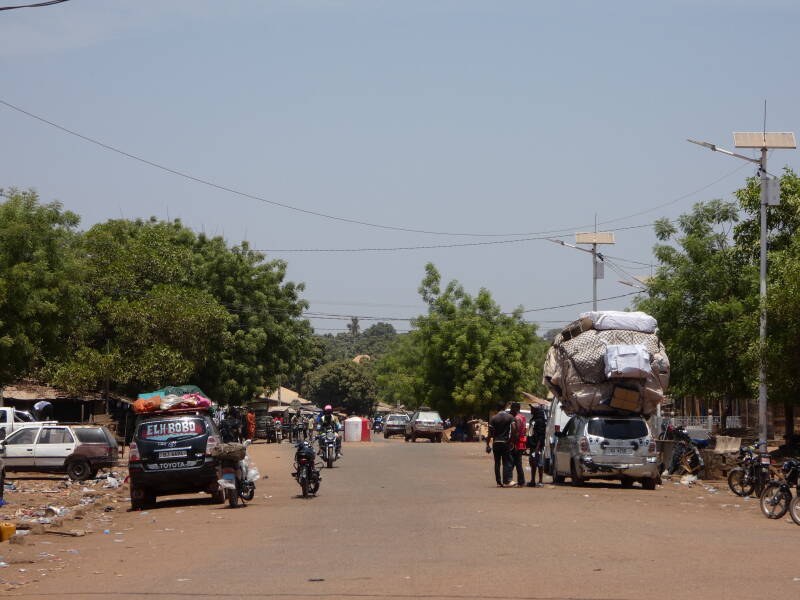
Typical town scene in Guinea
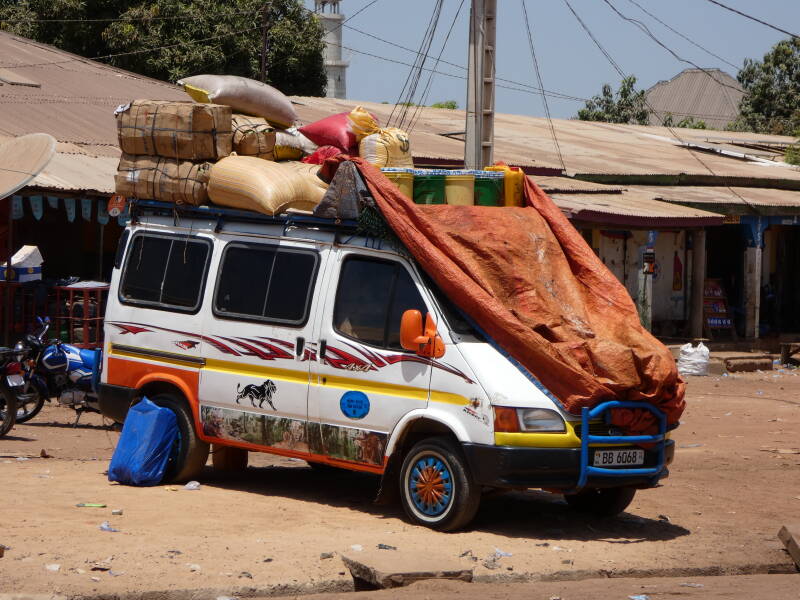
These minivans are used as taxis, sometimes with 30 people packed inside and even some outside on top of the luggage
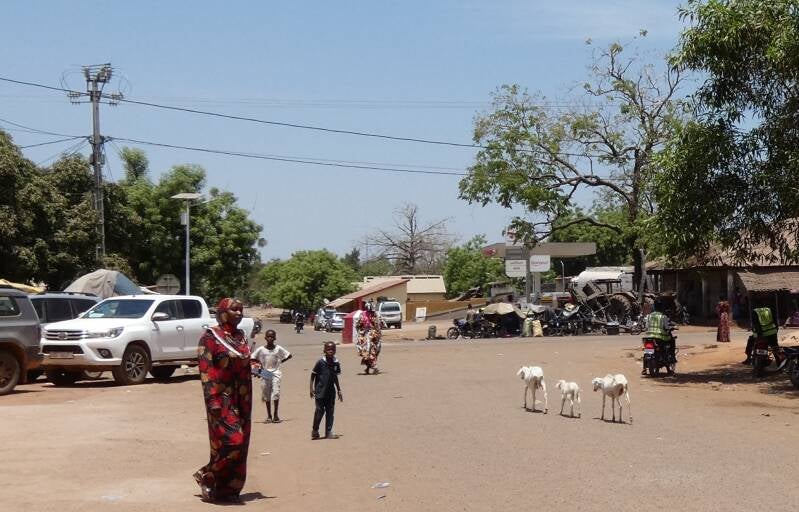
Guinea street scene
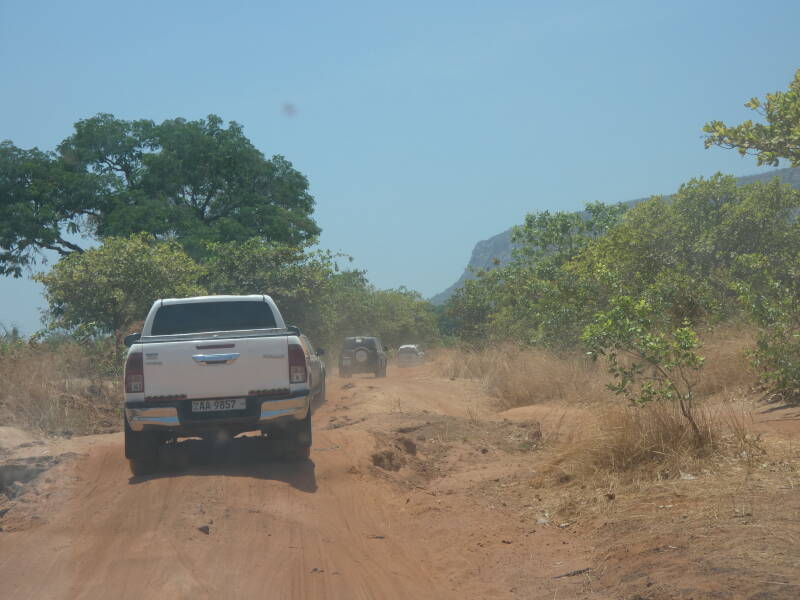
Bad road
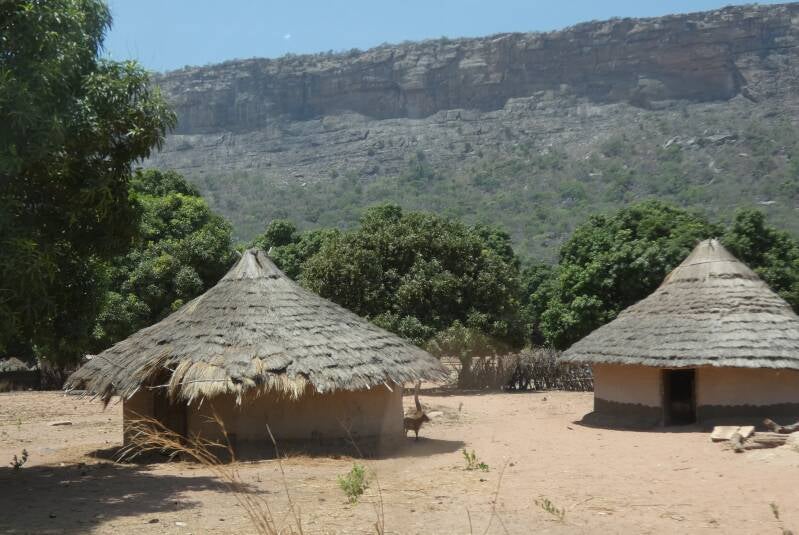
Lovely clean village with old style round huts on the road to the border
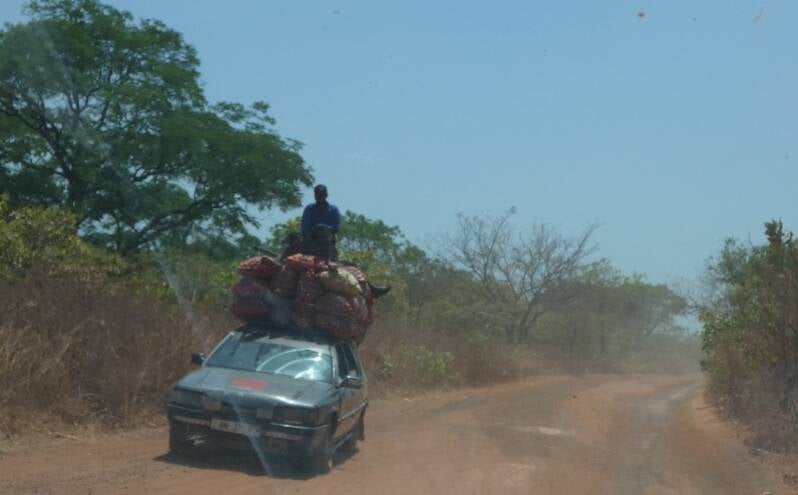
Road to the border
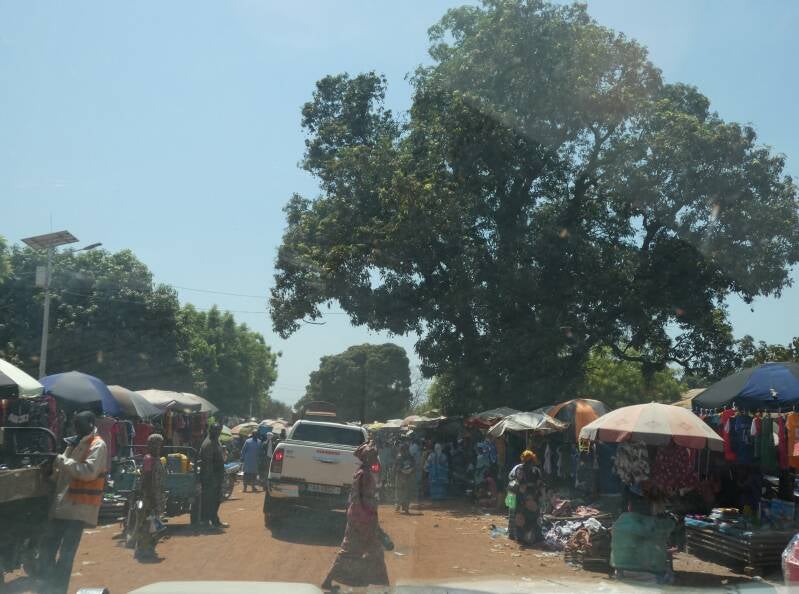
Sunday market

At the Sunday market
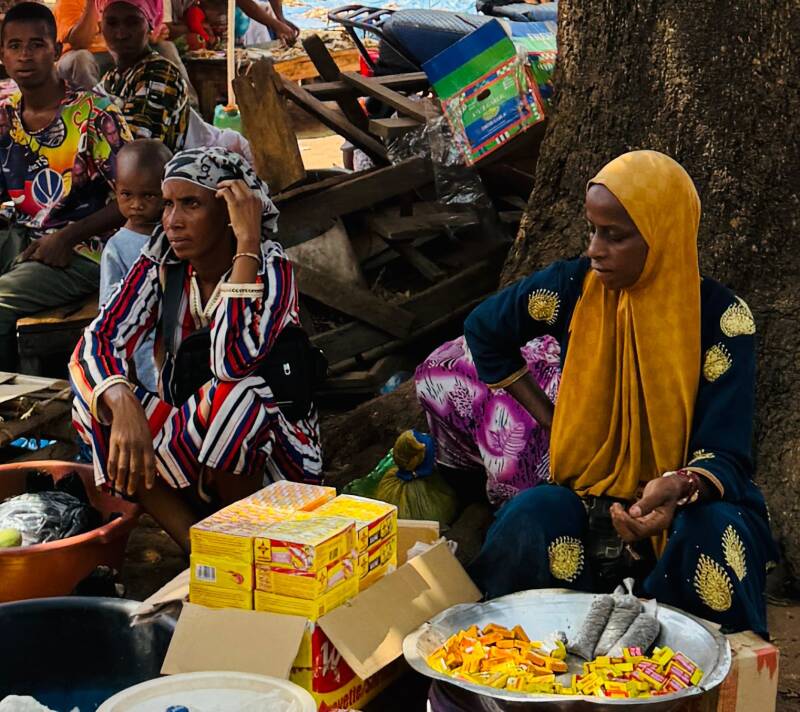
At the Sunday market
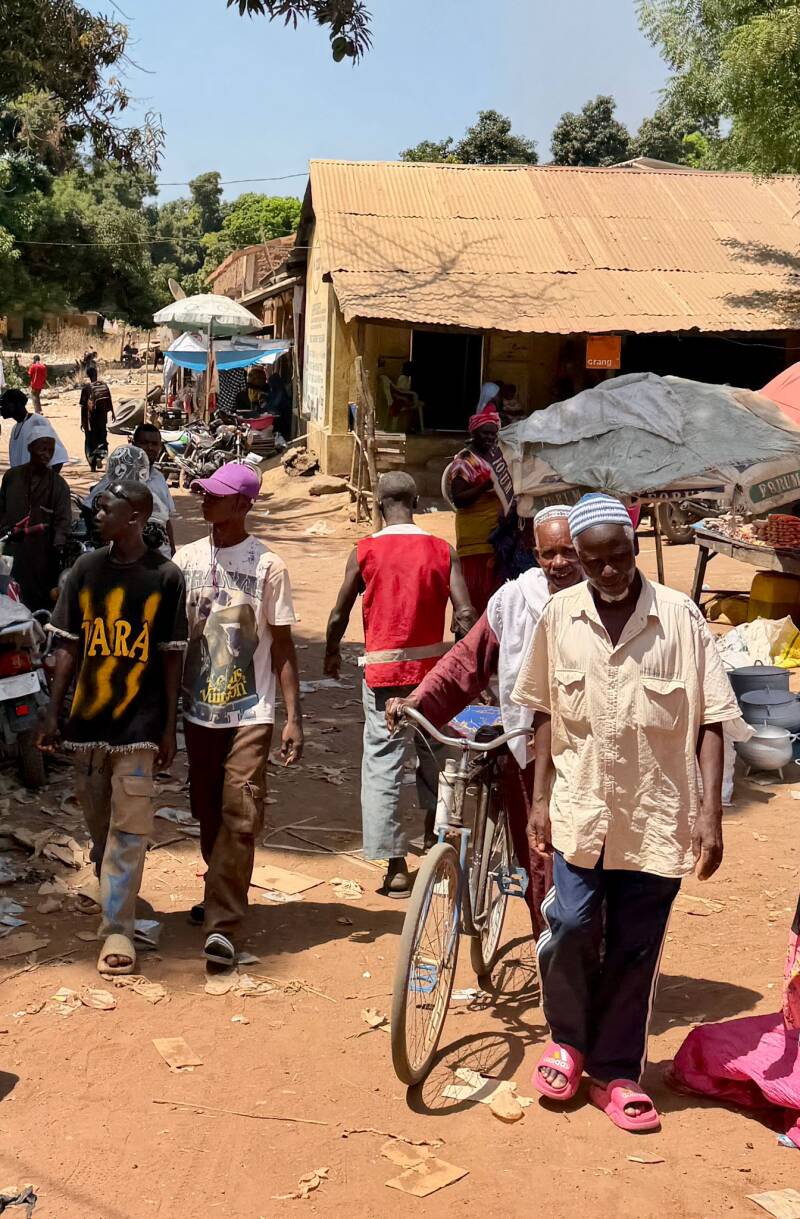
At the Sunday market
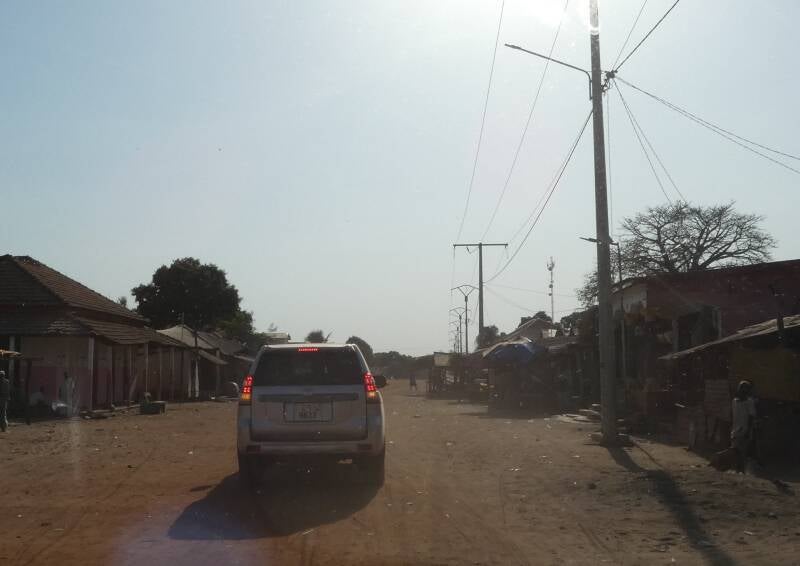
Driving into Guinea Bissau
Create Your Own Website With Webador