Day 7 9th March - A look around Lome, then across the border into Ghana

Photo above - Fishermen pulling in the day's catch on the beach at Lome, Togo. More photos below - a light photo day due to long drive and border crossing
Look around Lome
After breakfast, we set off to explore, Lome
Lome, Togo’s capital, is a vibrant city situated on the coast, sitting right on the international border with Ghana and with a population of 1.6 million. Slightly dishevelled, it is quite an atmospheric little city and is recovering from the civil disturbances suffered by the country in the 1990s, when following the end of the one party political system, and the introduction of a multi party system, the same family continued to gain re-election. There was eventually a coup. The city’s origins date back to the 18th century, when it was settled by the Ewe people, one of Togo’s largest ethnic groups.
We set off into the city proper, driving along the coast road, and along the beach where yesterday, which was Sunday, there were thousands of people sunbathing, picnicking, playing football, volleyball etc There are ruins of two docks in the sea here, one of stone that was German and one French made of iron.
We passed the original Togolese parliament building that is longer in use, and the current ministry of sport. Next up was the old Presidential palace, which was heavily damaged during the coup mentioned above.
Independence and monuments
Just around the corner is the Independence monument celebrating Togo’s independence on 27 April 1960. Next to this is the country ‘s tallest building, which has 32 floors. It is called the 2 February building. The story is, that in January 1974 there was a plane crash involving the existing president who was very unpopular. The populace believed he had been killed, but in fact he was the only survivor. He returned to the capital on 2 February and commissioned this building, and it was named to mark his return.
Another market
Next we walked through the Grand Marche or main market. As to be expected it was heaving with people buying cloth, food, electrical goods etc. as well as bikes cars and trucks trying to squeeze through the melee. There is quite a hard sell here, and it was sometimes hard to shake a seller off just by saying no. Several people attached themselves to us including a disabled guy from Berkina Faso who insisted on guiding us across busy junctions etc, and another guy who kept trying to tempt us in to his friend’s stalls.
Helping the local fishermen
Lome has a number of buildings which date from the German occupation, most noticeable of which is a rather bizarre looking 19th century Gothic style cathedral in the middle of the market, which looks rather out of place in a West African city. Coming out of the market down on the beach, we could see a group of fishermen pulling in the catch from the sea. We offered to help them. The rope is attached to the nets that are quite a long way out. They are therefore pulling the weight of the catch, plus dealing with the resistance of the water. For this reason, they have to pull as the waves are coming in. In-between waves you could feel the sea pulling back against the rope. It was hard work.
Crossing the border from Togo into Ghana
Next we went to a local cafe for a small lunch. There we met up with a money changer, who we used to exchange cash into Ghanaian currency, the Cedi. Then we set off for the two minutes drive to the Ghanaian border. Arriving at the border there was the usual melee of people, queues of trucks etc. Very few if any cars, but lots of foot passengers, most carrying goods on their heads. Lots of foot passengers do not have id cards, as it is not a legal requirement, so if they cross the border they need to give their details on a form and pay a fee.
Once we had gone through Togo customs which involved a form and some waiting, we arrived at the Ghana side where the process was super fast. They just checked our visas, took fingerprints and a photo, and then stamped the passport and we were through. They even had so called Immigration Ladies who are a hospitality service to help you through the process. Before we could drive off though, they did a couple of random bag checks.
About Ghana
Ghana is about the same size as the UK, but with half the population at 35 million. Apart from Togo, it also shares a border with Burkina Faso in the north, and Cote D’ivoire in the west, along with a fairly long Atlantic coast line. Officially the Republic of Ghana, it is a predominantly Christian country, and was a UK colony from 1874, until gaining independence in 1957. English is still the official language. They are quite a rich country and have oil, gold, diamond, coca and coffee resources.
There are about 60 tribes in Ghana, with a similar number of languages. Akam is the biggest tribe, along with the Ashanti. Accra is the hometown of the Ga tribe, who are fishermen.
The road West
The first couple of miles after the border contained a lot of shops and stalls, and a couple of police checkpoints where we were not stopped. After a few more miles the countryside became rural very quickly, being a mixture of rough grasses, palm trees and tiny road side villages. We are continuing roughly west and travelling parallel to the coast, as Accra is a coastal city. We passed through an area of lakes and marshland at one point. The road was good quality tarmac, but with very regular speed bumps to slow traffic through villages. All the roads off to the side were dirt roads, made from the now familiar red dirt we have seen since Benin. All the way, in villages or in-between, there were people sitting expectantly by the side of the road hoping to sell something. We were pulled over at the final police check point for another pass port check. This was the old border between Togo and Ghana, before the German part of the old Togo was taken over by Ghana. The border was marked by the massive River Volta, which we then crossed.
We are still on the main International road between Nigeria and Ivory Coast, and so there were quite a few trucks. The speed bumps lessened over the journey but the road surface was breaking up in places so that lengthened the journey. We started to see cattle in the fields, and bizarrely, a group of turkeys wandering down the hard shoulder. As we have seen all over, there were also plenty of goats roaming around. I also noticed rubbish at the sides of the road for the first time on this trip.
Long hold up
As we got nearer Accra, we went through a large area of factories, and warehoused and business units interspersed with rough scrubland - a very industrial area with few villages, and groups of workers at the side of the road presumably waiting for transport at the end of the working day.
Just as we were making reasonable time, we came across a very long queue trying to get through some roadworks. We had to wait ages and by the time we got going, darkness had fallen. The roadworks continued for maybe 20 plus miles. We finally got into Accra at about 7.30pm but still had to fight our way through rush hour traffic to get to the hotel. It appears to be quite a modern city, but we will see more tomorrow when we visit a few sites before driving to the second city Kumasi.
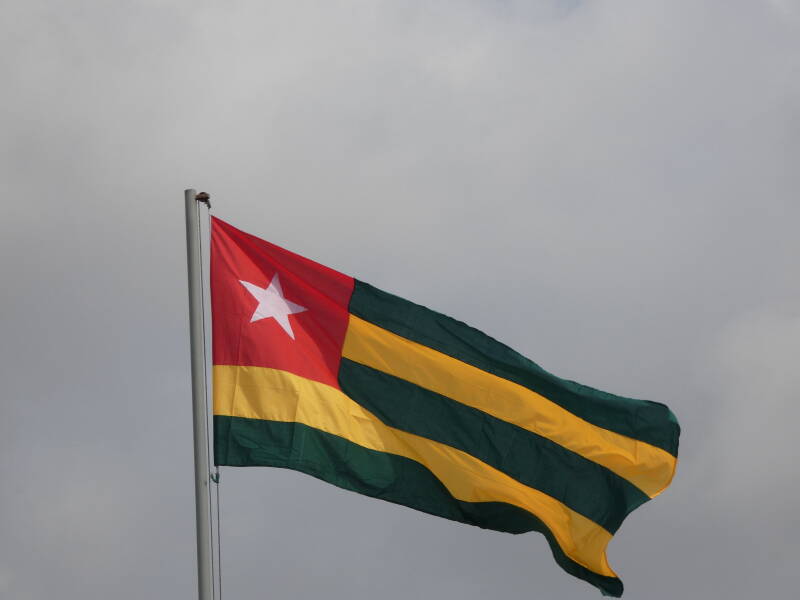
Togo flag
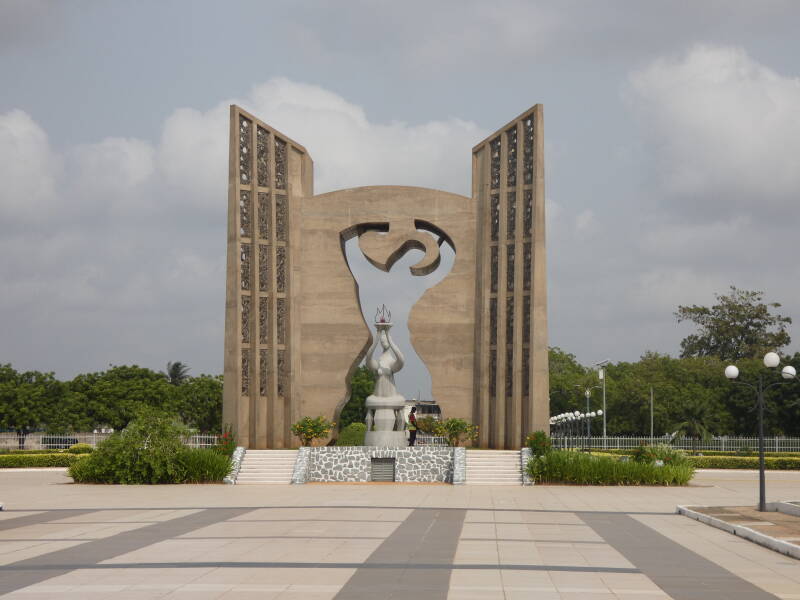
Independence monument
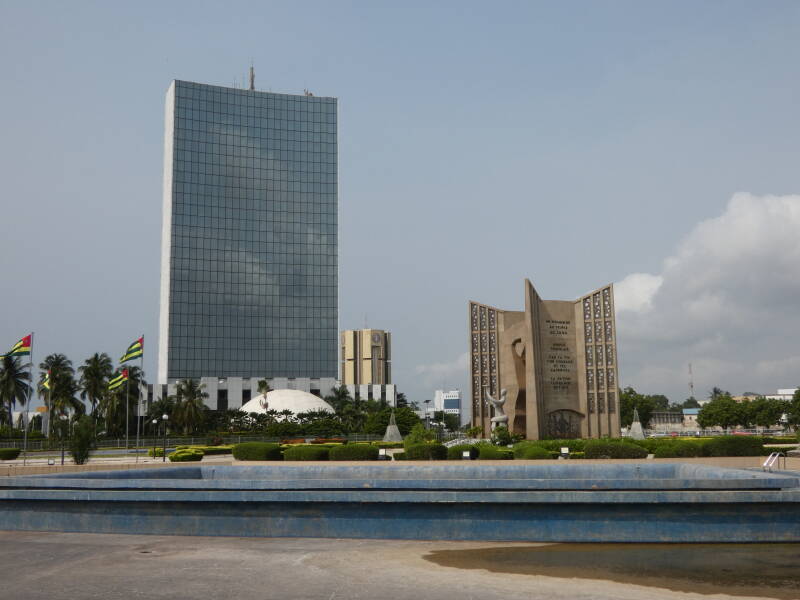
Independence monument next to the 2nd February building
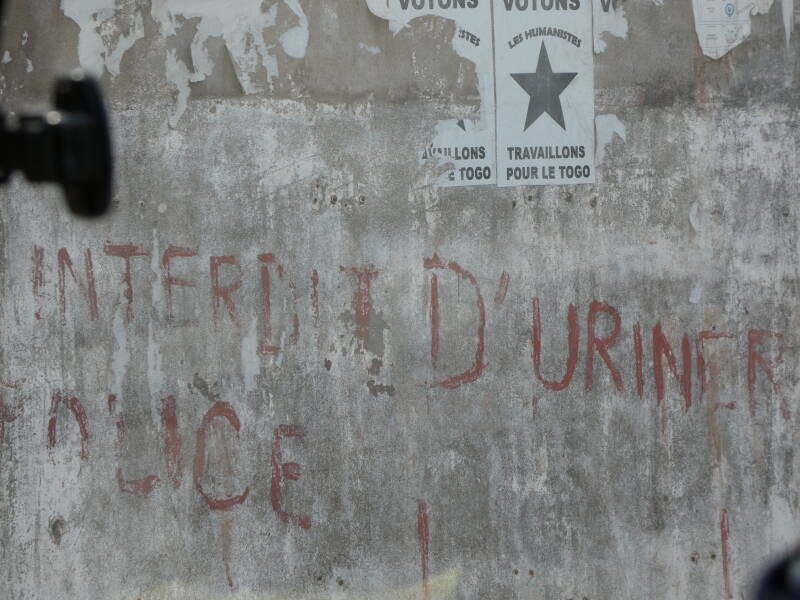
No peeing against this wall!
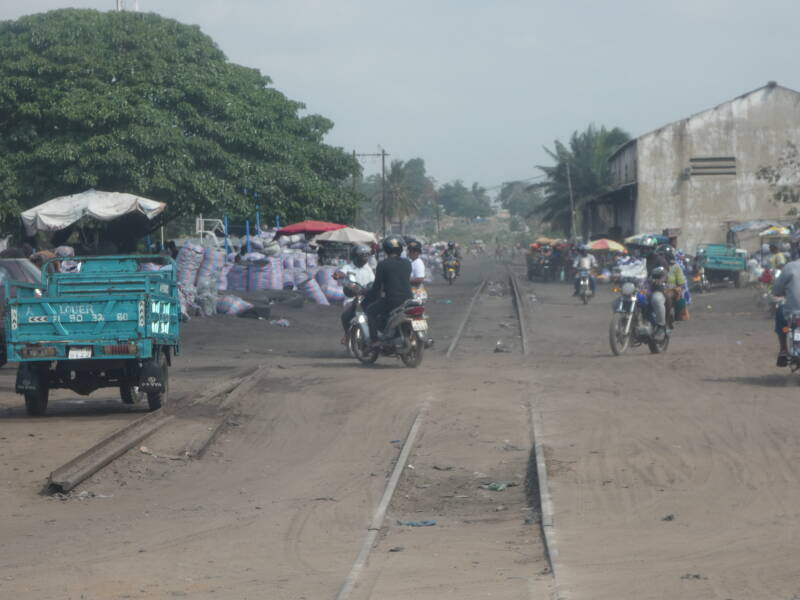
Lome street, Togo
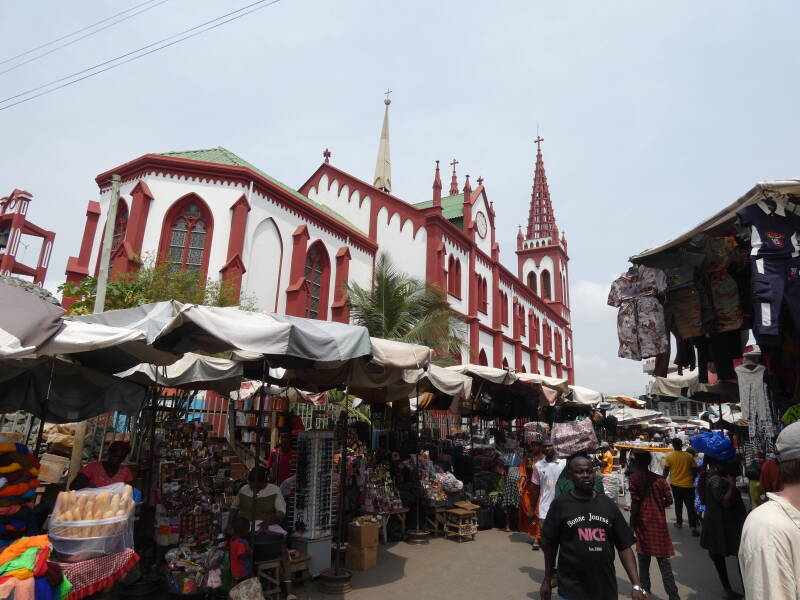
German church and market, Lome, Togo

Fishermen at Lome
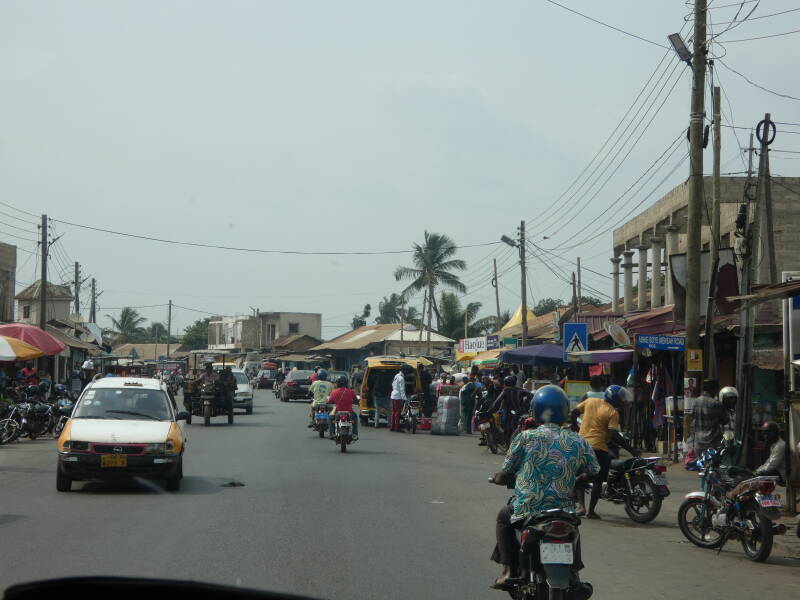
The road ahead, the first few miles into Ghana
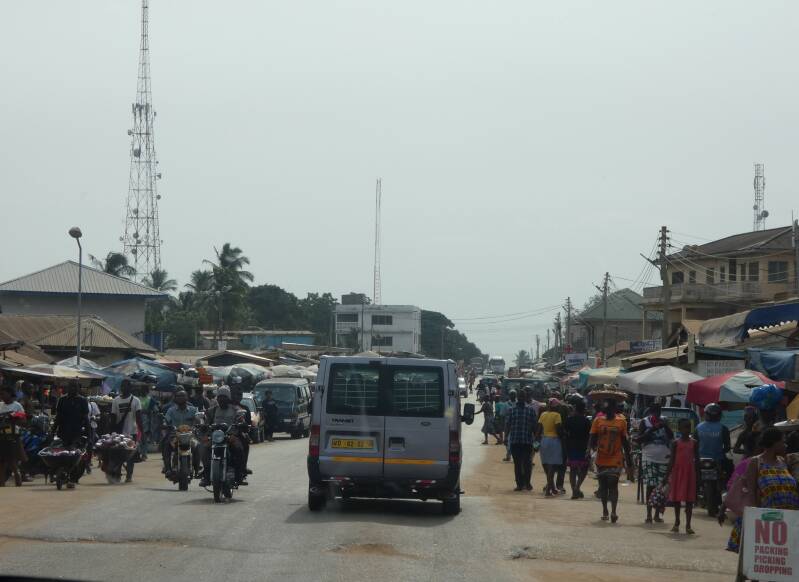
The road ahead, the first few miles into Ghana
Create Your Own Website With Webador