Day 14 - 6 Oct Off roading through high desert and mountain, then crossing into Chile

Photo above - me in the Bolivian high altitude desert, where there are no roads, or settlements, or people. Behind me are mountains that are in Chile. More photos to follow
Early cold start
Today we left at 6.30am as we have another long day across difficult terrain in the 4WD vehicles. We expect to drive about 125 miles, crossing the border into Chile at a mountain pass (Hiton Cajun).
Woke up to find it was -6c in our very remote, lagoon side, mountain surrounded hotel. We are so close to the Chilean border here that my phone has switched to Chilean time so it is a bit confusing as they are an hour ahead.
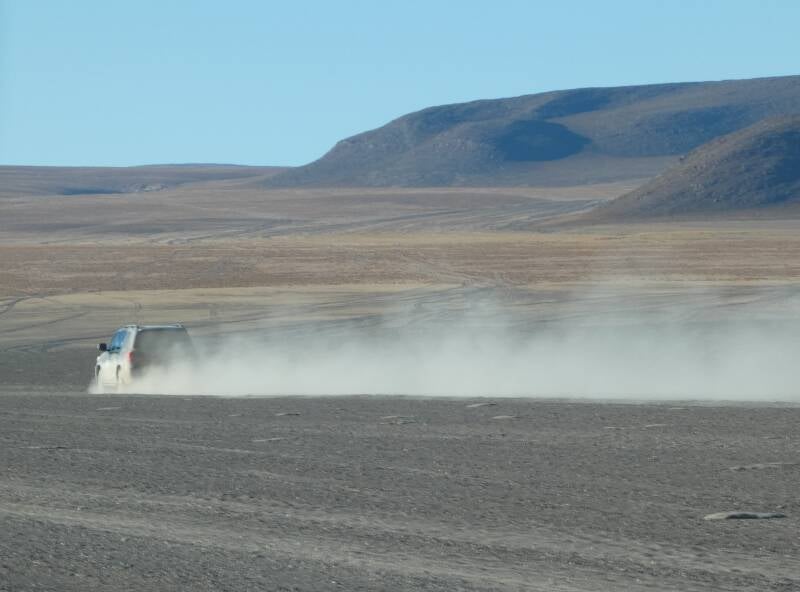
Off roading starts, as there are no roads here
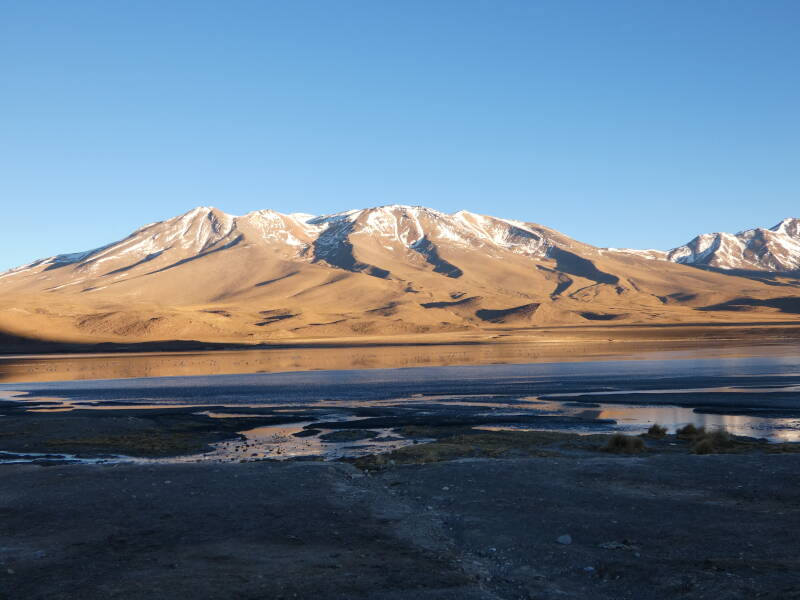
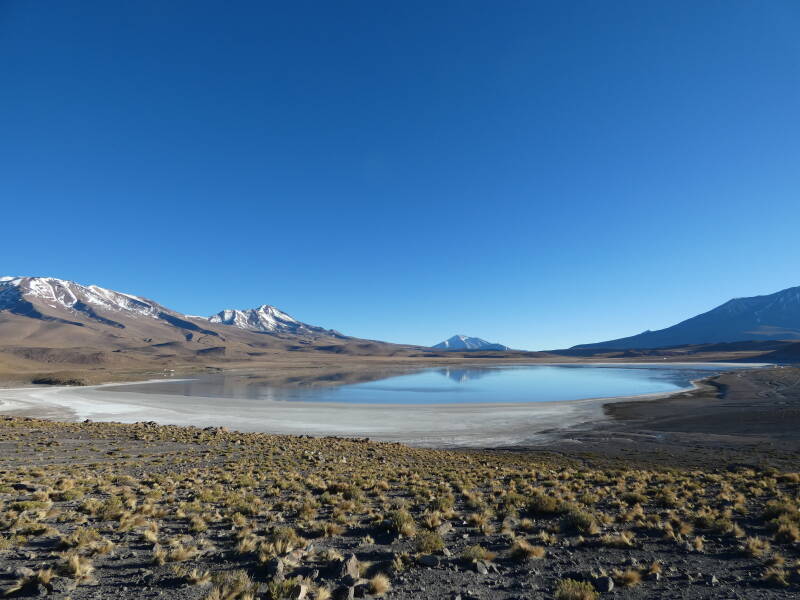
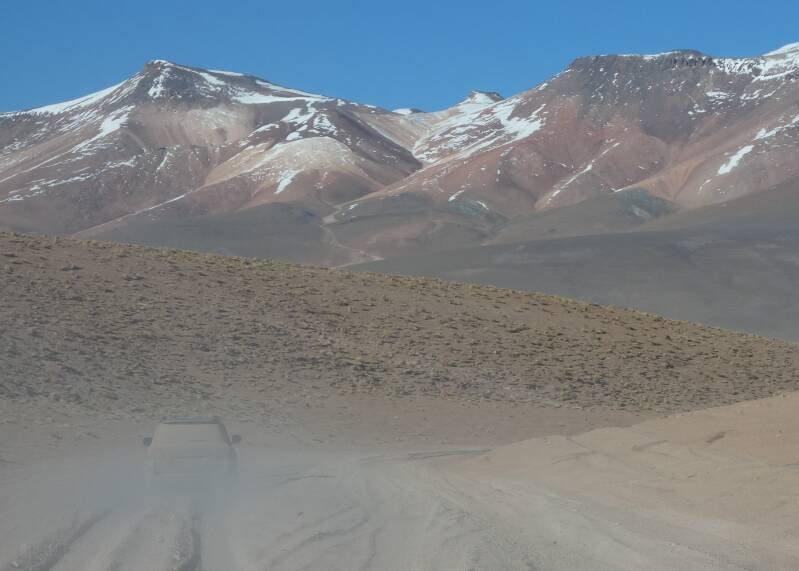
Almost as soon as we left, we were off roading across rock, gravel, and sand. There were literally no roads. We stopped briefly at a couple of lagoons to take photos, then headed off again across the wide open plains of sand and rock, and little bits of snow along the way. We were slowly heading upwards, and after 1.5 hours, we stopped on a vast plain to look over to the Chilean border at the foot of the distant red green snow capped mountains.
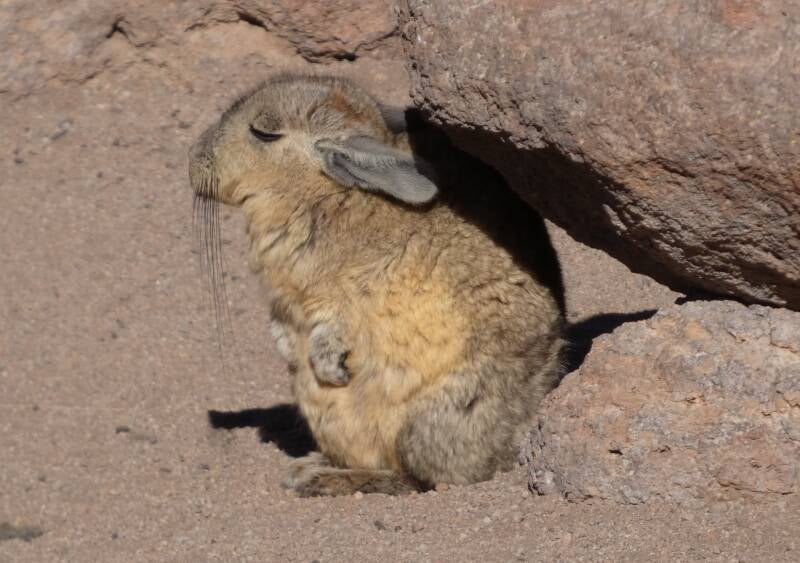
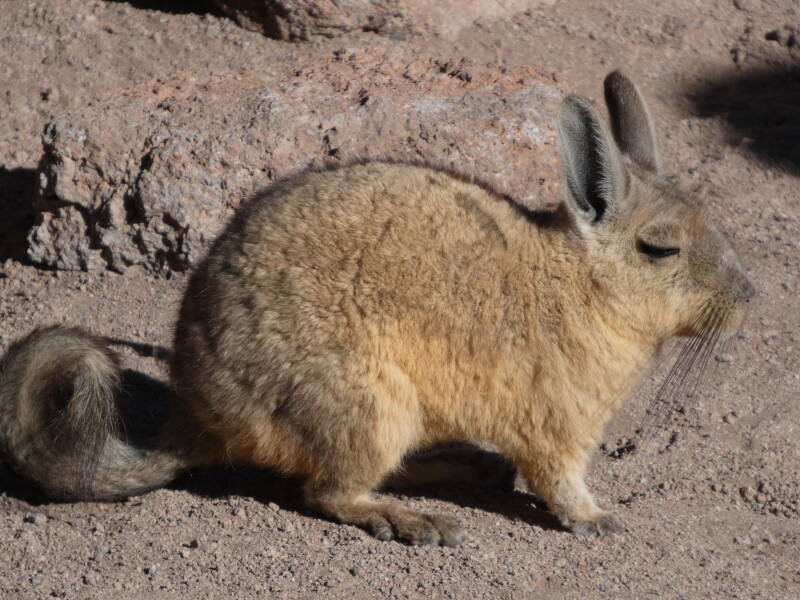
Friendly wild rabbits
Ten minutes further and we came across a rocky area with a lot of Vizcacha, a type of rabbit with a long tale. They bound around the rocks and don't seem to mind people. After another half hour of off roading we stopped to look at some unusual rock formations.
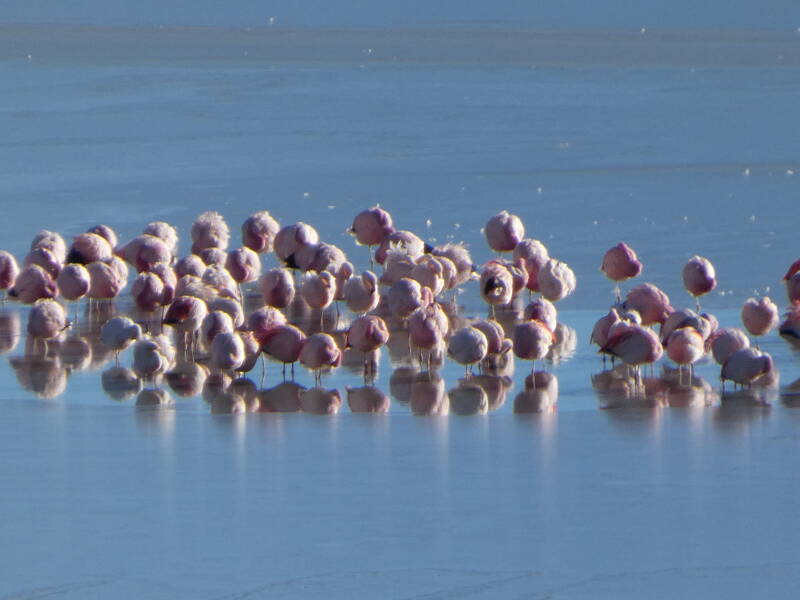
Flamingos in a red lake
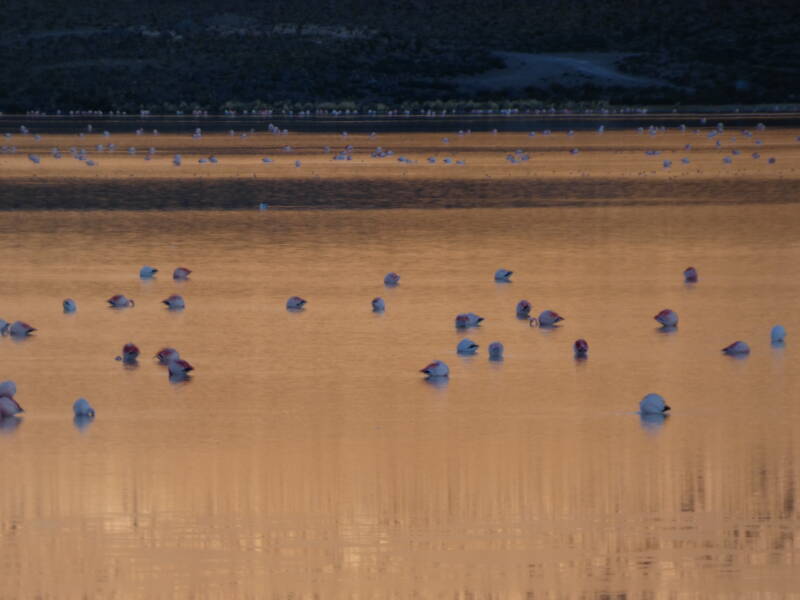
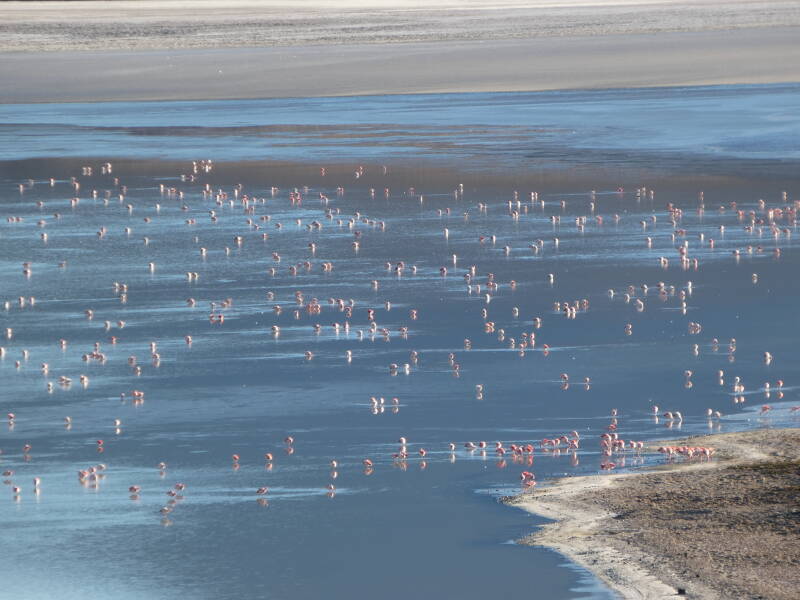
Next we visited the blood-red Laguna Colorada. Three of the world's six flamingo species can be found here; the Chilean, Andean and James flamingos - with the latter being incredibly rare, and thought to be extinct until the 1950s. The red lagoon looked amazing with the flamingoes and as an added bonus some Vicuna drinking.
Bubbling mud
Next after a further hour bumping over the high altitude plain and over the mountains, including a pass over 4900m, we stopped at the 'Sol de Manana' geysers (Bolivia), at 4,857m (16,076ft) altitude. The hot steam and bubbling mud pots provide a strange contrast to the serene salt flats we had seen. There was a strong sulphurous smell all around.
Lunch break, Dali desert and another lagoon
Ten minutes later we pulled up at a big blue lake where bizarrely there was a cafe, and a large hot pool to bathe in. We had an early lunch here, looking out over the lake and mountains, before pressing on
Next stop was 15 minutes up the gravel road to see the Salvador Dali desert. So called because of a selection of random rock structures dotted across the sandy landscape.
Our final stop was at the Green Lagoon. A lovely blue green lake surrounded by high snow dappled peaks.
Crossing the border into Chile
At the Chilean border at Hito Cajon (4,500m/14,764ft), we left our 4WD vehicles behind and switched back into a minibus, before continuing towards San Pedro de Atacama (2407m/7897ft) for the evening. I love border crossings despite the potential issues for hold ups, and this one is a particularly stark and remote border post. Getting out of Bolivia was relatively simple. We then drove across 3 miles of no man's land to the Chilean border. There we had our passports stamped then luggage checked with some random searches. Then we were on our way.
About Chile
Officially called the Republic of Chile, the country extends north south along a narrow piece of land between the Andes and the Pacific Ocean. It is the southernmost country in the world, and the closet to Antarctica. It is approximately three times the size of the UK, and has borders with Peru, Bolivia, and Argentina. It’s has a Pacific Ocean coastline, except in the far south where it meets the waters of Drake Passage, where crossings can be made to Antarctica. The capital, and largest city, is Santiago de Chile, located in the centre of the country.
The population is about 19 million, made up predominantly of Christians. Similar to other South American countries, it gained independence from Spain in the early 1800s (1818). The country stretches 2670 miles north to south, but it has an average width of just 109 miles, with the narrowest point being just 40 miles west to east, from the Pacific Ocean to the border with Argentina. Part of the north of the country contains the most arid desert in the world, the Atacama. Part of the Andes mountain range is contained within Chile’s borders, rising to over 6,000 metres. In the far south there is a polar climate.
First hour or so in Chile
Leaving the border there was an immediate change as we were on good quality tarmac roads. It is downhill all the way to Pedro de Atacama at 2407m. The temperature there is reported to be 32c which is nice after the -6c high altitude start today. The drive took us across the Atacama Desert once we had descended the mountain, and we were at the town within 40 minutes. Our hotel is on the main street, within easy walking distance of everything. It is strange to see traffic and people after where we have been in the last couple of days. The town appears fairly low key, small, and dusty, but we will have a look around tomorrow.
Create Your Own Website With Webador