Day 19 - 11 Oct Exploring Easter Island, and visiting sites of the giant Maoi heads

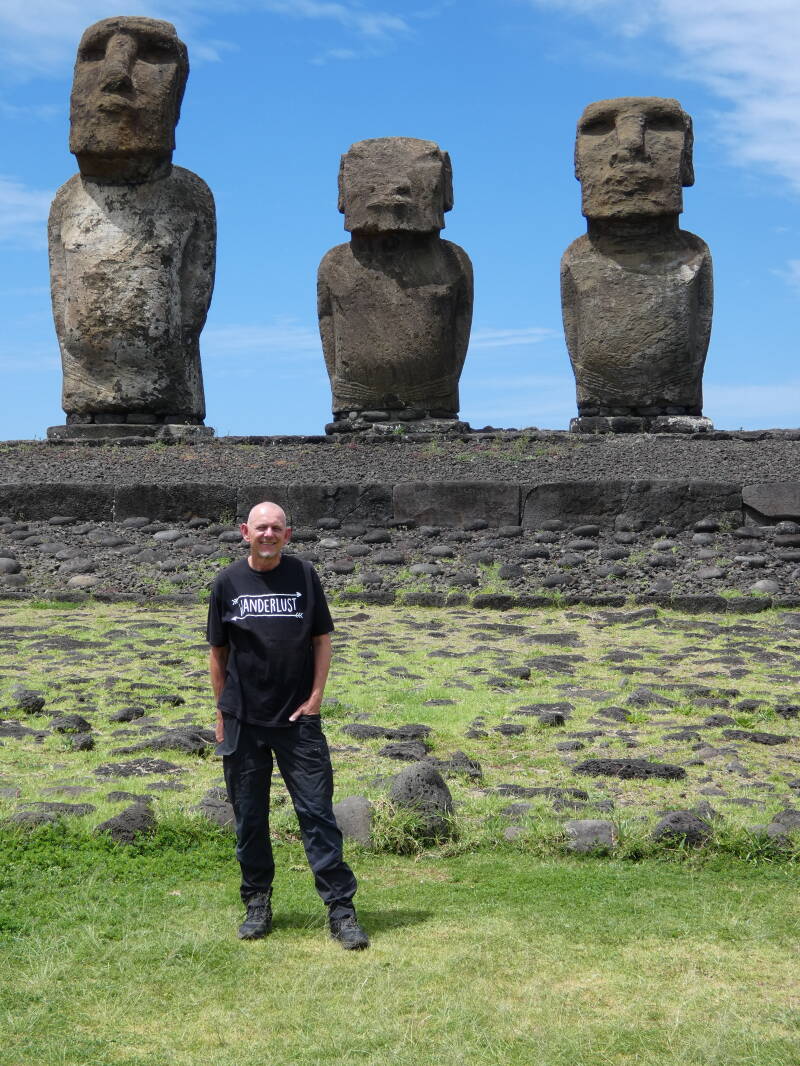
Photo above - me at the amazing Ahu Tongariki site. More photos to follow
Chicken alarm
I was woken by what is fast becoming the signature sound of Easter Island….chickens! Had a leisurely breakfast before being picked up for a tour of some of the island, which should be roughly a 25 mile round trip.
What are the Maoi heads?
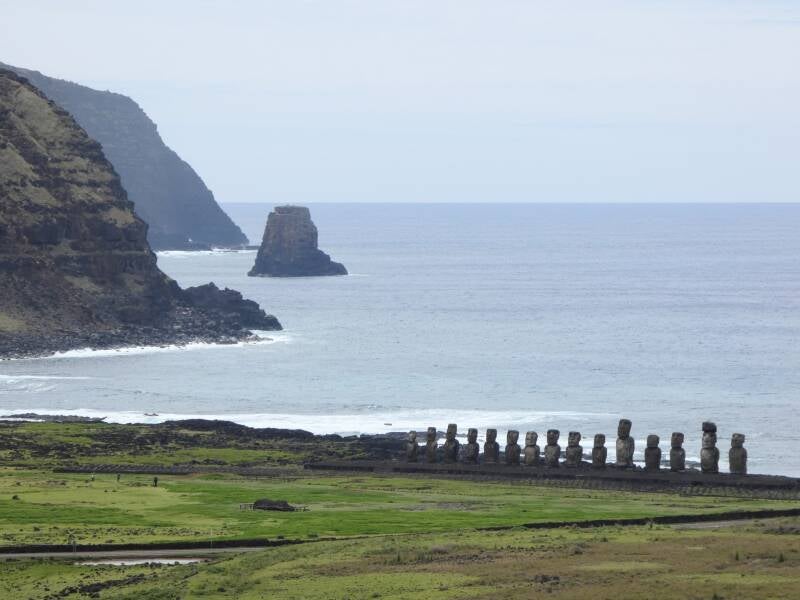
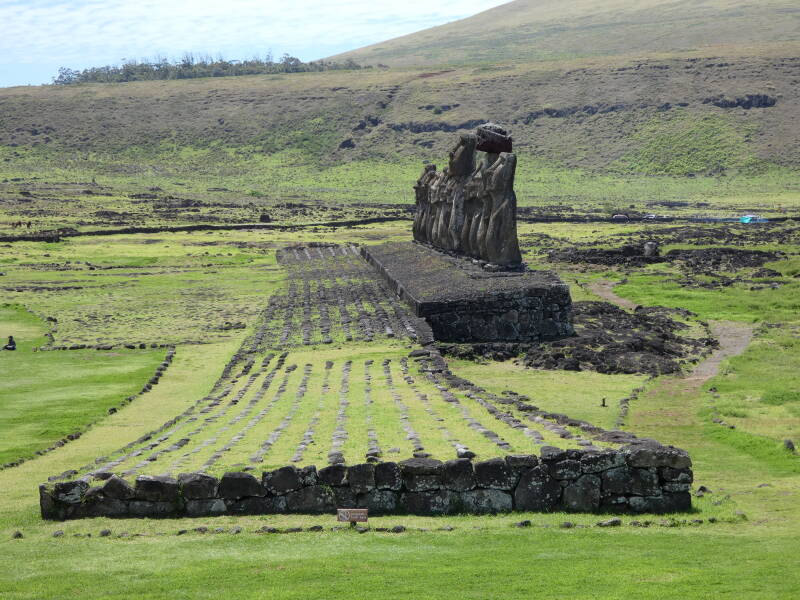
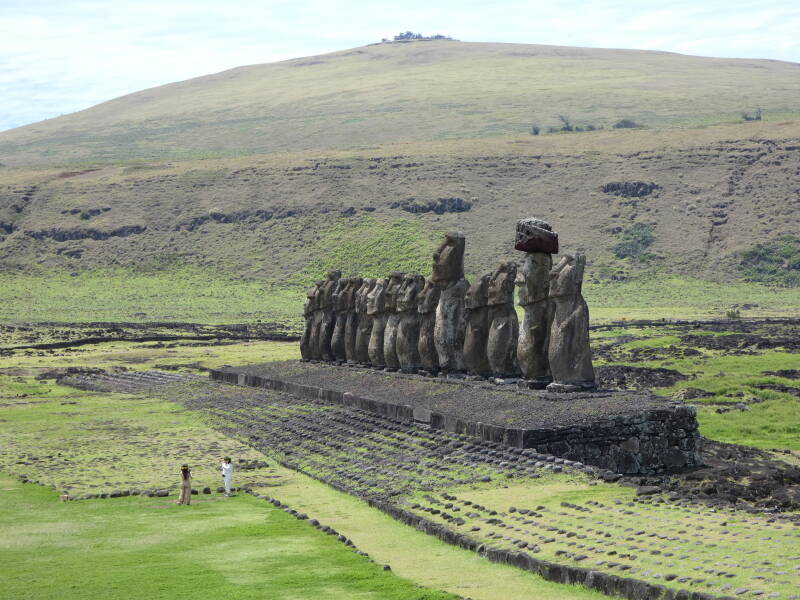
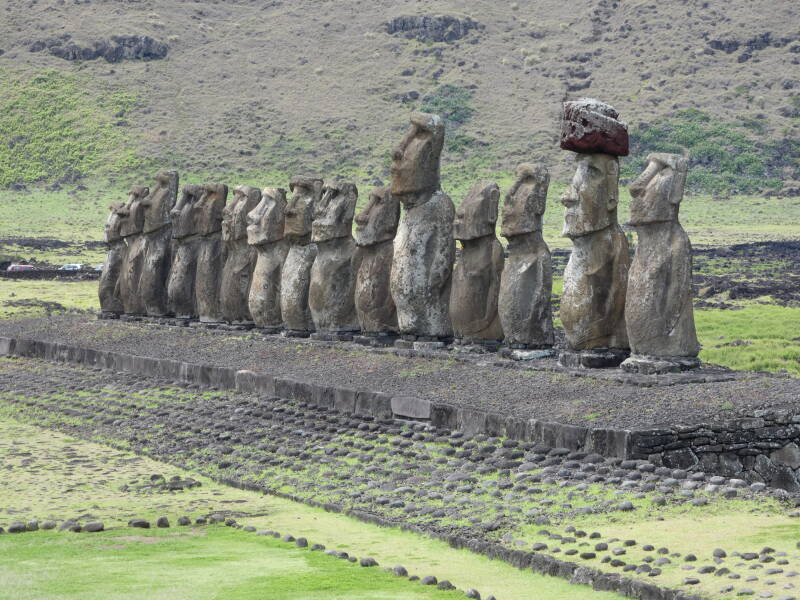
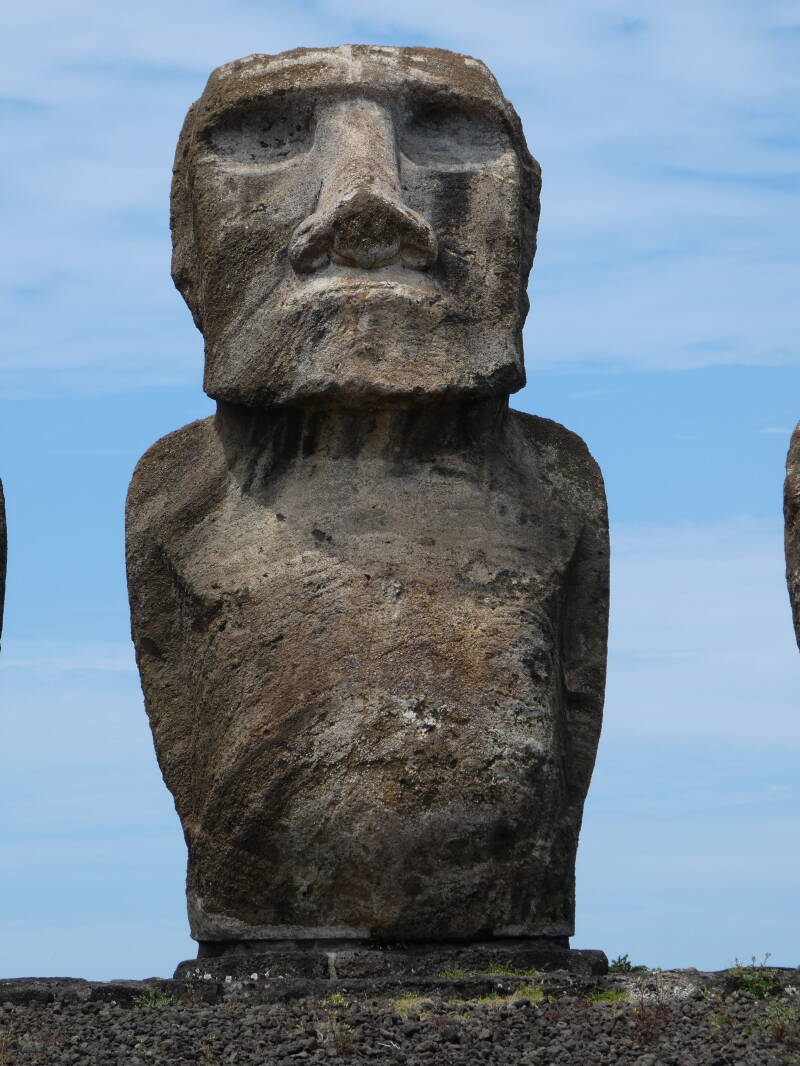
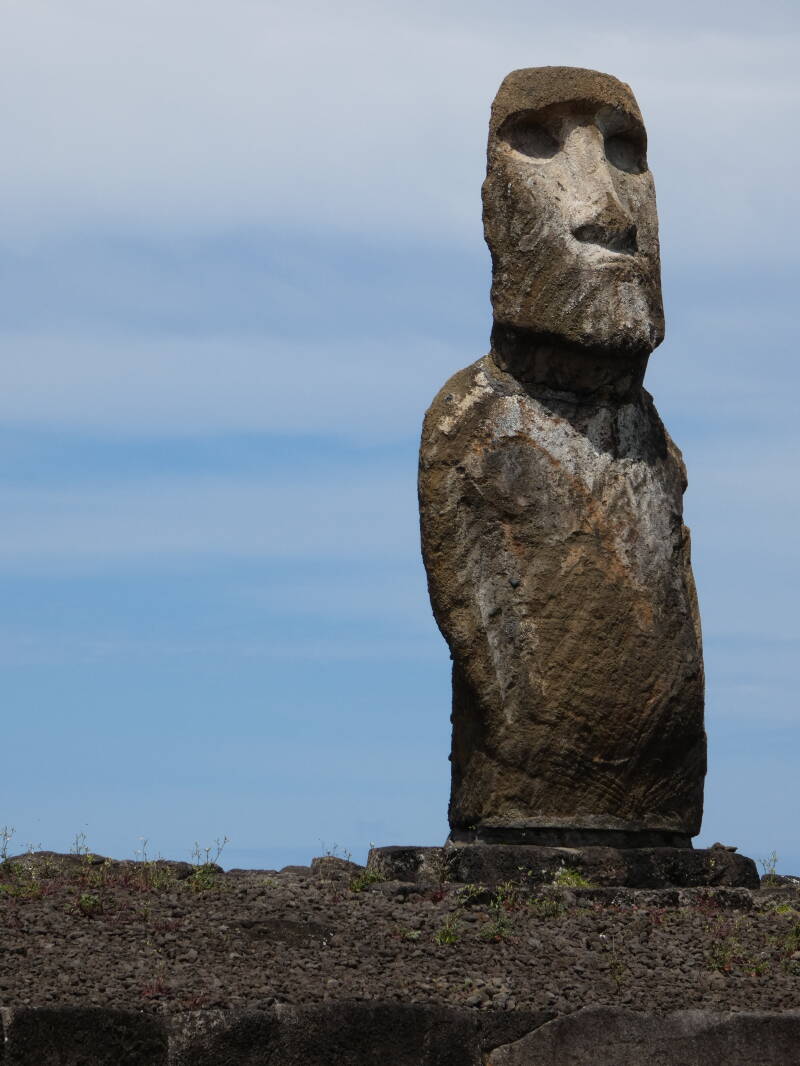
An 'Ahu' is a ceremonial platform, usually a stone pedestal or a sacred site where several moai stand. They average 4.5 metres high and 25 tons. There are over 1000 Maoi on the island. They are memorials to one of the clan, and always face in to the village, not out to the sea. In a lot of cases, a lot of the body will be hidden buried beneath the ground.
Ahu Vaihu was our first stop on the south coast, with a recreation of an original village, and several fallen Maoi. The surrounding area of farmland and horses looked remarkably English. As we drove along the coast road, we saw horses and cattle happily wandering across the road.
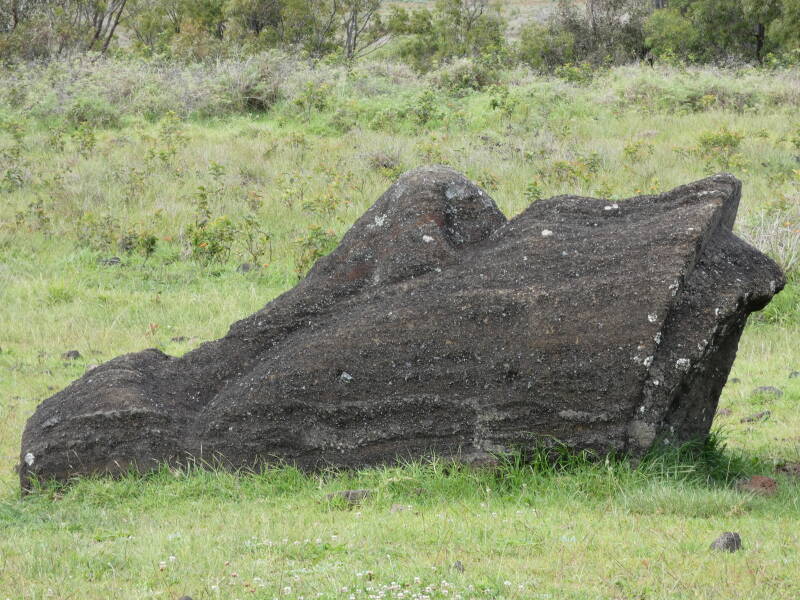
Fallen Maoi
We continued along the coast to the second stop at Ahu Akahanga, a small but important platform and ruins of a ceremonial village that is thought to be the final resting place of the first 'King' of Easter Island, Hotu Matu'a, with a statue of him at the entrance. Again these Maoi are fallen, with some separated from their heads.
Maoi foundry
Next we drove further along the coast to the impressive volcanic crater at Rano Raraku. This enormous quarry is the foundry, if you like, of all moai heads, and the largest unfinished moai can be found standing at 21 metres high. They were carved in situ out of the rock, then moved down the hill for the family that had commissioned them to take them away. If they fell and broke, they were just left where they fell. We still don't know how they were moved across the island.
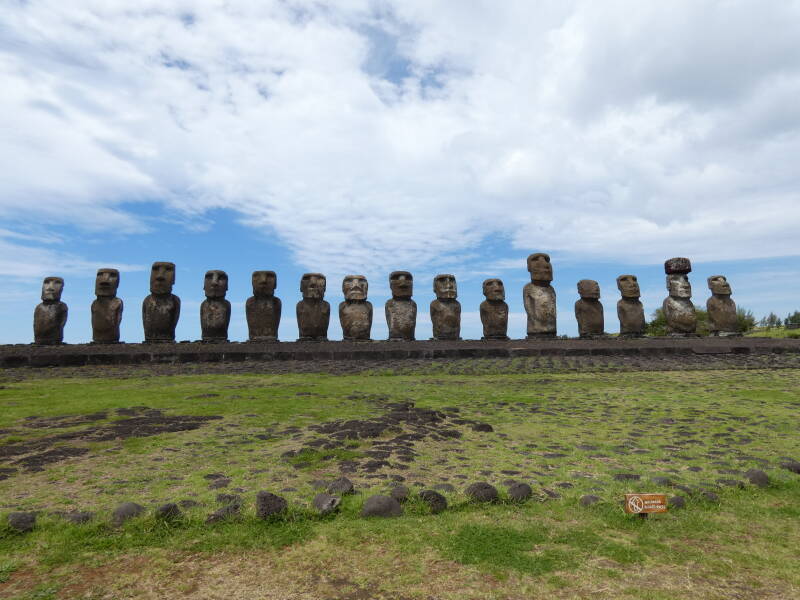
We stopped for some lunch in this scenic spot, before moving on to the largest Ahu in Polynesia, Ahu Tongariki, which has 15 gigantic restored moai all standing sentinal along its majestic platform. An absolutely amazing sight.
Living on such a remote island
I asked our guide how the isolation impacts the island. The nearest Polynesian island is Tahiti about 5000km away, and mainland Chile is five hours by plane.The plane comes once a day, and that is the main contact with outside, however some things havé to come by boat, like gas for heating, cooking etc and the boat takes seven days to cross the sea from Chile. There is a small hospital on the island that can deliver babies and deal with small injuries, and there are dentists, but any major surgery or illness requires a hospital plane which is a ten hour round trip. There were no cases of COVID on the island, but it was closed for 2.5 years due to the pandemic.
Sandy beach and more heads
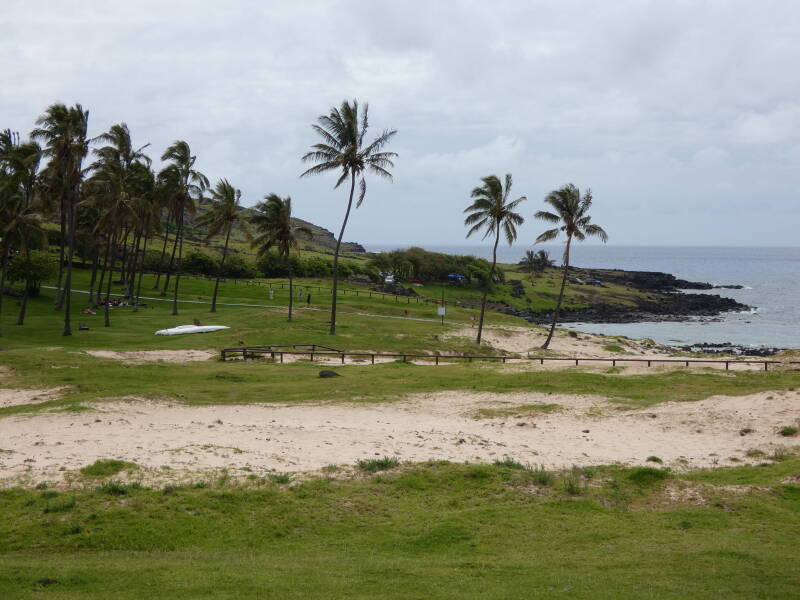
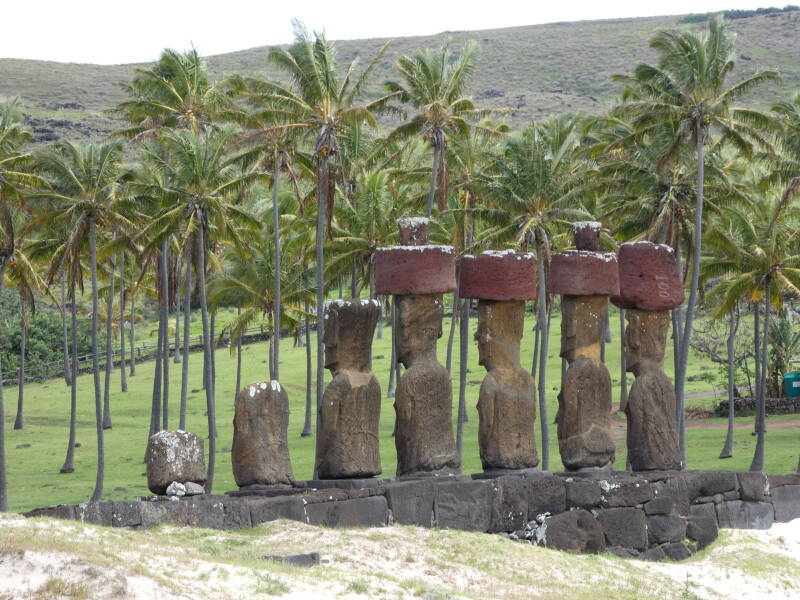
Finally, we drove across the centre of the island to the white-sand beach of Anakena on the northern coast of the island. This beautiful, palm-tree fringed spot is home to Ahu Nau Nau, a superbly photogenic platform that really captures the wonder that these incredible statues must have evoked. As it was Sunday, the beach was also full of locals enjoying the day off.
Tomorrow, we explore some more of the island.
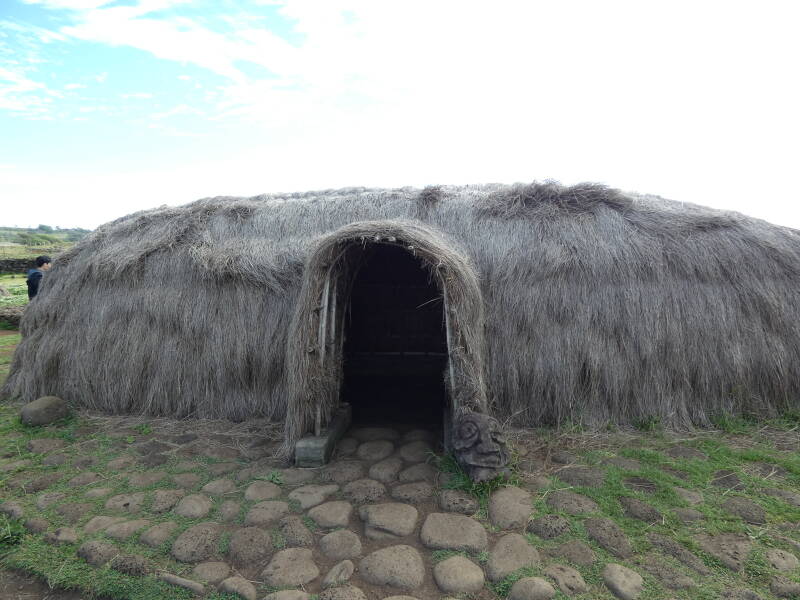
Reconstruction of original village house
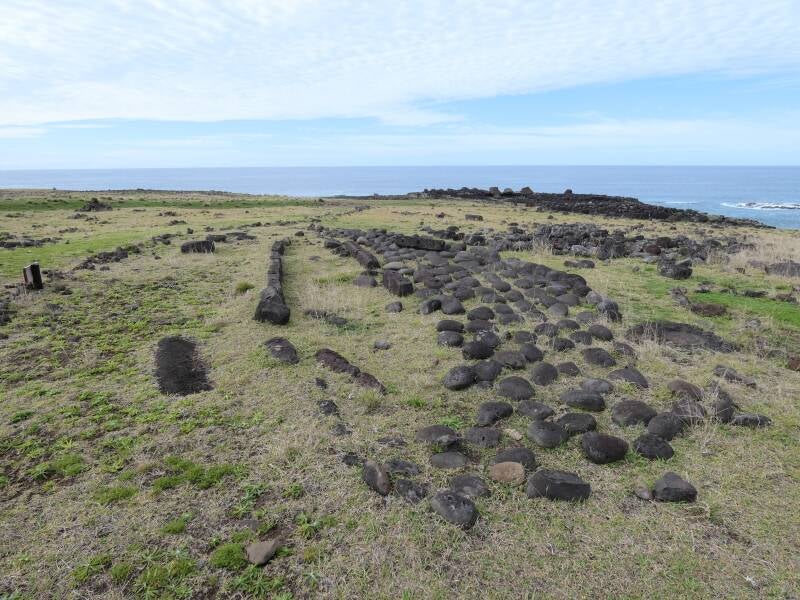
Remains of original village house
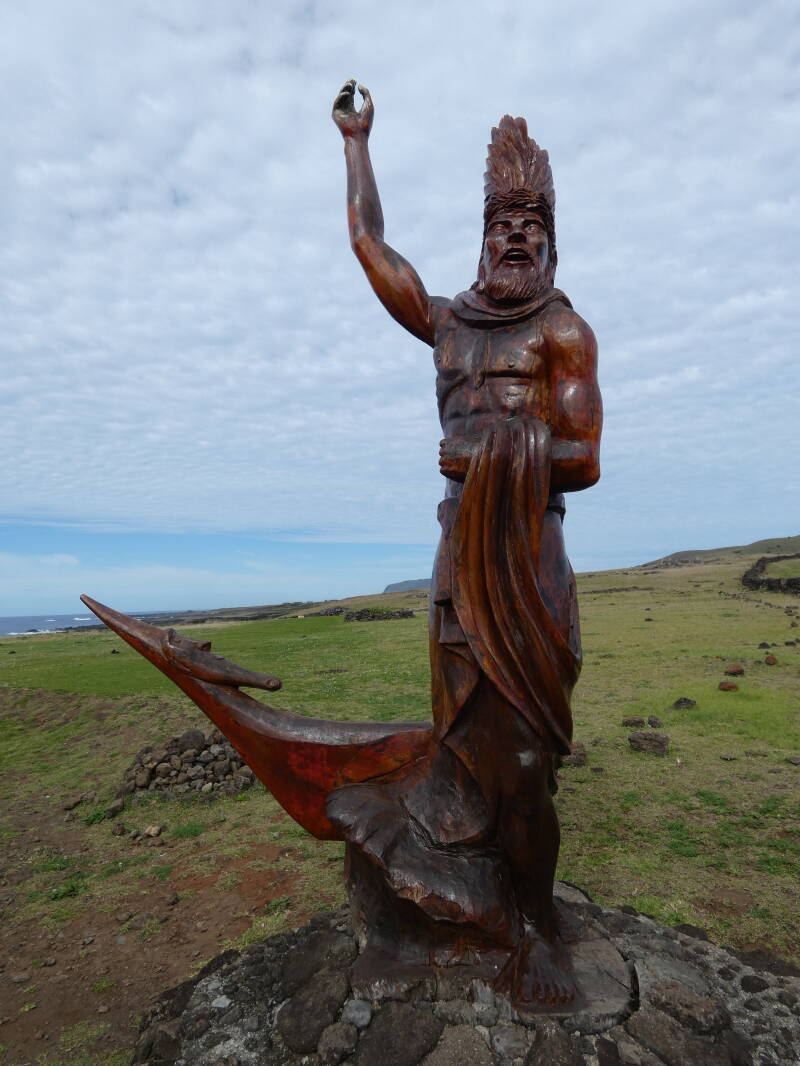
First king of Easter Island
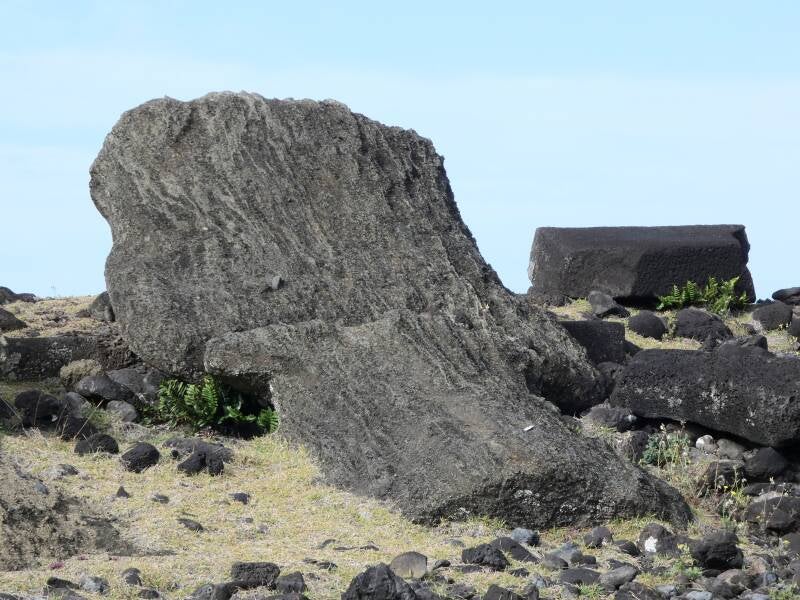
Face planted Maoi head
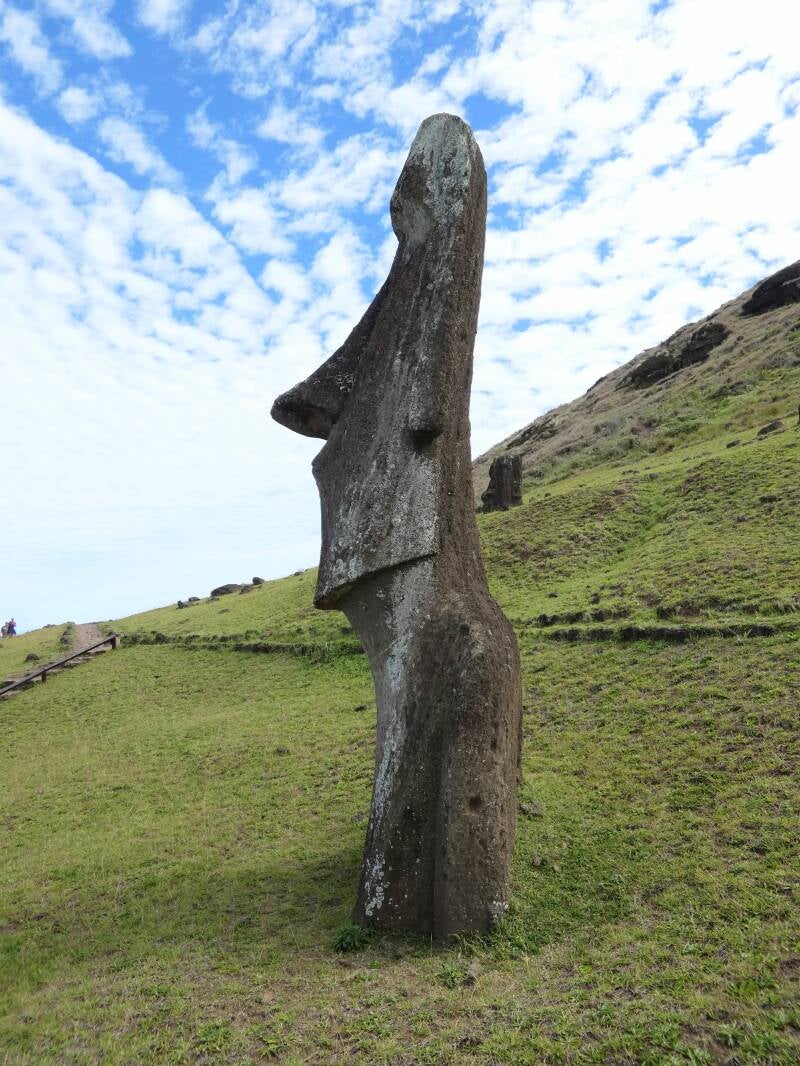
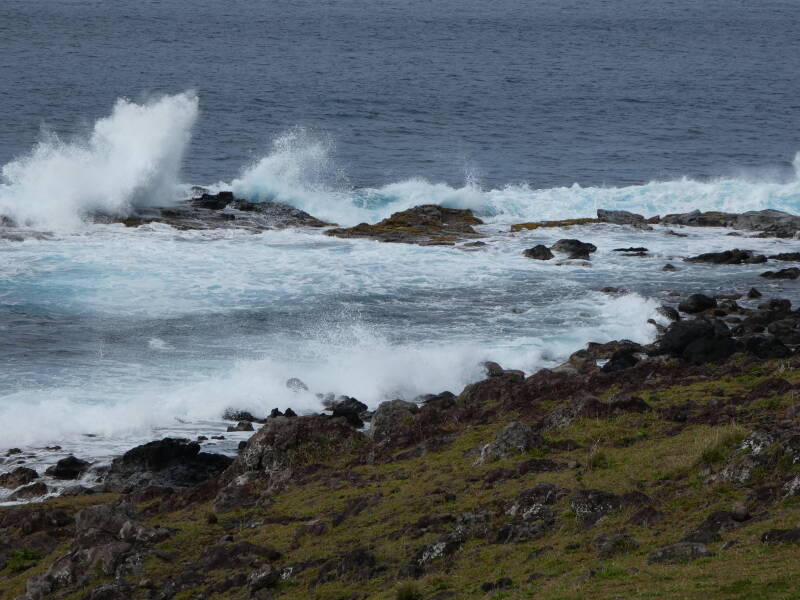
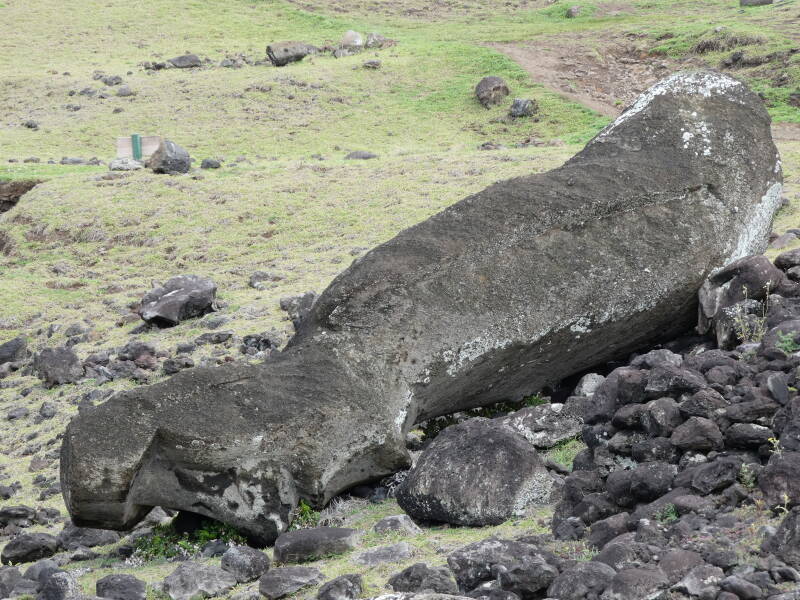
In moving the Maoi across the island, if they fell, they were left where they had fallen
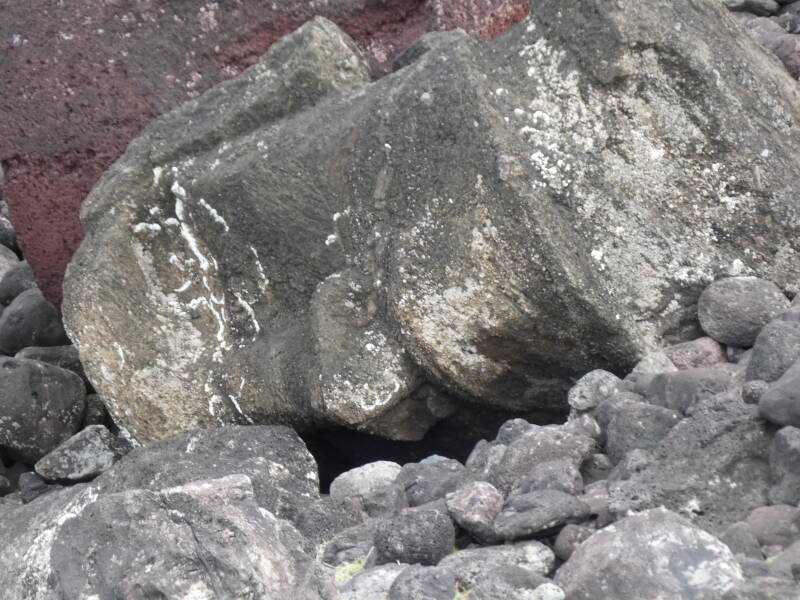
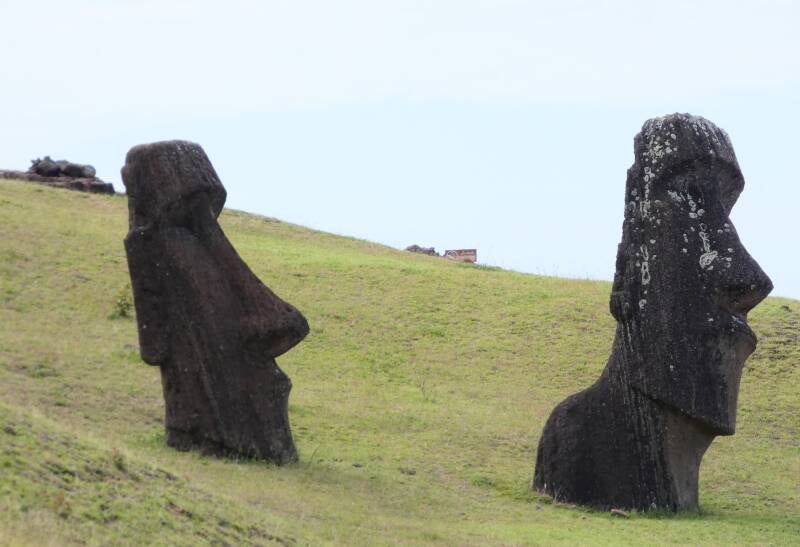
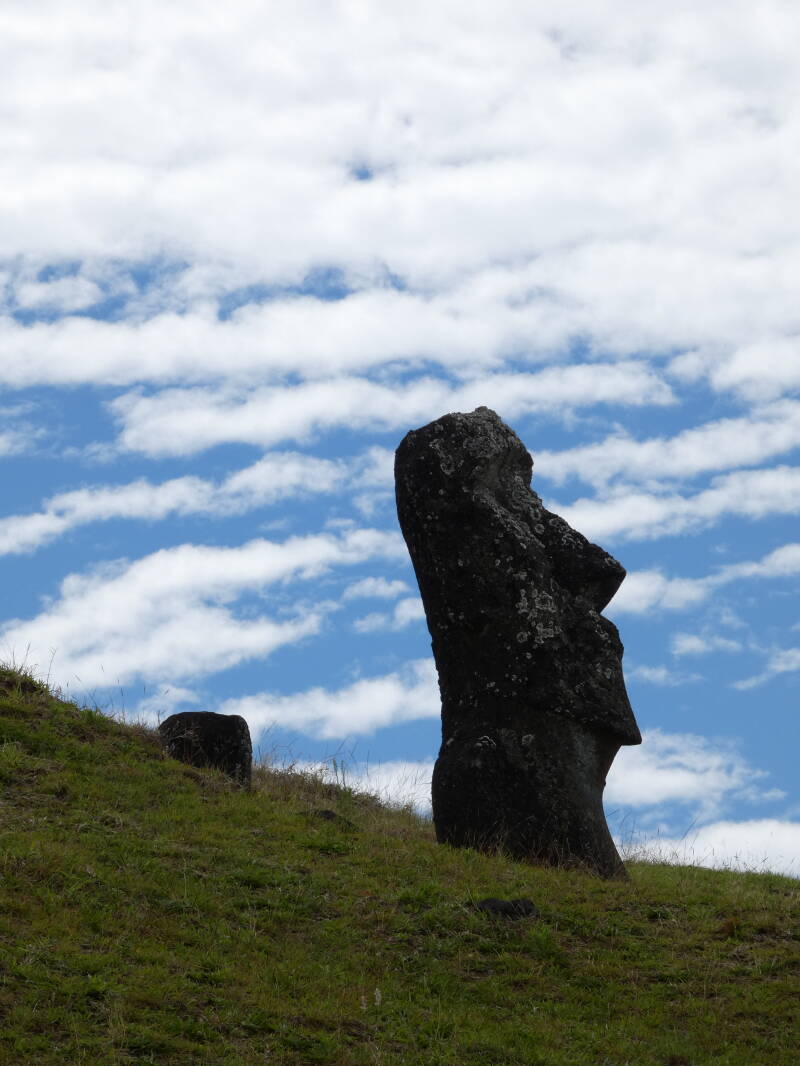
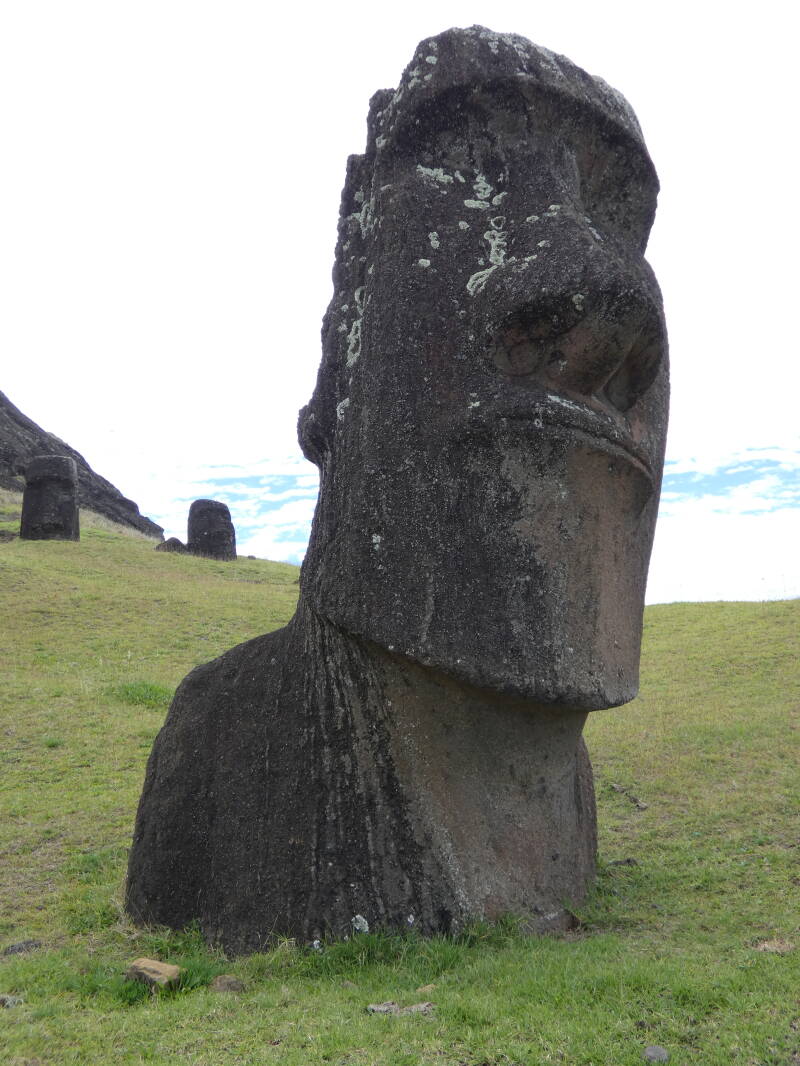
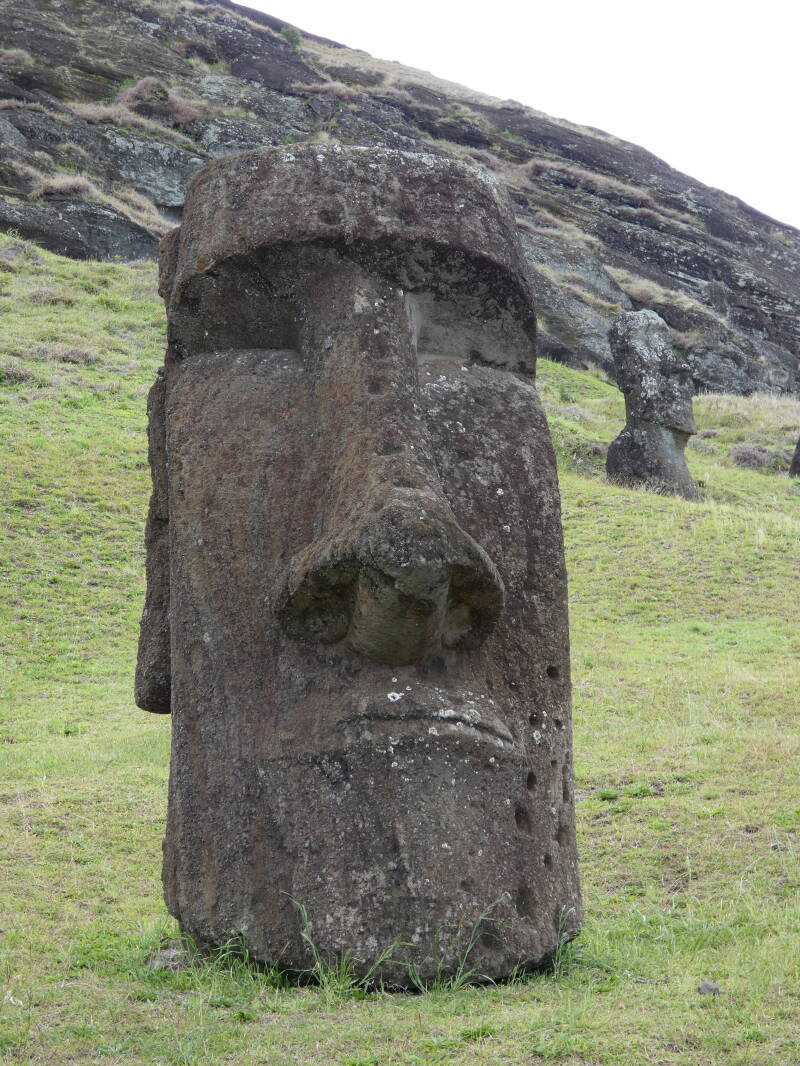
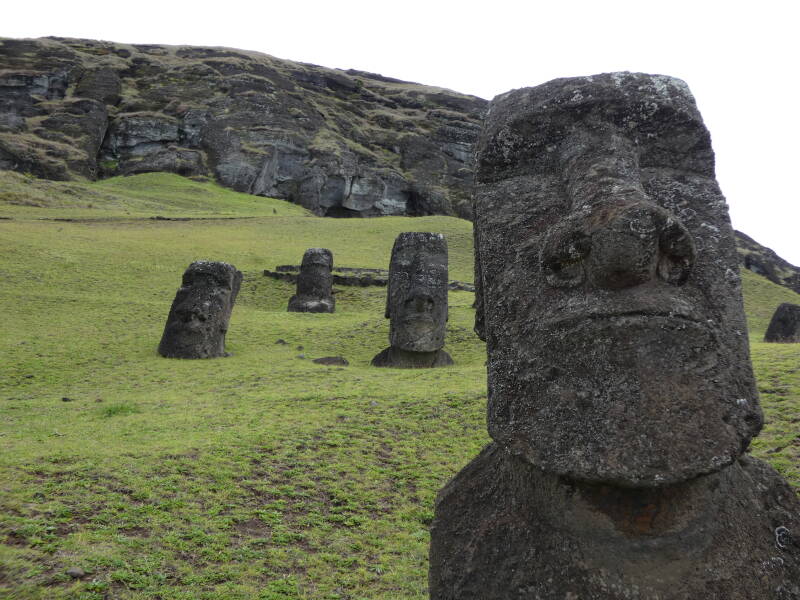
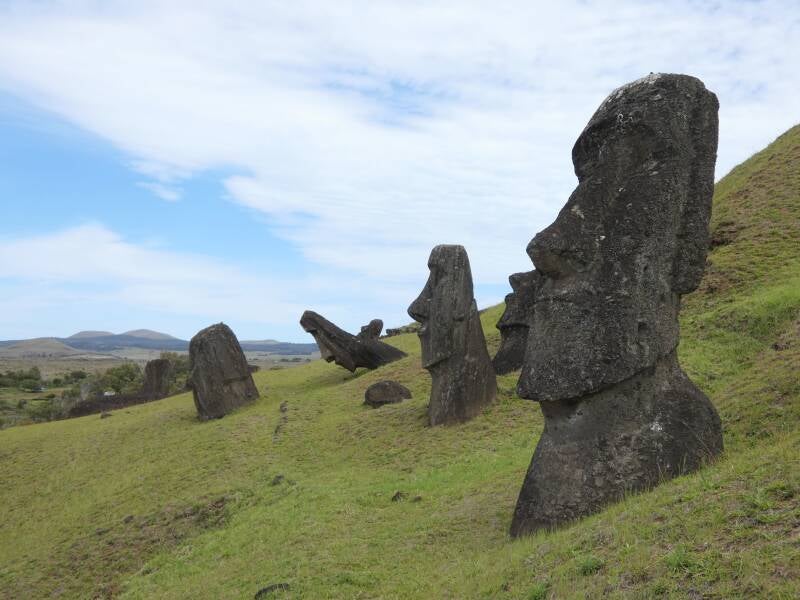
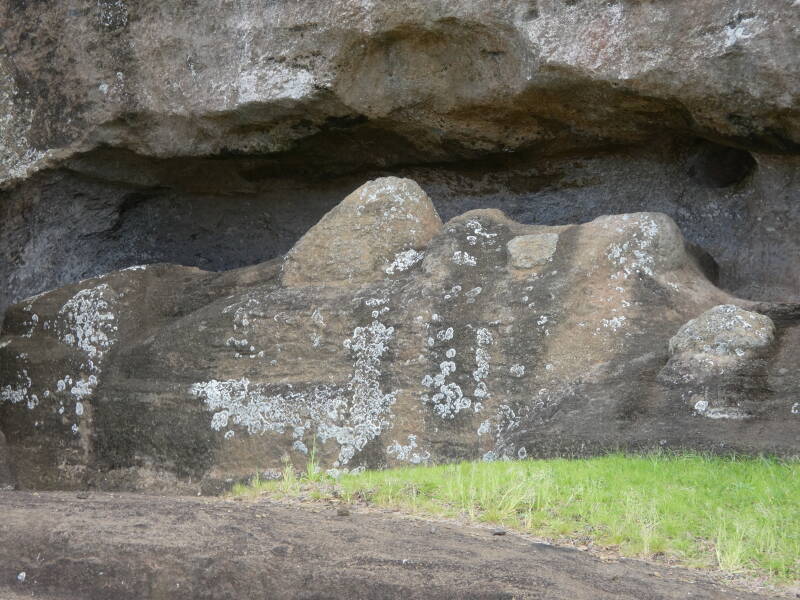
The Maoi were carved directly out of the rock. This one was half done and never completed
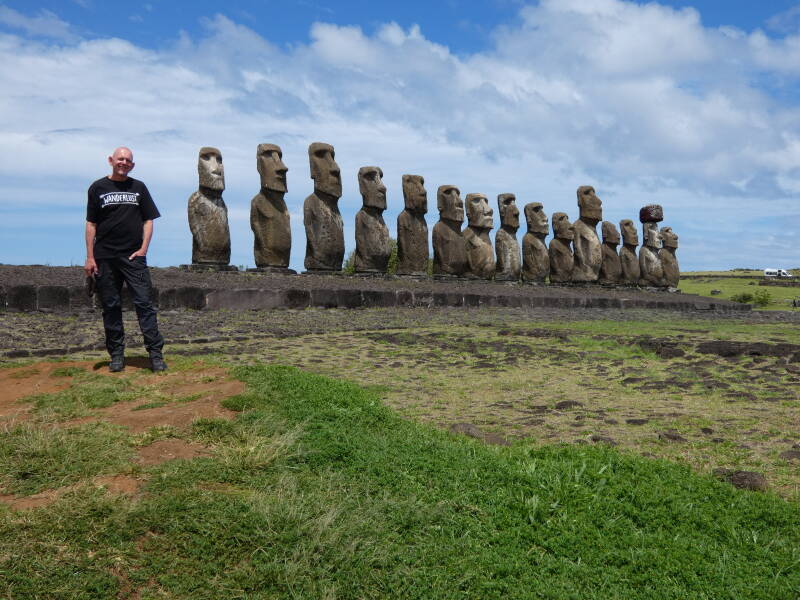
Honorary 16th Maoi
Create Your Own Website With Webador