Day 5 - 27 Sep Flight from La Paz to Buenos Aires, Argentina

Photo above - in the hotel in Buenos Aires
Flight east to the city of Santa Cruz de la Sierra
Early start today to fly south to Buenos Aries, the capital of Argentina. Got a taxi at 1.30am from the hotel up to El Alto airport for my 4.45am internal flight west to Santa Cruz, where I will transfer to a 10am flight south to Argentina.
As usual a lot of waiting around at the airport, but it is only small, with six gates I think, so things like security do not take long. Got talking to a Bolivian lady whose English was as bad as my Spanish, but it passed the time.
Arrived on time at Santa Cruz, which is a larger city than La Paz but again only seems to have a small airport. More waiting around until flight departure. The flight distance is 1200 miles to Buenos Aires, and it should take 3 hours. When I walked out to the plane I was hit by the heat and humidity. Having flown straight in to the high altitude of La Paz, and the hot but pleasant mountain air, I had temporarily forgotten that I am in South America, and an awful lot of it is jungle and other humid lowland.
Flight south to Buenos Aires
Shortly after the flight started, we passed over huge area of flat land that had been cleared for farming, but also at least one huge river that looked completely dry. Not sure what crops were being grown from thousands of feet up, but there was a lot of it. Later off to the west, and just visible in the haze, were wave upon wave of mountain and valley. It looked just like some big waves on the sea rolling in towards shore. After two hours, the huges areas of agricultural land continued, although by now, we were flying over Argentina.
Approaching Buenos Aires we experienced terrible turbulence, with people screaming, and we were violently thrown about in our seats, all was well though, and we arrived on time, to find it very grey and cool.
About Argentina
Argentina, officially named the Argentine Republic, is the second largest country in South America after Brazil, and the eighth largest in the world, covering over 1 million square miles, making it over 10 times the size of the UK. It shares borders with Brazil, Chile, Bolivia, Paraguay and Uruguay, and has an Atlantic coastline in the far south. The official language of the 47 million population is Spanish, and nearly 80% are Christian. The country officially gained independence from the Spanish in 1816.
A land of extremes, Argentina has the highest point in the southern hemisphere at 6959m in the Argentine Andes, but it also has the lowest place in the southern hemisphere at -105m in the San Julian Great Depression. The southern point of the country is part of the Antarctic region, but there are also desert regions and rain forest. It is also home to the world's largest waterfall system – Iguazu Falls, which is taller and twice as wide as Niagara Falls in Canada, and at 2 miles wide/across, it is wider than Victoria Falls in Zambia/Zimbabwe.
About Buenos Aires
Buenos Aires, Argentina's capital and largest city, is located on the southern shores of the Rio de la Plata, on the east coast of the country, very close to the border with Uruguay. The city has a population of 3.1 million, with an urban population of 16.7 million, making it one of the most populous metropolitan areas in the world.
Since its founding by Pedro de Mendoza in 1536, the city has thrived on trade and its vibrant streets are brimming with an eclectic mix of European architectural styles, with Spanish, French and Italian classicism rubbing shoulders with the remnants of Victorian grandeur.
First hours in Argentina
By the time I got through customs, which was plain sailing, and found the guy who was going to drive me into the city centre, it was really raining hard. The airport is about 30 miles out from the centre, and takes about an hour, but there was not too much traffic, on account of it being Sunday.
The majority of the journey is on a fast three/four lane toll road. All along the way there were police cars at the side with their blue lights flashing, but I guess it is their way of trying to keep traffic within the speed limits. Along the road and into the centre there are hundreds of high rise apartment blocks or flats, a lot of which do not look in a good state of repair. I had been in the country for barely an hour when I saw a huge mural on the side of a building of Maradona. This was followed shortly after by one of Messi nearer the centre.
We drove along what is allegedly the widest road in the world, at 140m and 22 lanes. The same road has a giant obelisk in the centre at one point which one can go up, presumably for some views. I am hopeful the weather is better tomorrow when I intend to explore a bit of the city
Postscript
After I had written the above, the sun came out, and i went out to look at the immediate area. There are several theatres around and a nice looking park at the end of the street. I walked a little way down the very wide road, Avenue 9 de Julio, which is made so by the fact that there are several lanes of traffic in each direction, plus a dedicated bus area between the two, where the buses go both ways, and there is s linear bus station of sorts. At one point, there are seven lanes for traffic wanting to turn right!
I spotted a tree a bit like a baobab, but it is actually a Palo Borracho tree. I also walked as far as the obelisk, which is 220 feet high.
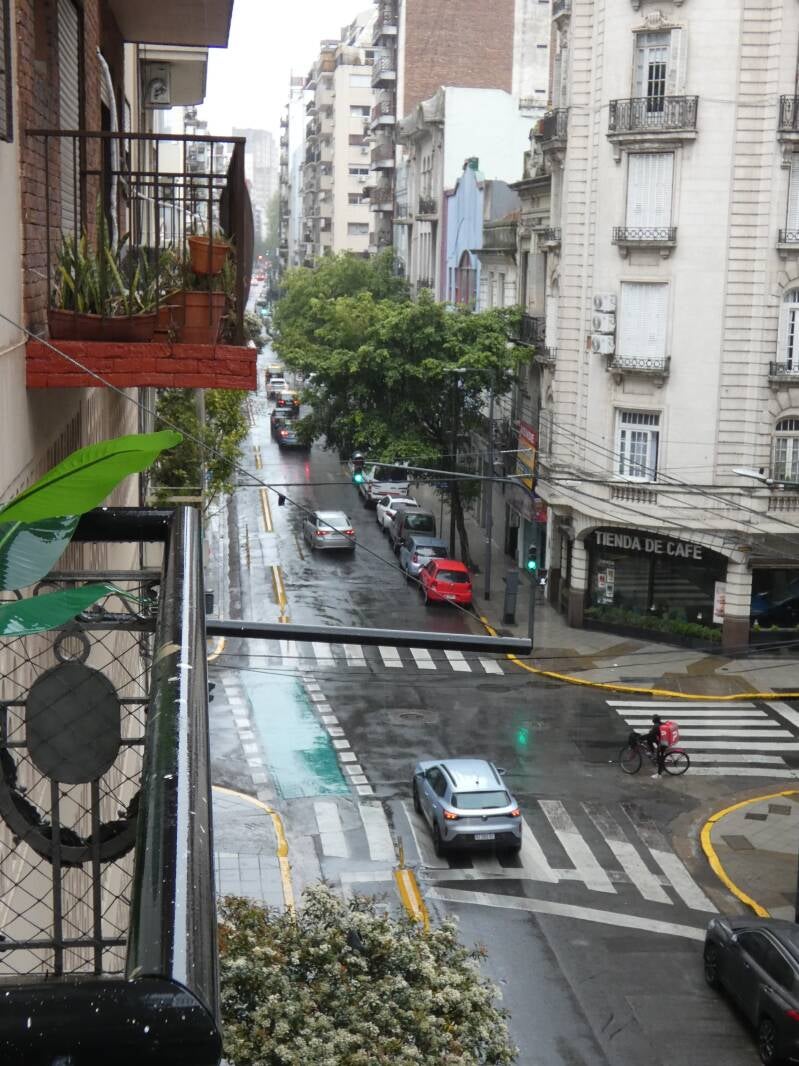
View from my hotel room
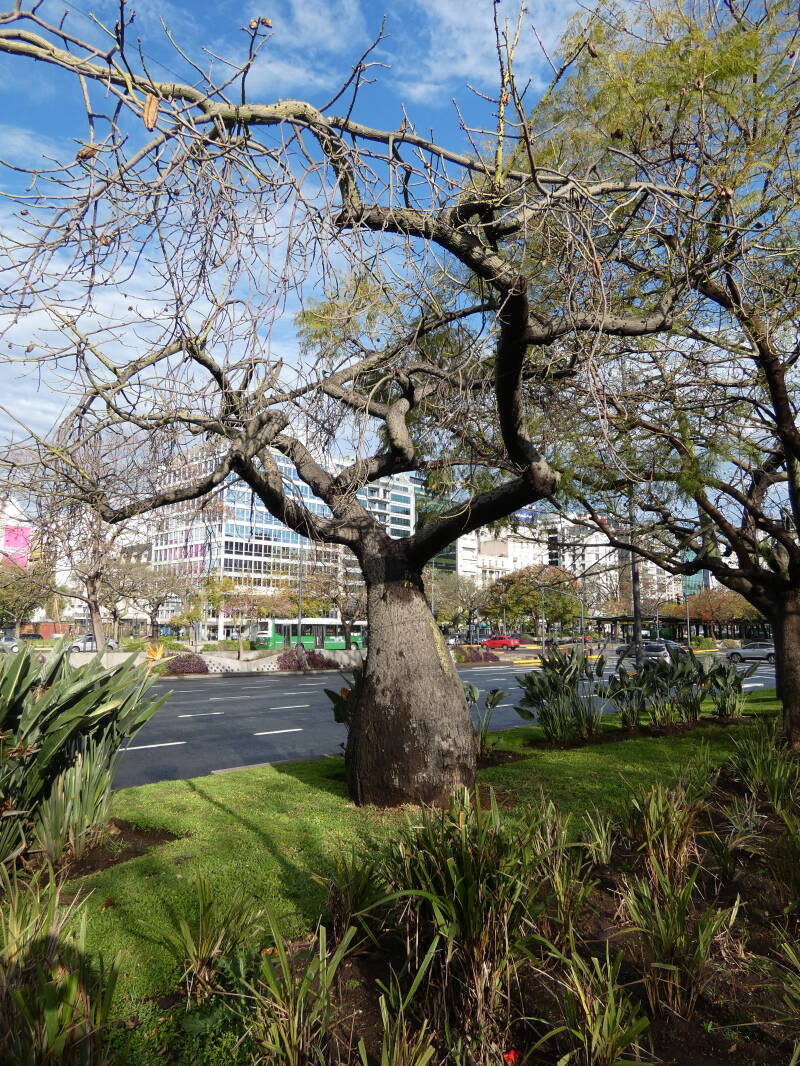
Palo Borracho tree
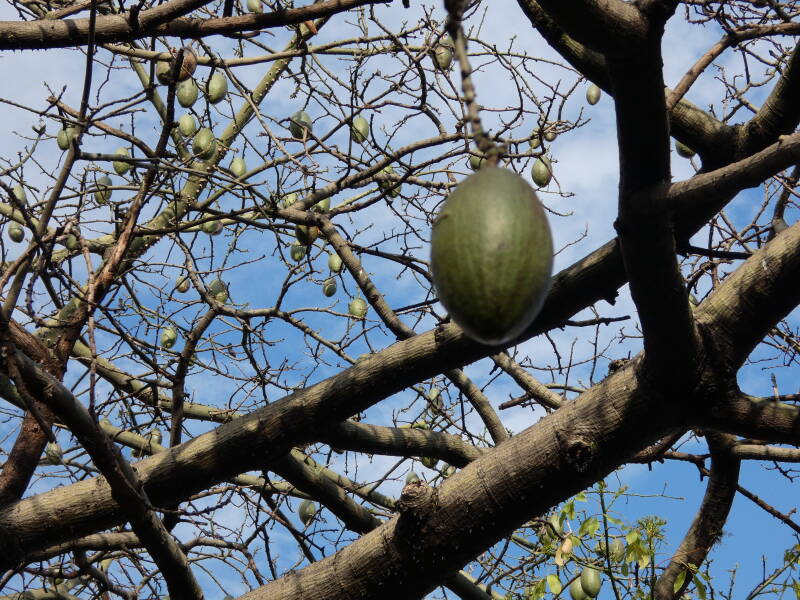
Palo Borracho fruit
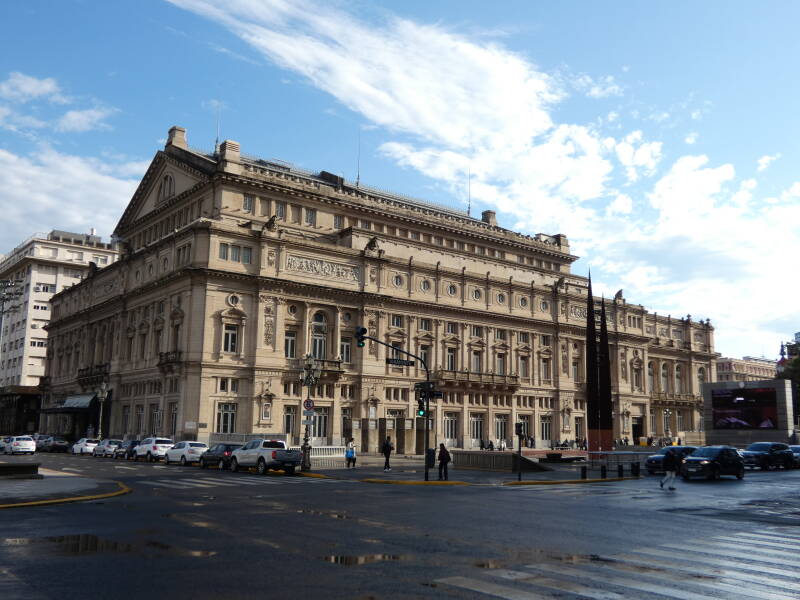
Tatro Colon Opera House
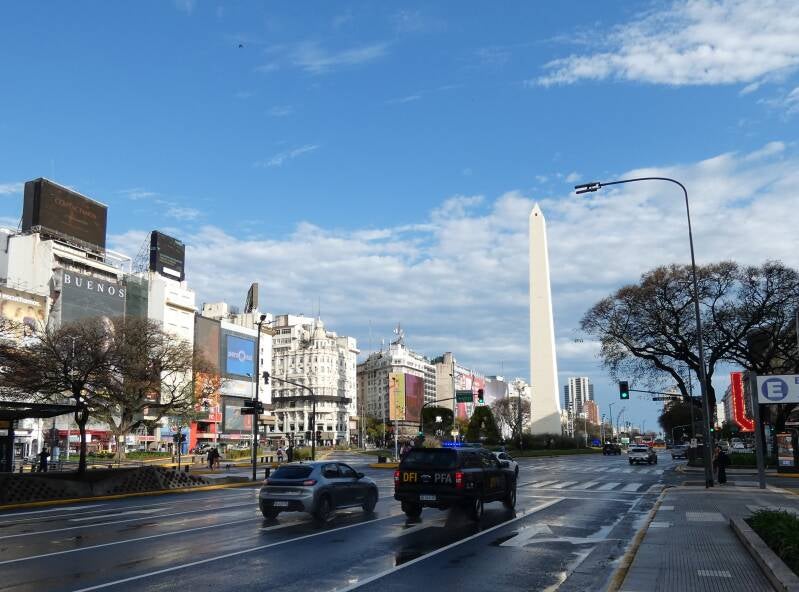
Buenos Aires obelisk
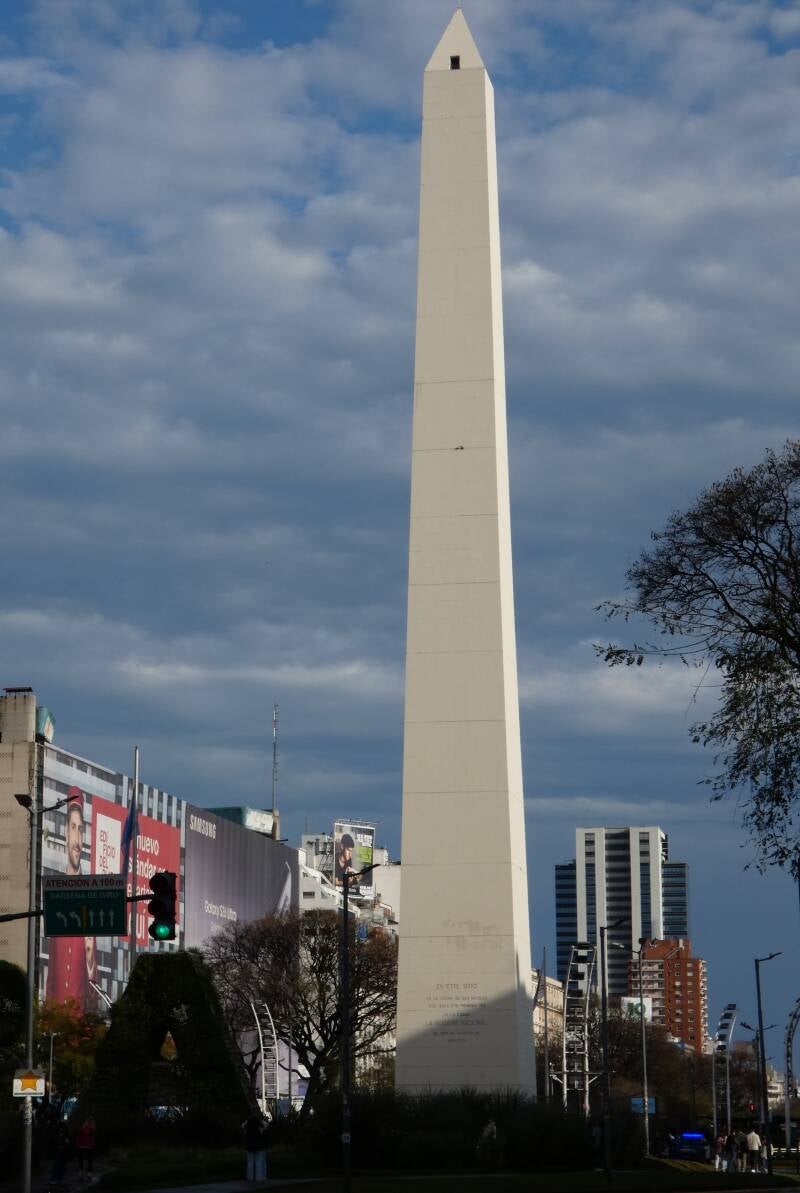
Buenos Aires obelisk
Create Your Own Website With Webador