Day 5 2 Sep - Cross border train and road trip into Bosnia and Herzegovina

Photo above - me at our final stop on the train in Croatia before transferring to the road for the crossing into Bosnia.
Train to the East
Today we are travelling by train and road to Sarajevo, a distance of 250 miles, crossing the border into Bosnia and Herzegovina on the way.
At 9am we left the hotel and took a cab to the main railway station in Zagreb. Here we caught the 9.50am eastbound train. Again, the train was nice and clean, and departed on time. After twenty minutes, we all had to leave the train and get a replacement bus, as the line is being repaired.
Bus replacement service Balkans style
The bus was really full but it was only about 20 minutes until we were dropped at the next station, and the journey was quite pleasant, taking us through rural Croatia, with lots of small villages and farmland. The next part of the train journey took about 3.5 hours, taking us into eastern Croatia. The landscape was primarily flat and made up of farmland, a lot given over to wheat and maize, interrupted by small villages. No large towns at all.
Back to the road and a border crossing
The train finally arrived at the remote village of Vrpolje, near the Bosnian border. From Vrpolje, we switched to a minibus to drive to the border. We crossed at a place called Svilaj. The border consisted of toll like booths where we had to show our passports to customs officers, both on leaving Croatia/EU and entering Bosnia. All ran smoothly, and we were away by 3.30pm.
About Bosnia
Bosnia and Herzegovina, sometimes just referred to as Bosnia, borders Serbia in the east, Montenegro to the south east, and Croatia. It also has a 12 mile Adriatic coast line. It is a largely mountainous country. It has a population of about 3.5 million, but unlike Slovenia and Croatia which were largely Christian, Bosnia is 50% Islam/50% Christian. Bosnia was absorbed into the Kingdom of Yugoslavia in 1918, and then gained independence in 1992, however this was followed by the Bosnian war (1992-1995), which saw fighting between the Republic of Bosnia & Herzegovina forces and those from breakaway states led by Serbs and Croats. Bosnia is not part of the EU, but has been a candidate country since 2022.
Road south to Sarajevo
The drive south through northern Bosnia started on empty motorway through flat densely populated countryside, but as we continued the scenery became increasingly dramatic as the flat plains gave way to rugged mountains and steep valleys, which are part of the wider Dinaric Alps, and the road became thinner and twistier. Larger towns appeared in the valleys as the slopes got higher, many with prominent mosques.
Then about an hour out of the capital, we joined a new motorway, which bridges valleys and cuts through the mountains via a series of tunnels.
We eventually arrived in the capital mid evening. Sarajevo has a population of about 275,000, and is set in the narrow valley of the Miljacka River, surrounded by the Dinaric Alps on all sides.
After checking in, we went for some food in a local restaurant, however found that they did not serve alcoholic drinks, as was a Muslim run business. Lovely food though.
Tomorrow, we will explore the city in the morning, and in the afternoon, we hope to visit some tunnels near the airport which were used during the civil war in the 1990s.
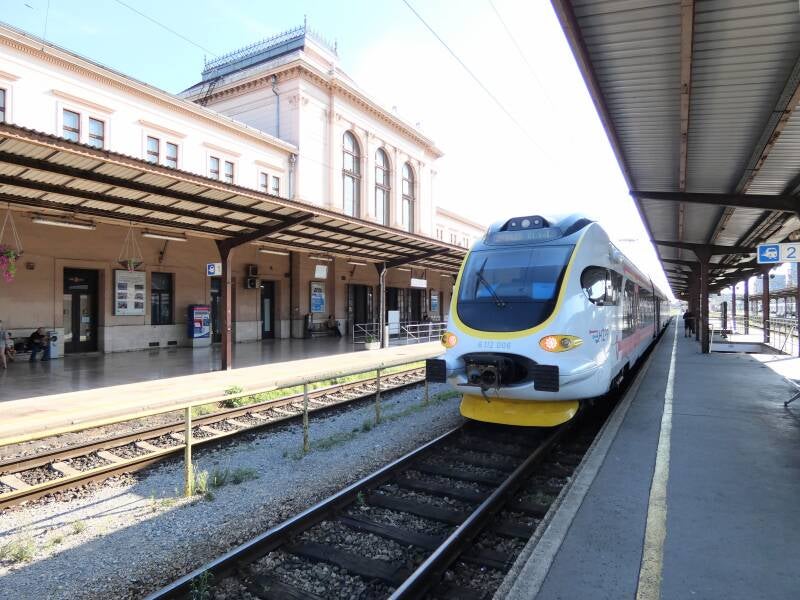
Our train from Zagreb station
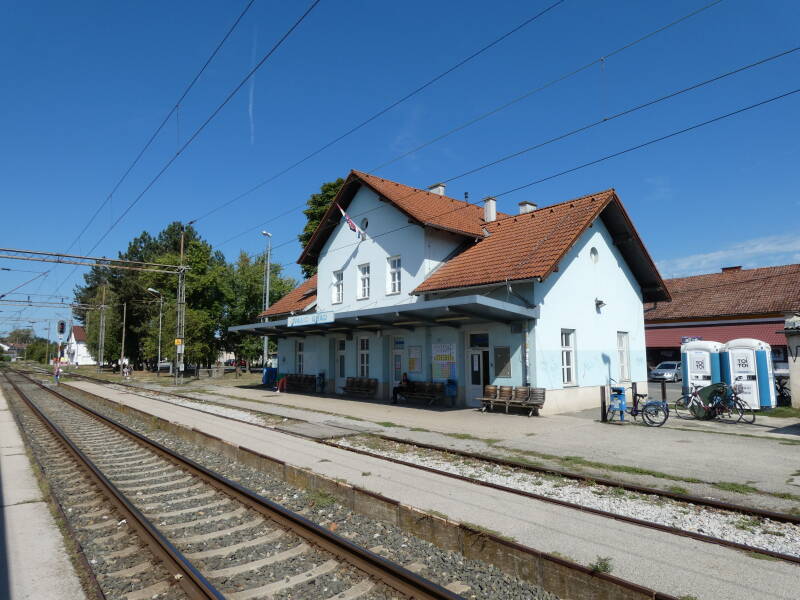
Typical rural Croatian station
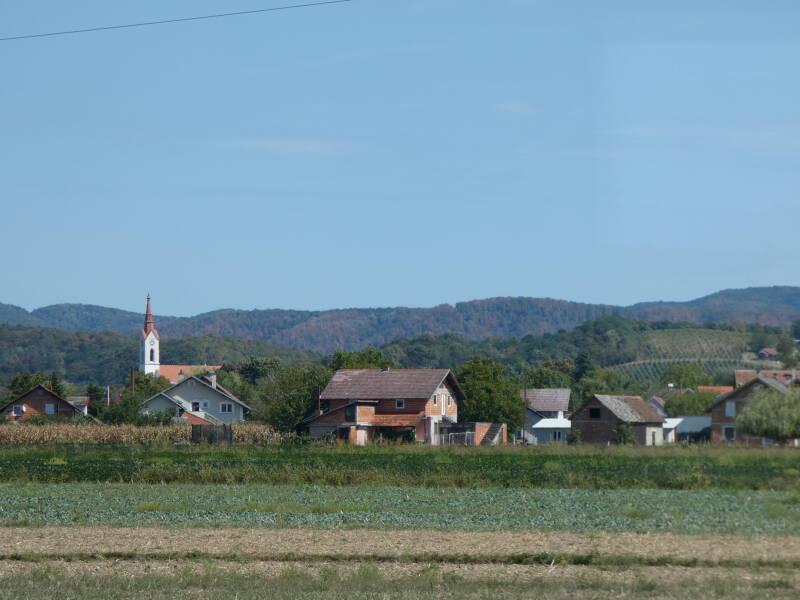
Rural Croatia from the train
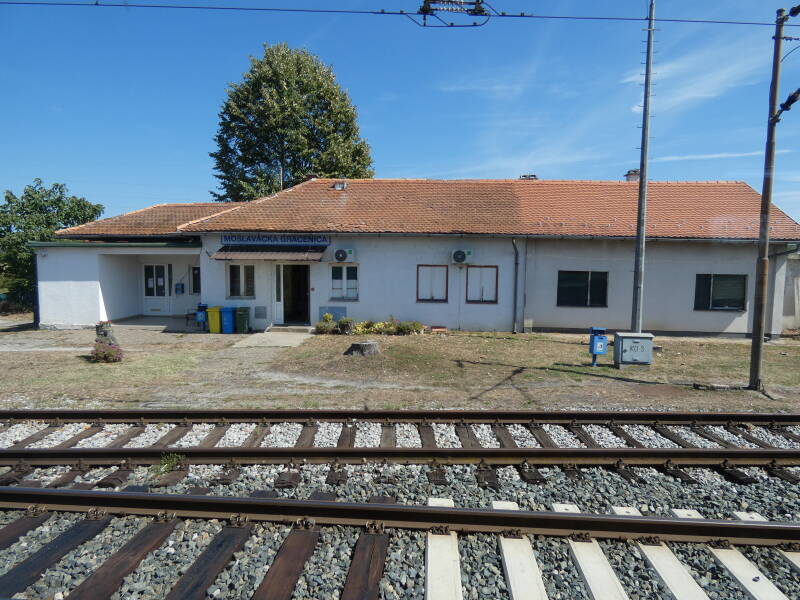
Another rural station
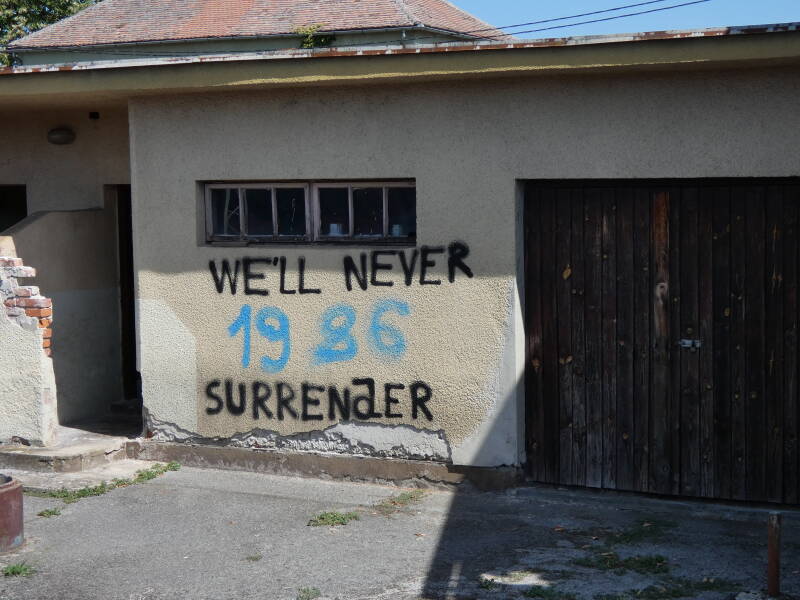
Initially I thought this was political, but it actually relates to the formation 40 years ago, of the hard line fan club of the football team Dynamo Zagreb
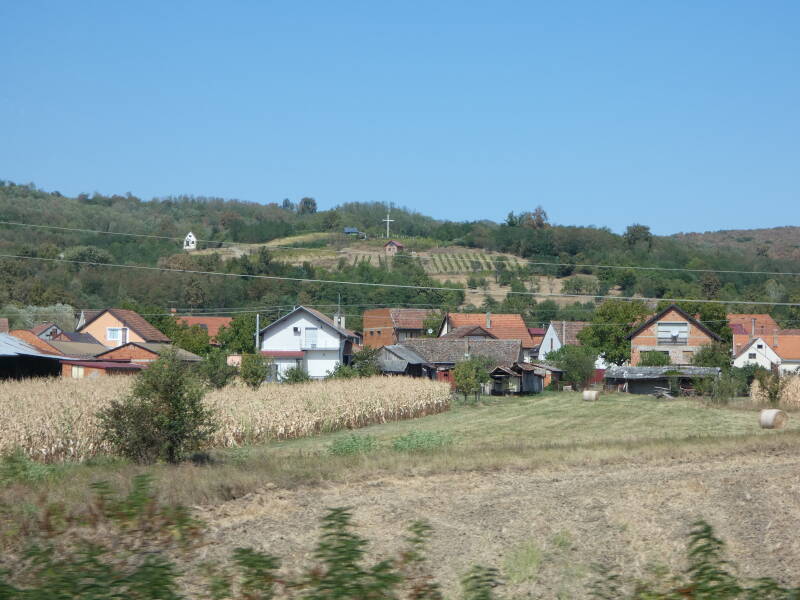
Another rural scene from the train
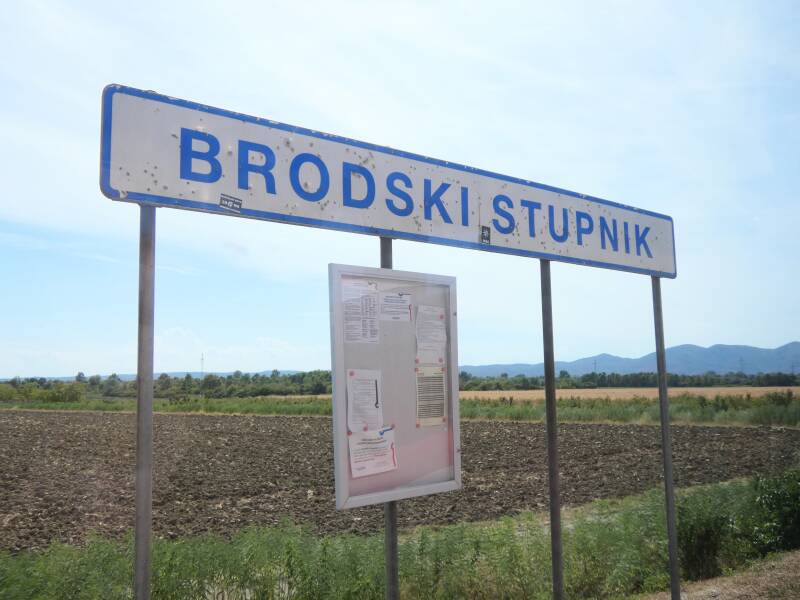
My favourite station name of the day
Create Your Own Website With Webador